
The complete guide
How to Choose a Silk Pillowcase, and Why 23 Momme Matters
The problem with most pillowcases
Most of us never think about the pillowcase. It comes with the sheet set, it goes on the pillow, and that is the end of it. Usually it is cotton, often a fairly coarse cotton, and it does the job of covering a pillow perfectly well.
The trouble starts when you look closely at what happens over seven or eight hours. You move. You turn from one side to the other, maybe a dozen times. Each turn drags your cheek and your hair across the fabric. Woven cotton has a surface full of tiny peaks and loops, and hair catches on them. That is why long hair ends up tangled on one side by morning, and why a cotton case can leave creases pressed into your face that take half an hour to settle.
Silk behaves differently. The filaments are long and smooth, the weave is dense and flat, and things slide rather than grip. It is a simple mechanical difference, not magic, and it is the reason silk pillowcases keep selling long after the novelty should have worn off.
What momme actually tells you
Cotton gets described by thread count. Silk gets described by momme, written as mm and pronounced "mommy". It is a weight measure. One momme is roughly the weight in pounds of a piece of silk measuring 45 by 100 inches. The higher the number, the more silk is packed into the cloth.
For bedding you will see anything from about 16 momme up to 25 or so. Below 16 the fabric gets thin and starts to feel papery. Around 19 is the volume sweet spot that most brands land on. At 22 to 25 you are into the heavier end, where the cloth has real body.
This pillowcase is listed at 23 momme. In practice that means it hangs rather than floats. When you pull it over a pillow it settles flat instead of rippling. It does not feel slippery in the way a light silk charmeuse does. If you have handled a cheap silk case before and found it oddly flimsy, the weight is usually what was missing.
Heavier silk also tends to survive washing better, simply because there is more fibre doing the work. That is worth considering if you plan to wash your pillowcase weekly, which you should.
Grade 6A and why the letters appear everywhere
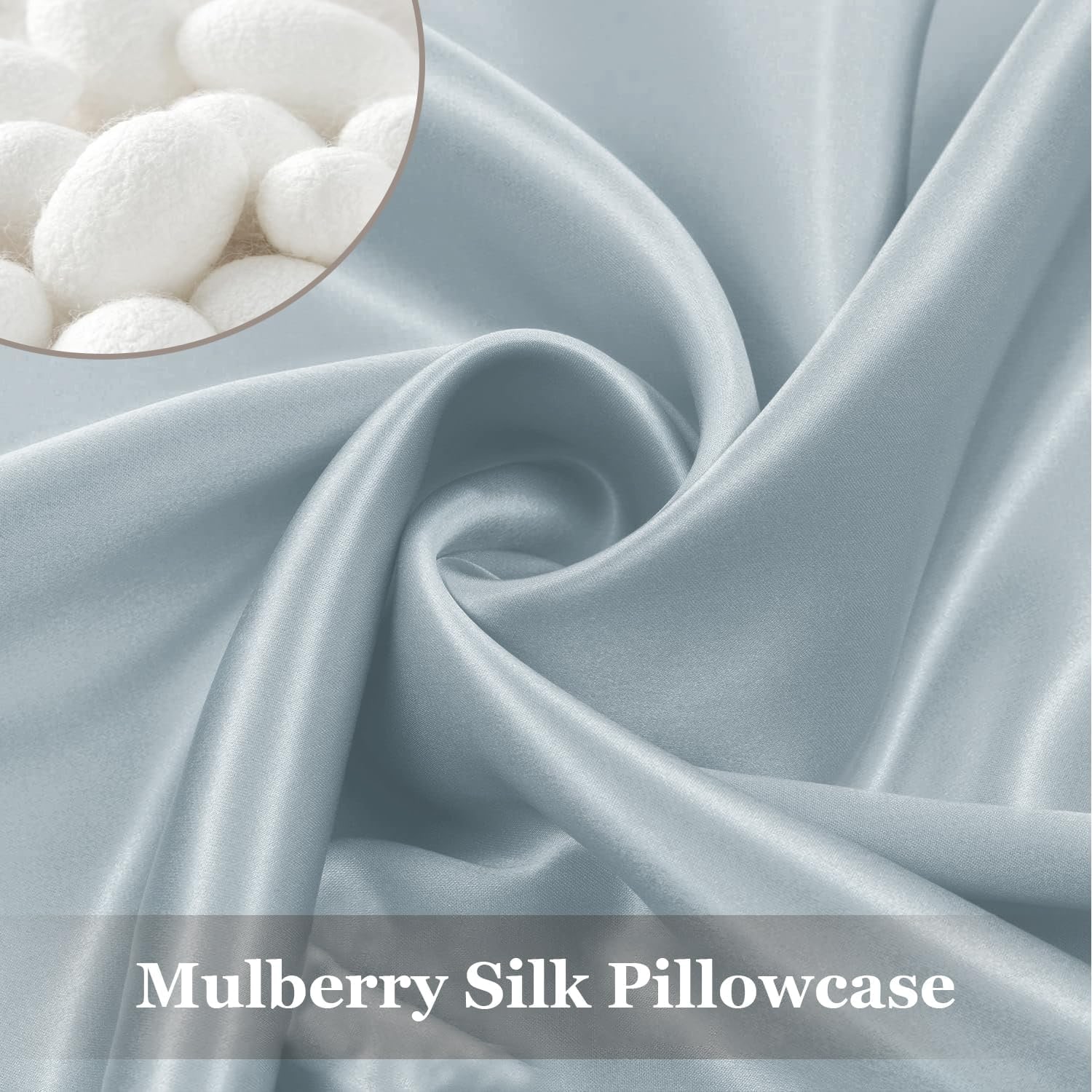
Alongside momme you will nearly always see a grade, usually written as 6A. Grading in mulberry silk refers to the quality of the raw filament, mainly its length and how even it is. Grade 6A describes long, uniform filaments with few breaks.
Long filaments matter because they mean fewer joins in the yarn. Fewer joins mean a smoother, more consistent surface, and that is what you actually feel against your skin. It also means the fabric is less prone to pulling and snagging over time.
The grading system is not independently policed, so it is not a certification. Treat it as a useful description of the raw material rather than a guarantee. Combined with a stated momme weight it gives you a reasonable picture of what you are buying. This case is listed as grade 6A mulberry silk at 23 momme.
Getting the size right
This is where more orders go wrong than anywhere else, and it is entirely avoidable.
Pillow sizes are not standard across Europe. The 50 x 70 cm pillow is common in Germany, the Netherlands and much of northern Europe. France traditionally uses 65 x 65 cm square pillows. Italy and Spain favour longer shapes, and 50 x 75, 40 x 80 and 80 x 80 cm all appear regularly. If you have ever bought bedding abroad and found it would not fit at home, this is why.
This pillowcase is 50 x 70 cm, which is about 20 x 28 inches. Before you order, take your pillow off the bed, lay it flat, and measure it with a tape. Do not measure it while it is compressed or stuffed into an existing case. If your pillow comes out at 50 x 70, you are set.
A pillow that is slightly too large will stretch the seams and make the silk look strained. A pillow that is much too small leaves loose fabric bunching under your head. Neither ruins anything, but neither looks or feels the way silk should.
Zip or envelope
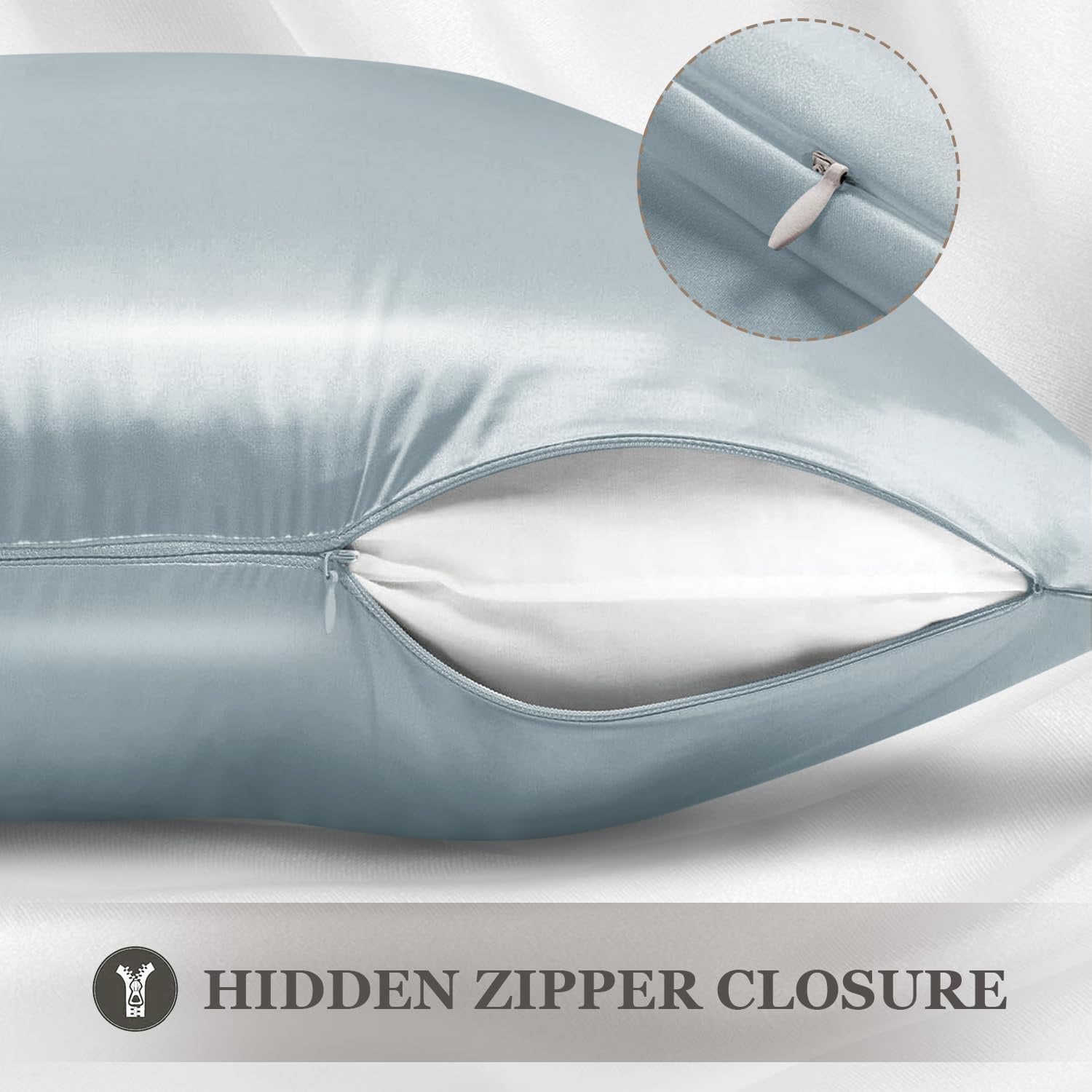
Pillowcases close in one of two ways. An envelope closure is a flap of fabric folded back over the open end. A zip is sewn into the seam.
Envelope flaps are cheaper to make and they work fine on cotton, where friction holds everything in place. On silk, which is slippery by design, the flap tends to work loose as the pillow moves. You wake up with a corner poking out.
A zip solves that. This case uses a hidden zip, set into the edge seam so it sits away from where your head rests. Two small habits help it last. Close the zip before washing, so the slider cannot catch on the fabric in the drum. And when you put the case on, feed the pillow in corner by corner rather than forcing it, so the zip tape is not taking the strain.
Living with silk
Silk is a protein fibre, closer in chemistry to hair than to cotton. That shapes how you should treat it.
Wash in cool water, never hot. Use a detergent formulated for silk or wool, because standard detergents carry enzymes designed to break down protein stains and they do not distinguish between a stain and your pillowcase. Skip bleach entirely, and skip fabric softener too, since softener coats the fibres and dulls the surface you paid for.
Machine washing is possible on a delicate cycle if you put the case in a mesh bag first. Hand washing is gentler and takes about four minutes. Whichever you choose, press the water out rather than wringing, then dry flat or hang in the shade. Direct sun fades colour and direct heat from a radiator makes silk brittle over time.
If you want it crisp, iron on the lowest silk setting, on the reverse, while the fabric is still faintly damp. Most people find silk looks fine straight off the line.
One more practical note. Heavy night creams and hair oils will transfer onto any pillowcase. If you use them, wash more often. Silk takes a weekly wash perfectly well when you treat it properly.
Who this suits
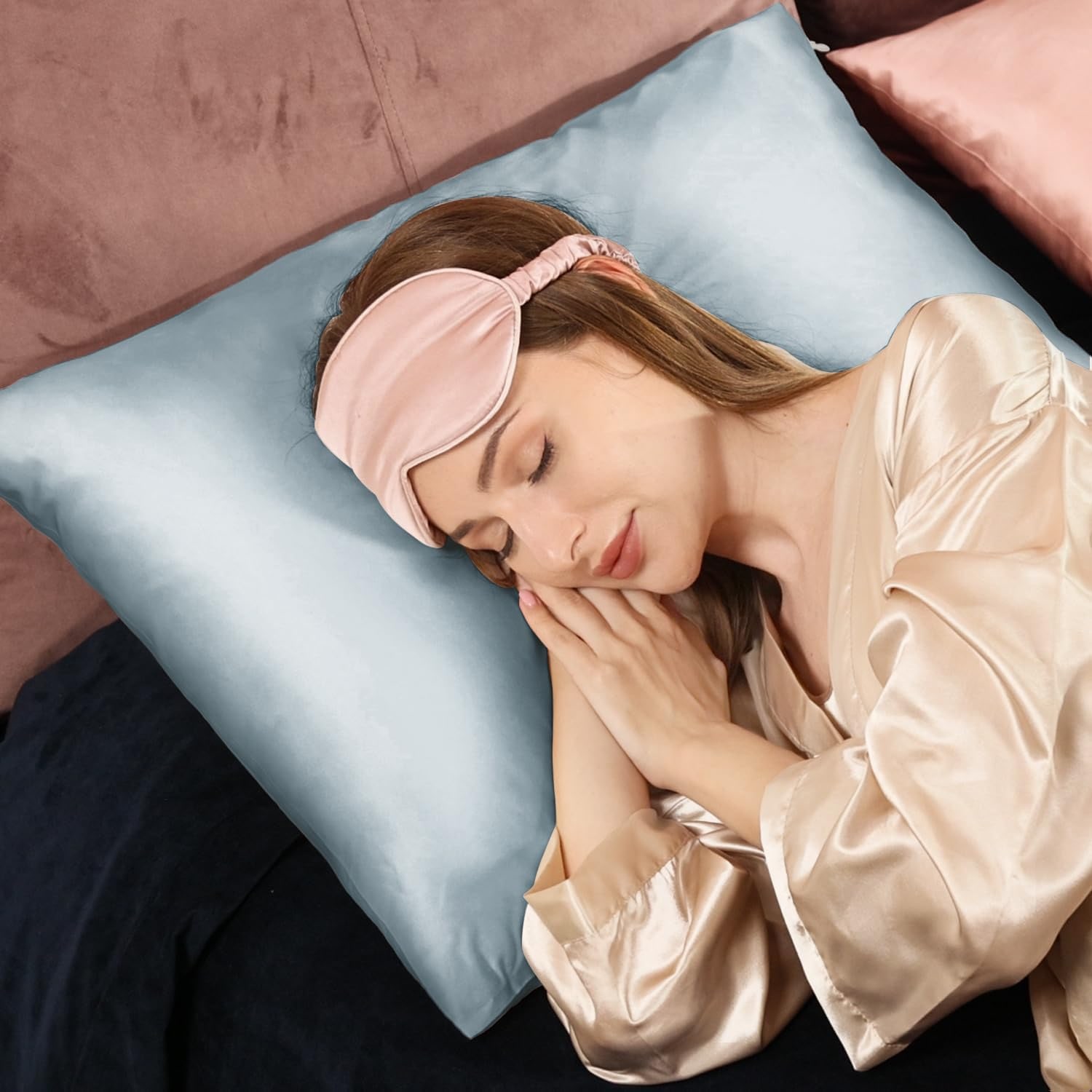
Anyone with long hair, because less friction means less tangling by morning. Anyone who runs warm at night, since silk does not trap heat the way thick cotton can. Anyone who finds cotton leaves creases pressed into their face. And anyone buying a gift for someone whose taste they do not know well, because a plain silver grey slips into almost any bedroom without argument.
It is less suited to someone who wants a fuss-free wash-and-tumble-dry pillowcase. Silk asks for a little care. If that sounds like one job too many, cotton sateen is a reasonable compromise, though it will not feel the same.
The short version
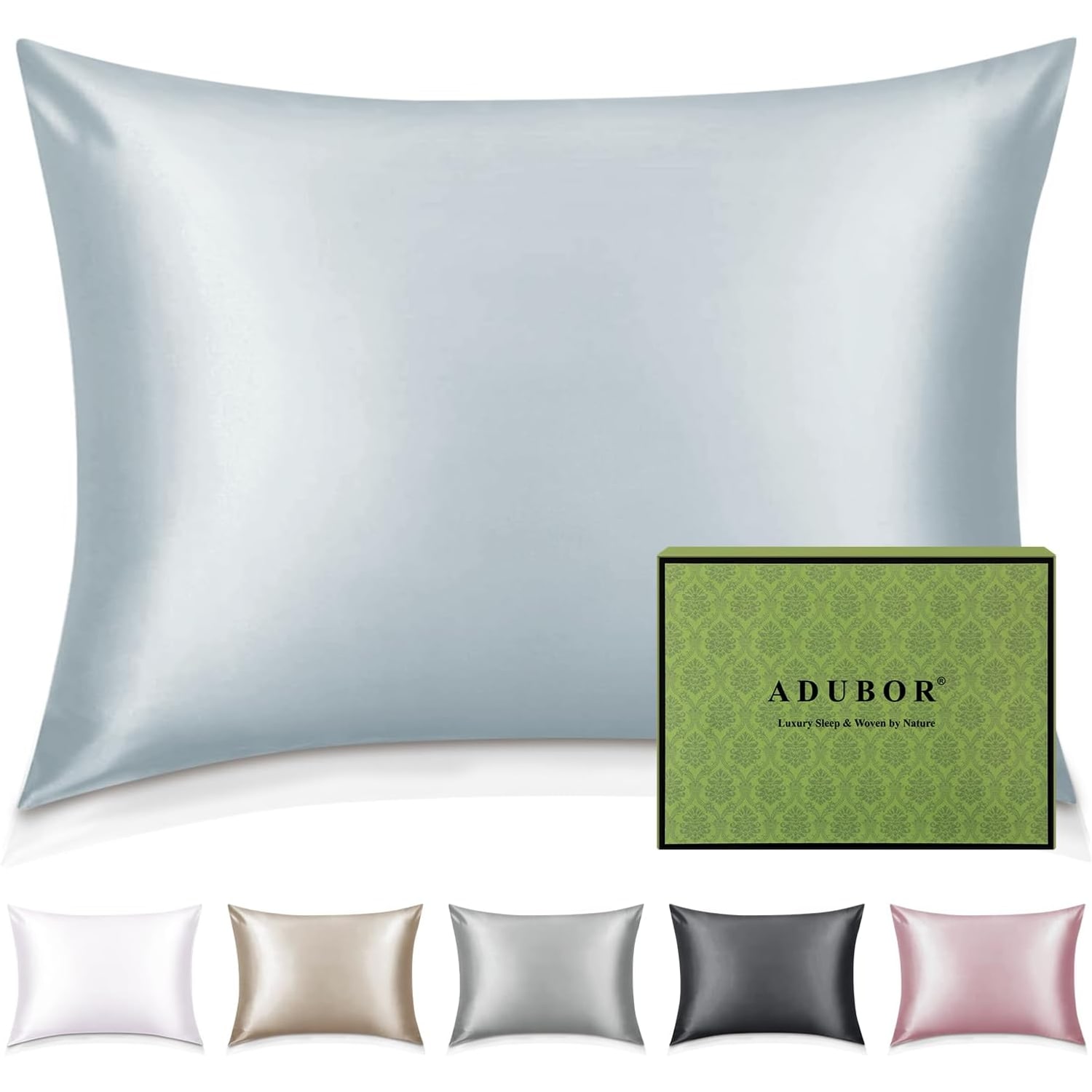
Silver grey mulberry silk, grade 6A, listed at 23 momme, in the 50 x 70 cm European size, closed with a hidden zip. One case per order.
The 23 momme weight is the part worth paying attention to. It gives the cloth body, makes it drape properly, and means the case is not going to feel thin the first time you touch it. Measure your pillow before you order, wash it cool and gently, and keep it out of the dryer. Done that way, it stays good for years.