
The complete guide
How to Choose and Wear a 68 cm Silk Head Scarf
The problem with most scarves you already own
Open a drawer of scarves and you will usually find two kinds. There are the big winter ones, wool or acrylic, warm but thick and useless in May. Then there are the thin novelty squares, polyester, printed brightly, that look fine in the packet and look cheap once they catch the light.
What goes missing is the middle. A scarf you can wear in spring and summer, tie in more than one way, and not feel self-conscious in. Something that reads as deliberate rather than leftover.
That is the slot a 68 x 68 cm silk square fills. It is a size with history behind it. Wide enough to cover hair properly, small enough to knot at the throat without bulk, light enough to live in a bag and come out when the wind picks up.
Why mulberry silk behaves differently
Silk is not just a fancier version of cotton. The fibre itself is a different shape.
Cotton is spun from short staple fibres. Under magnification the surface is rough and irregular, with thousands of tiny ends poking out. That roughness is why cotton grips and why a cotton pillowcase or headwrap drags on hair.
Mulberry silk is a continuous filament. One long, smooth strand, extruded rather than spun. The surface is even. Hair and skin move across it with far less friction.
You notice this in small, practical ways. A knot in silk slides when you want it to and does not bite into the hair when you undo it. Pulling a wrap off at the end of a long day does not come with that dry rasping sound. The fabric falls into folds rather than holding a stiff shape, which is why a silk scarf drapes at the neck instead of standing up like a collar.
The one trade-off is that slipperiness cuts both ways. A single knot in silk can work loose over several hours. A double knot or tucking the tail under the band fixes it, and it becomes second nature quickly.
Reading the numbers: why 68 cm is the sweet spot
Scarf sizing confuses people because the number given is one edge of a square, not the length you actually tie with.
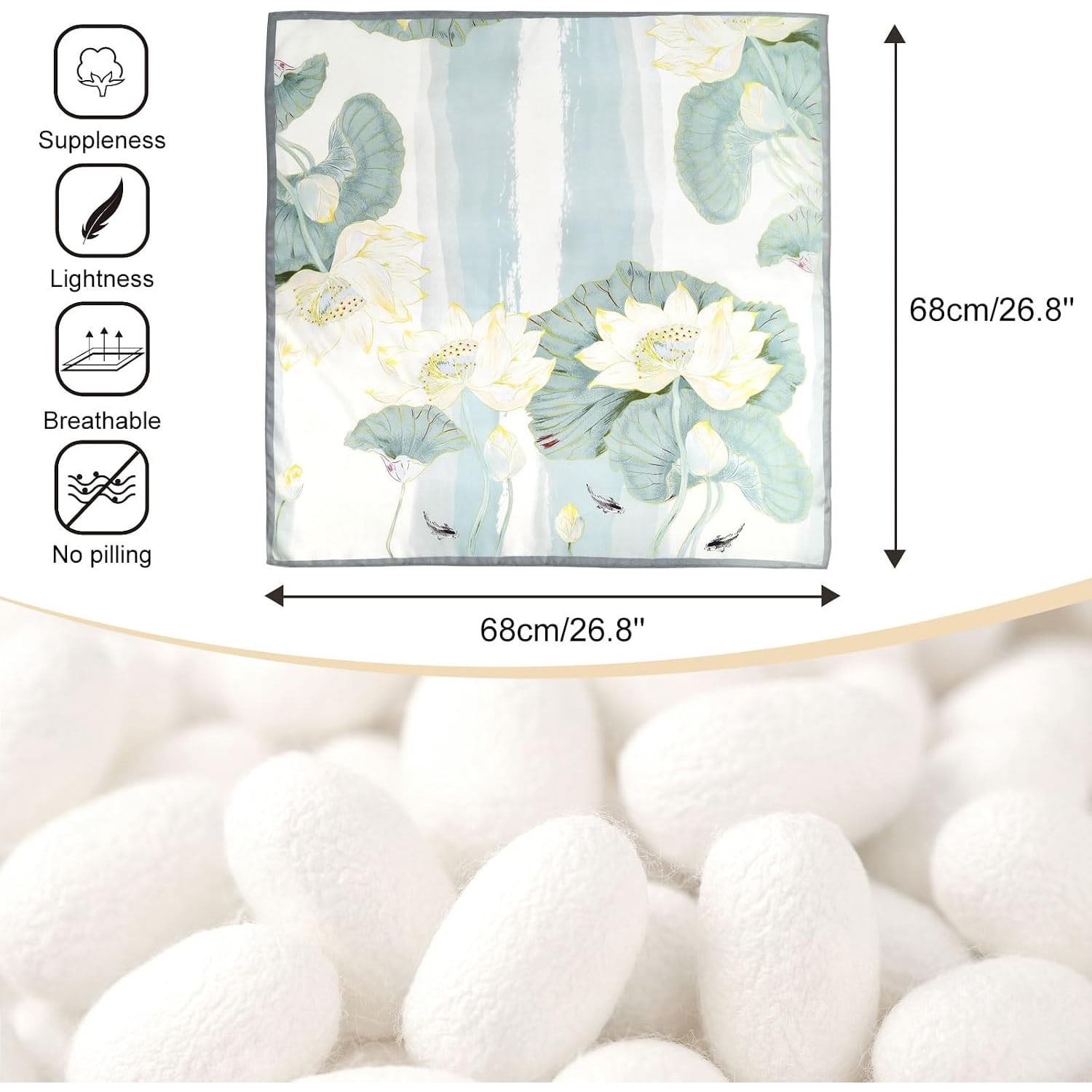
A 68 cm square folded on the diagonal gives you a triangle with a long edge of roughly 96 cm. That is the measurement that matters. It is enough to go around most heads and tie at the back with tails to spare, or around a neck with a comfortable loop.
Smaller squares, around 50 to 55 cm, are neckerchief-only. They look good at the throat but will not cover hair. Larger squares, 90 cm and up, cover beautifully but bunch at the knot and can feel like a lot of fabric for a casual day.
Sixty-eight sits between the two. If you only want one square silk scarf that does several jobs, this is the size to buy.
Who this suits
People with long or thick hair get the most obvious benefit, because a full wrap needs real surface area and 68 cm gives it. Curly and coily hair types often reach for silk squares for the same low-friction reason, and the open square is easy to wrap without flattening volume.
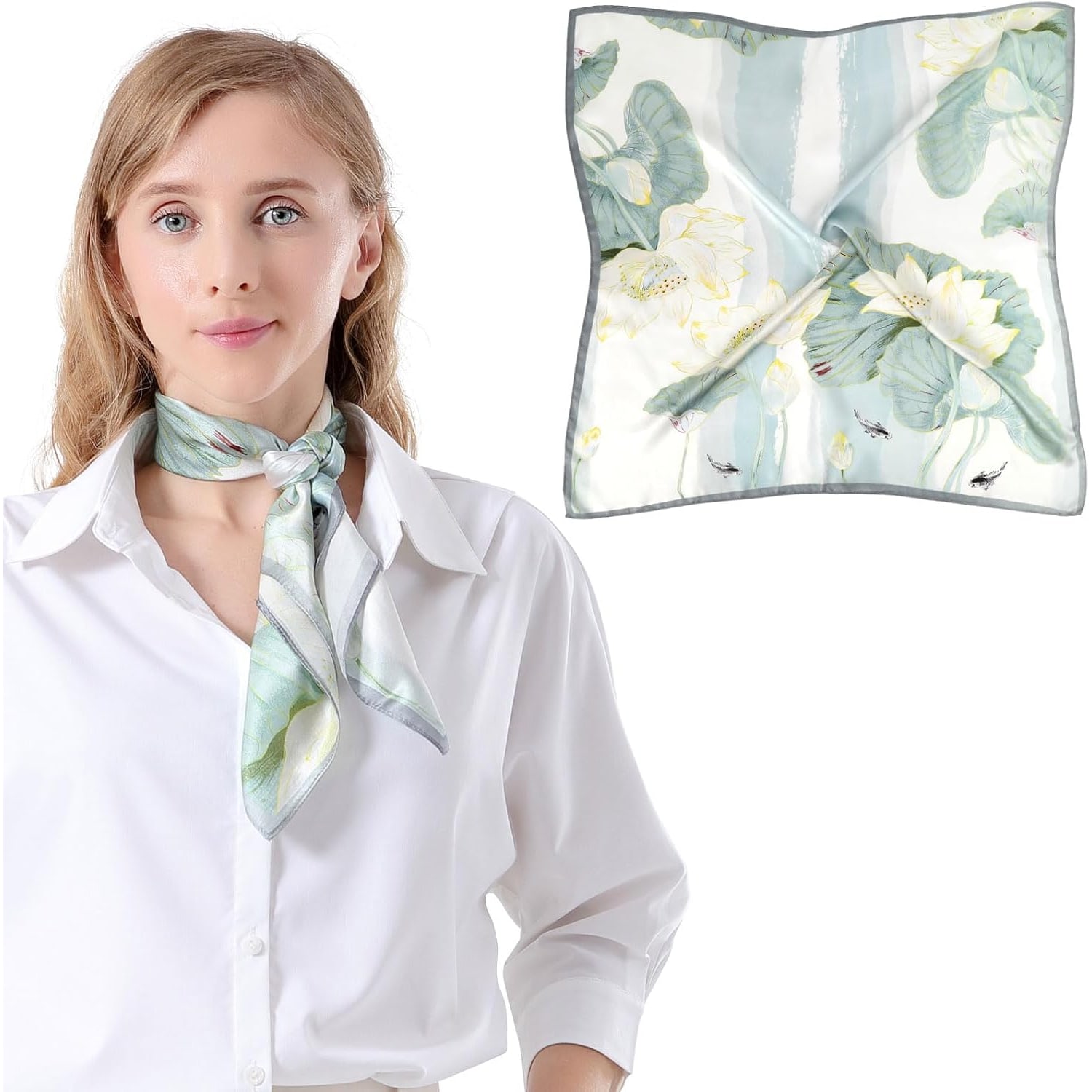
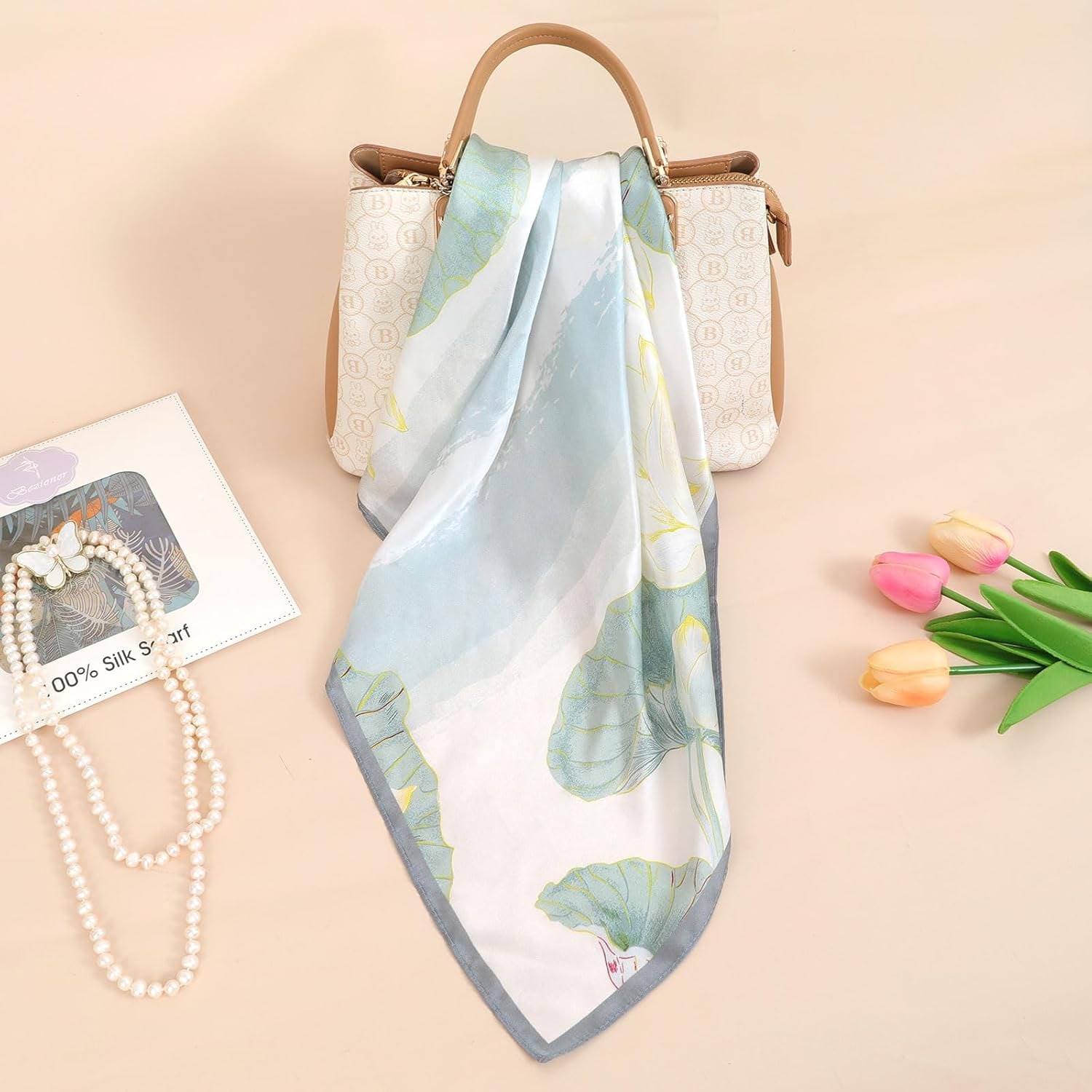
It also suits anyone who wants a light, pale accessory for warmer months. The print here is floral in light blue with green. That is a soft palette rather than a loud one, which makes it easier to wear with clothes you already own.
If you commute, cycle, drive with the windows down, or walk anywhere exposed, a scarf you can tie over your hair in five seconds earns its keep.
It is less suited to someone who wants warmth. Silk at scarf weight is not an insulating layer. Buy it for how it looks and how it feels, not for winter.
Choosing a print you will actually wear
The mistake most people make with a first silk scarf is buying the boldest print in the shop. It photographs well. It then sits unworn because it fights with everything.
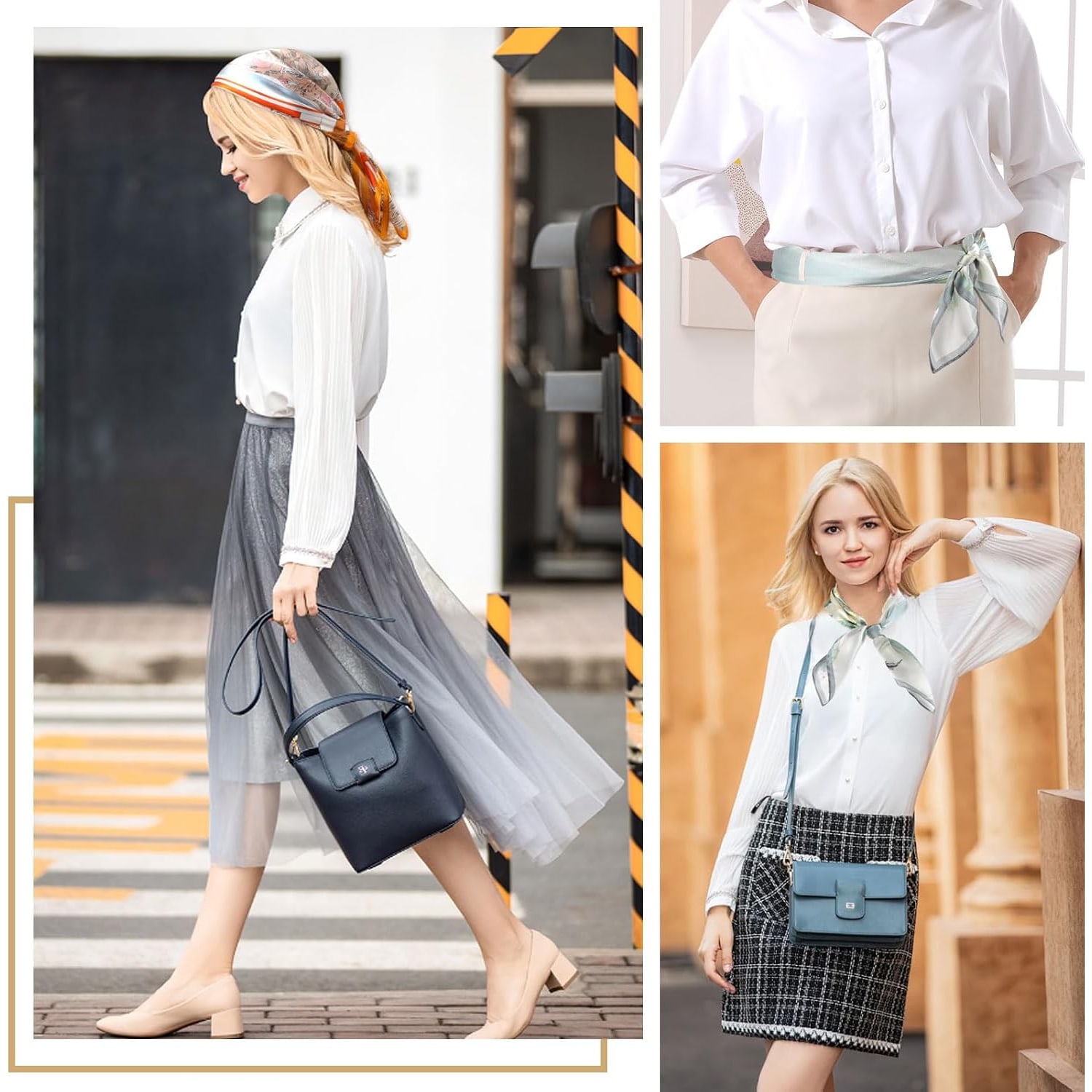
Pale, soft-patterned squares get worn far more. A light blue floral works against denim, white cotton, navy, grey, black and natural linen. Against dark hair it gives clean contrast. Against blonde hair it reads tonal and soft. Neither is wrong.
Think about the two or three outfits you wear most often, not the one you wear twice a year. If the scarf works with your everyday jeans and a shirt, it will get used.
Ways to tie it
Start with four and add from there.
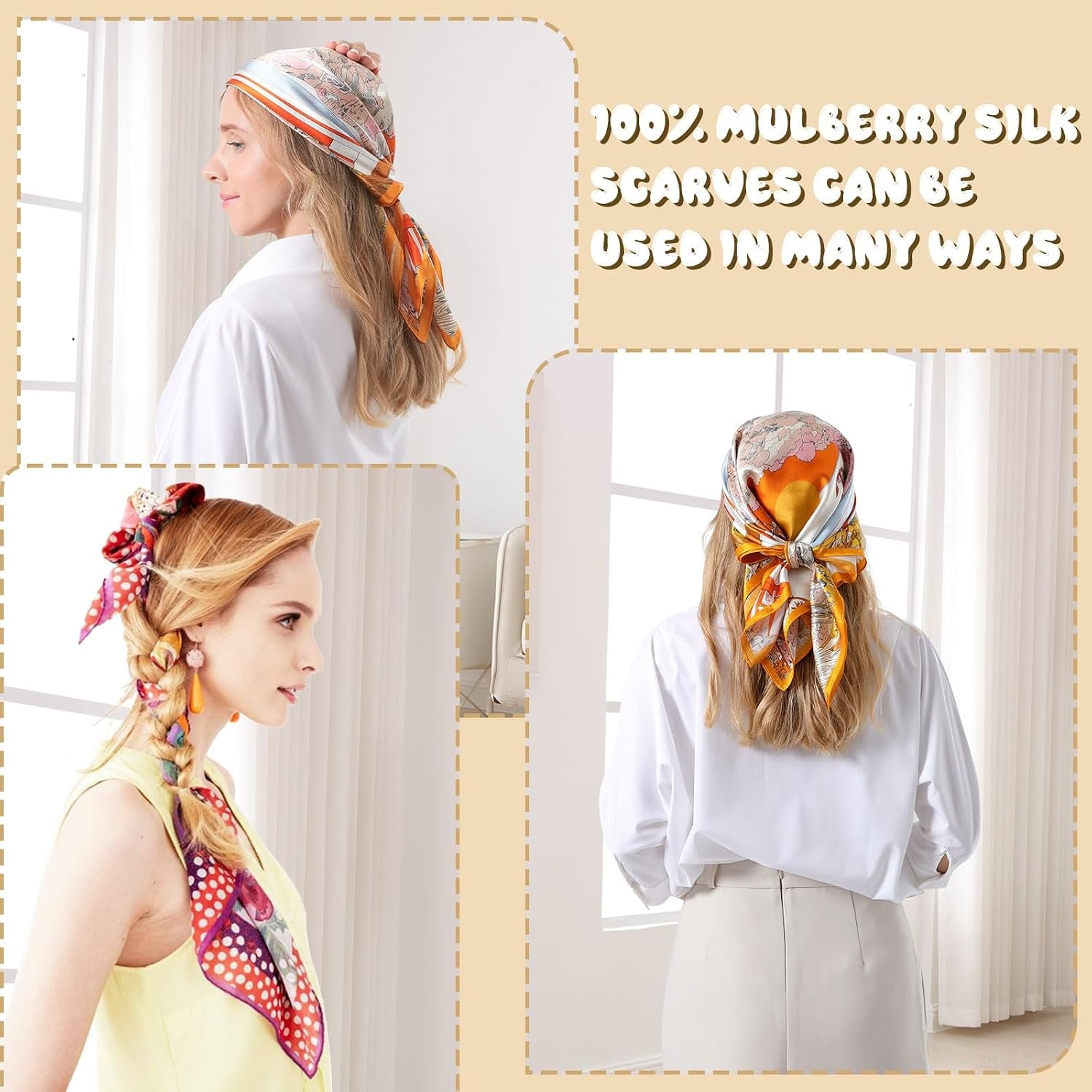
The rolled headband. Fold the square to a triangle, then roll from the long edge up until you have a band about five centimetres wide. Place it at the hairline, bring the ends to the nape and double knot. Tails can hang or tuck.
The back-tied triangle. Keep the triangle open, place the long edge at the forehead, gather the two ends behind the head and knot over the point. Tuck the point up under the knot for a clean finish, or leave it down.
The neckerchief. Roll loosely, loop once around the neck and knot off to one side. Leave it slightly loose so it drapes rather than chokes.
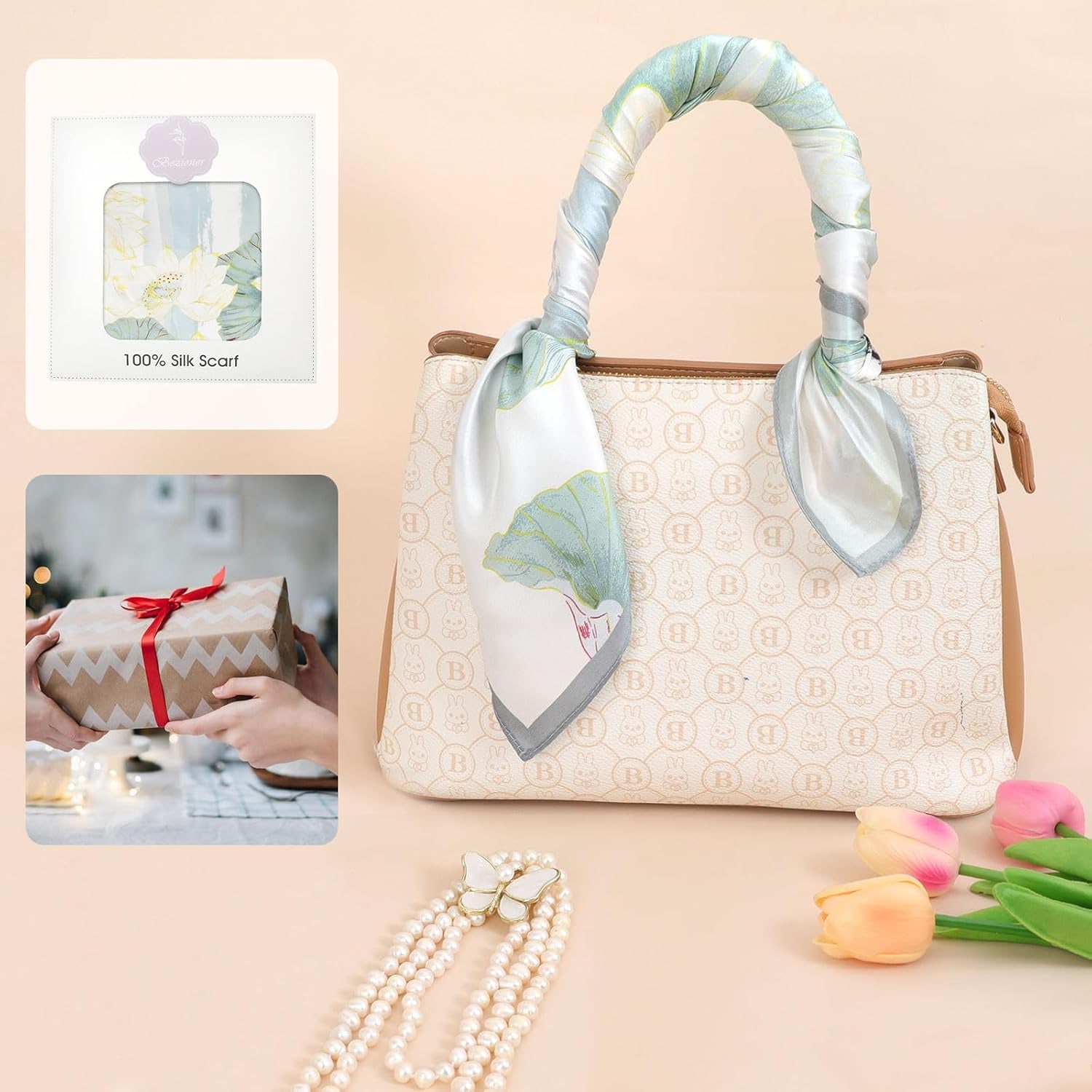
The handbag knot. Fold narrow, loop once around the bag handle, single knot, tails hanging. Takes four seconds and changes how the bag looks.
Once those feel easy, the ponytail bow and the over-hat tie come naturally.
Looking after it
This part is short but it is the part that decides whether you still have the scarf in five years.
Hand wash in cold water with a mild detergent made for delicates. Swirl it, do not scrub. Do not soak it for long. Do not wring or twist it, because that stresses the fibres and sets creases you will struggle to remove.
Press the water out in a clean towel. Dry flat or over a hanger, away from direct sun and away from radiators. Sunlight fades dyes and heat dulls the sheen.
Iron on the lowest silk setting, on the reverse side, while the fabric is still slightly damp. A thin cotton cloth between iron and silk adds a safety margin.
Two habits help more than anything else. Let perfume and hairspray dry fully on skin and hair before tying the scarf on, because alcohol can mark silk. And store it rolled rather than folded tight, so you are not ironing out the same crease every time.
What the record does and does not say
Worth being straight about. The confirmed facts are the material, 100% mulberry silk, the size, 68 x 68 cm, and the print, floral in light blue and green. Care is a gentle cold hand wash.
The momme weight, the exact colour name, the country of origin and the edge finishing method are not specified. If one of those details is a deciding factor for you, ask before ordering rather than assuming.
The short version
A 68 cm square in pure mulberry silk is the most useful scarf size there is. It wraps hair, ties at the neck, bands into a headband and knots onto a bag handle, and it does all four without looking like a compromise.
Silk earns its price through the fibre itself. Smooth, continuous, low friction, with a drape that cotton cannot copy. The light blue floral print keeps it wearable with clothes you already own rather than saving it for one occasion a year.
Wash it cold by hand, dry it out of the sun, press it low and damp. Do that and it stays good for a very long time.