
The complete guide
How to Choose a 23 Momme Silk Pillowcase
The problem with a pillowcase you never think about
Most people buy pillowcases as an afterthought. They come in the sheet set, they go on the pillow, and that is the end of it. Then you notice that your hair looks slept-on in a way it did not used to, or you wake with a crease pressed down one cheek that takes an hour to fade, or the cotton just feels rough when you are hot and restless at two in the morning.
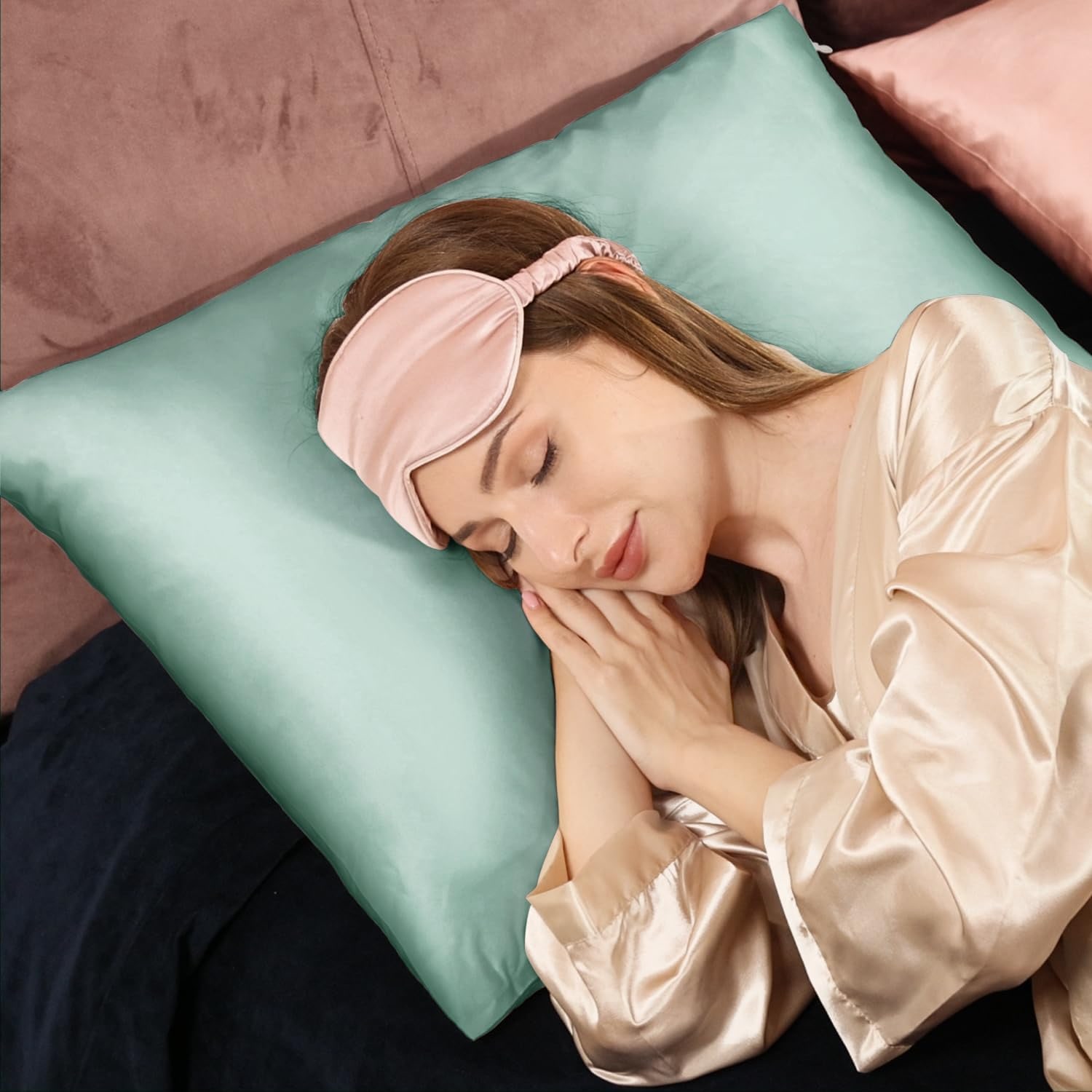
A pillowcase is the one piece of bedding your face is pressed into for about a third of your life. The surface it offers matters more than the pattern on the duvet. Cotton, even good cotton, has a woven texture made of short staple fibres. Those fibres grip. They catch hair and they hold skin in place while you turn. Silk does not do that, and that single difference is why people trade up.
This guide covers what to look for in a silk pillowcase, what the numbers on the label actually mean, how to get the size right in a part of the world where pillow dimensions change every few hundred kilometres, and how to look after silk so it lasts.
What momme actually tells you
If you have shopped for silk at all you will have seen momme, usually written as a number followed by "mm" or the word itself. It is a Japanese unit of weight and it describes how heavy a given area of silk is. Higher number, denser cloth.
Nineteen momme is the volume figure in silk bedding. It is light, it is cheaper to produce, and it is perfectly pleasant. Twenty-two and 23 momme are the step up. This pillowcase is listed at 23 momme, and the difference you notice is body. The fabric hangs over the pillow instead of floating on it. It feels like cloth rather than film. Pick up a 19 momme case in one hand and a 23 in the other and you can tell them apart without looking.
Does heavier mean it lasts longer? Generally a denser weave handles washing and daily use with less visible wear, simply because there is more fibre in every square centimetre. That is a reasonable expectation rather than a promise. How long any silk lasts has more to do with how you wash it than what it weighs.
Very high momme silk does exist, up around 25 and beyond, but at that point the fabric starts to feel stiff and the price climbs faster than the benefit. The range from 22 to 23 is where most people find the balance between substance and softness.
Grade 6A and why fibre length matters
The other number on silk labels is the grade, usually written as a letter and a number. Grade 6A is what this fabric is listed as, and it refers to the quality of the raw filament reeled from the cocoon.
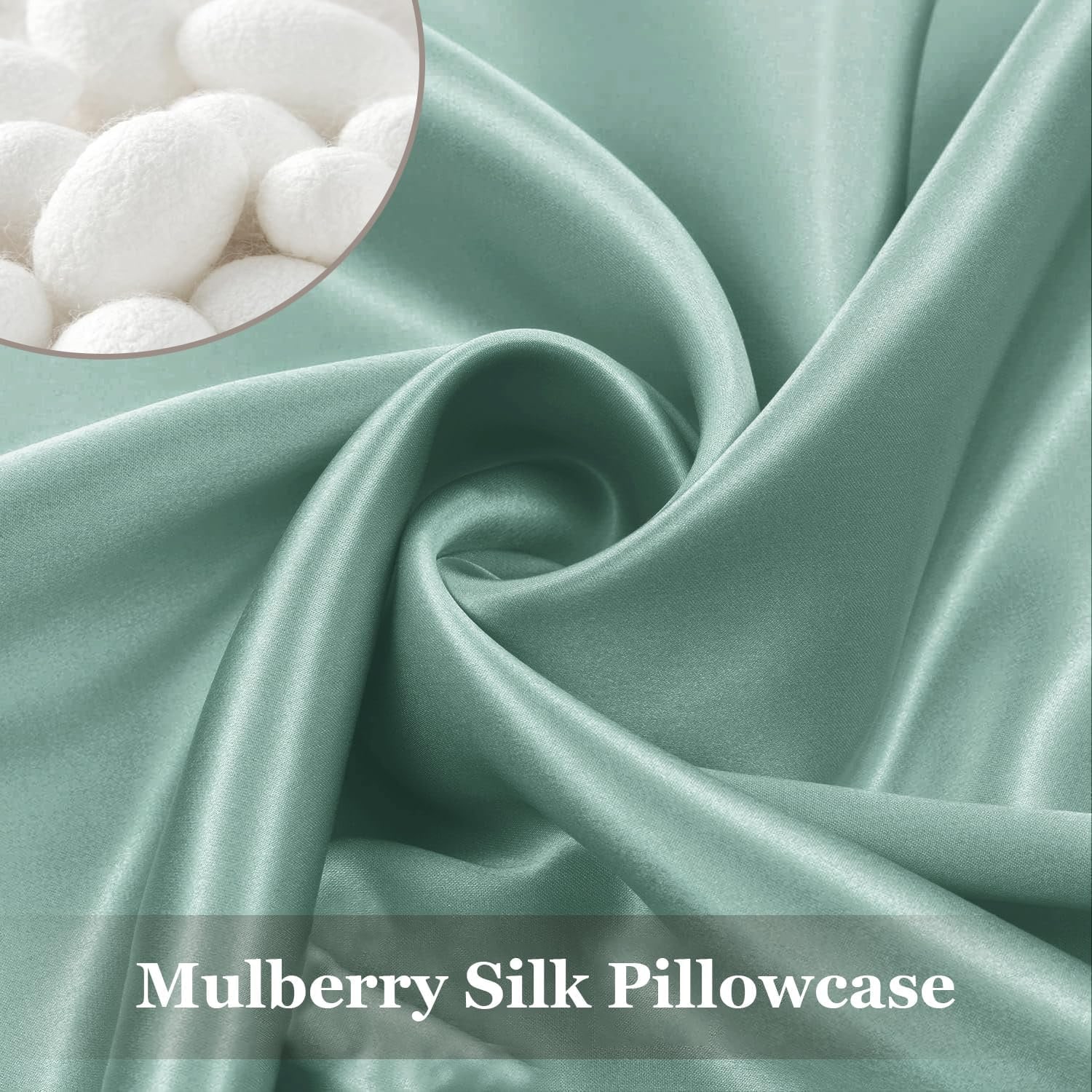
Silk is unusual among natural fibres because a single cocoon yields one continuous filament hundreds of metres long. The best silk uses those long filaments more or less intact. Lower grades use shorter pieces spun together, which means more joins, more tiny ends sticking out of the yarn, and a surface that is subtly less even. You cannot see this with your eyes. You can feel it after a few months, when the lower grade fabric starts to look slightly hazy and catch the light differently.
So when you are comparing the best grade 6A silk pillowcase against a case that does not state a grade at all, the silence is telling. Makers who use long-filament silk tend to say so.
Getting the size right in Europe
This is where more orders go wrong than anywhere else. There is no single European pillow size. Fifty by seventy centimetres is the most widespread rectangular format, but 50 x 75, 40 x 80, 65 x 65 and 80 x 80 are all in regular use depending on where you live and what your bed came with.
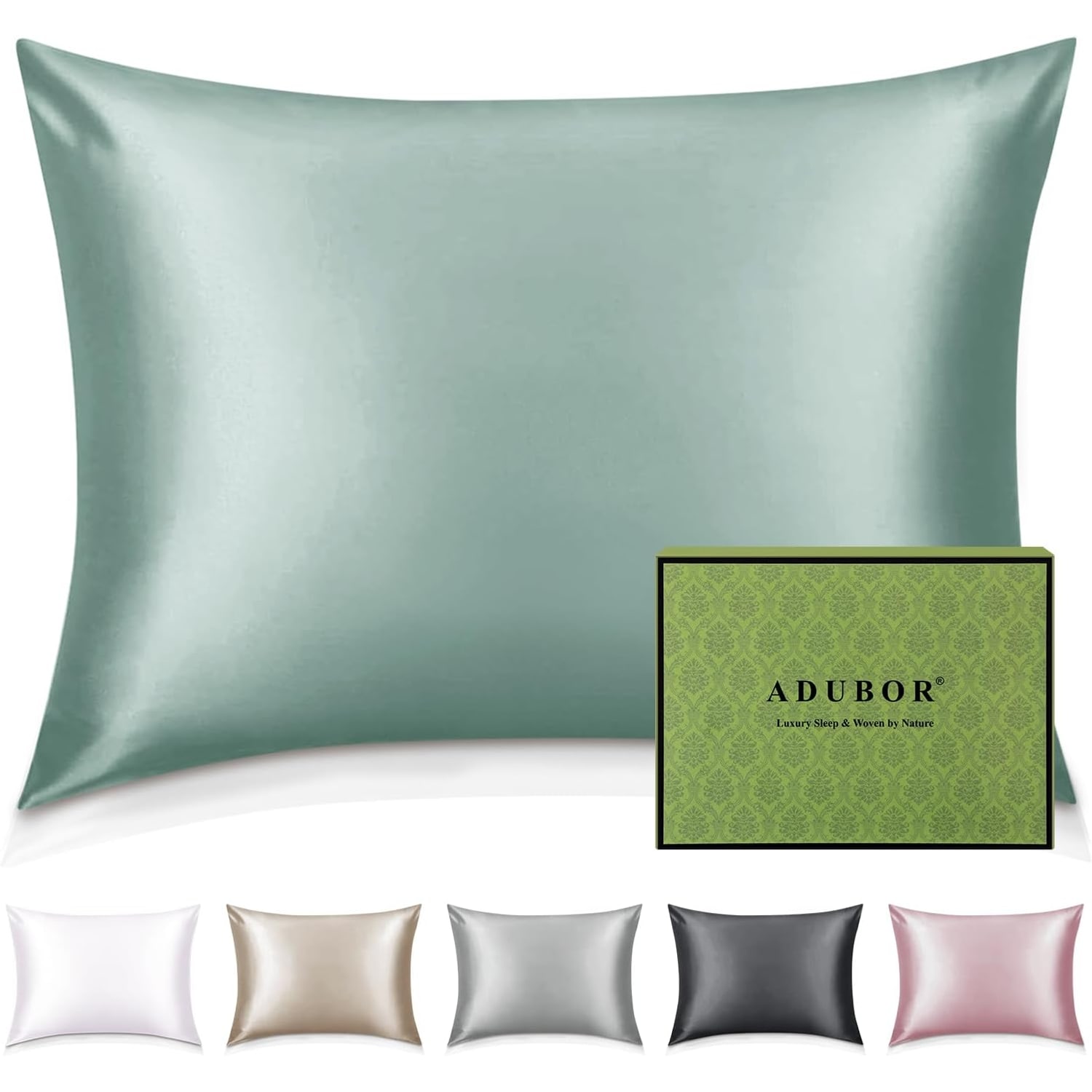
This pillowcase is 50 x 70 cm, which is about 20 x 28 inches. That is the right choice if your pillow matches, and it is the most common format in a lot of European homes.
Before you order, go and measure the pillow. Not the bed, not the old pillowcase, the pillow itself, laid flat and uncompressed. A tape across the width and the length takes ten seconds and saves a return. If your pillow is a centimetre or two under the case dimensions you are fine. If it is five centimetres over, the silk will be pulled tight across the seams and you will be putting strain on the stitching every time you plump it.
People hunting for the best silk pillowcase 50 x 70 are usually replacing a standard European pillow, and this is the size for that job.
The closure question
Silk pillowcases come with one of three closures. Open-ended cases are the cheapest to make and the worst to live with, because the pillow works its way out by morning. Envelope flaps are better, with an internal tuck of fabric holding things in, though they can bunch if the flap is short.
This one uses a hidden zip. The zip sits inside the seam so the outer face stays smooth and unbroken. It holds the pillow completely enclosed, which matters more with silk than cotton because silk is slippery and a pillow will happily slide out of anything that does not actually close. If you are looking for the best hidden zip silk pillowcase, the thing to check is that the zip is set into the seam rather than sewn across the face, which is how this one is built.
One practical tip. When you put the case on, turn the zip edge toward the foot of the bed. You will never notice it is there.
Colour and how to use it
Lake blue is a soft blue-green. It is quieter than a sky blue and warmer than a true teal, which makes it one of the easier colours to drop into a bedroom you already like.
It sits well against white and ivory, which is the default for most bed linen. It works with grey, both warm and cool. It holds its own next to sand and natural linen tones. If your room runs to deeper navy or charcoal, the lake blue reads as a lighter accent rather than a clash.
Solid colour also means no print to match or pattern to line up. Many people choosing the best blue silk pillowcase want exactly that, a bit of colour without a scheme to commit to.
Silk takes dye deeply and the colour has a soft sheen to it rather than a flat matte finish. In daylight you will see the shade shift slightly as the fabric folds. That is normal and it is part of what silk looks like.
Washing silk without ruining it
Silk is a protein fibre, chemically closer to hair than to cotton. Treat it the way you would treat something delicate and it will last for years. Treat it like a tea towel and it will go dull in a month.
Cool water, always. Hot water relaxes the fibre structure and dulls the surface. A mild detergent made for delicates or for wool is ideal. Ordinary laundry powder often contains enzymes designed to break down protein stains, and silk is protein, so those enzymes slowly attack the fabric itself.
Skip the fabric softener entirely. Silk does not need it and the coating softeners leave behind flattens the natural sheen. Never bleach.
Hand washing is gentlest. Fill a basin, swirl for a couple of minutes, rinse in clean cool water, then press the water out between your palms or in a towel. Do not wring and do not twist. If you want to machine wash, use a mesh laundry bag and the silk or delicate cycle on a low spin.
Dry flat or hang in the shade. Direct sunlight fades dyed silk faster than anything else you can do to it, and radiators make the fibre brittle. Tumble dryers are out.
If it needs pressing, use the lowest iron setting, work on the reverse, and do it while the fabric is still slightly damp. Most of the time it does not need pressing at all, because silk relaxes out of its own creases overnight.
Wash weekly alongside the rest of your bedding. If you use rich night creams or hair oils, wash sooner, since oils left to sit will mark silk.
Who this suits
Anyone upgrading a standard 50 x 70 pillow and wanting a surface with less drag than cotton. People with long hair who are tired of finding it tangled at the back. Anyone who sleeps hot and finds brushed cotton clingy. Travellers who want a familiar sleeping surface in a hotel, since a single case packs down to almost nothing.
It is also a straightforward gift. There is no sizing to guess beyond the pillow, the colour is easy to live with, and the heavier 23 momme weave makes it feel like a proper present rather than a token one.
The short version
Twenty-three momme means a denser, heavier silk than the common 19. Grade 6A means long-filament yarn with a smooth, even surface. The case measures 50 x 70 cm, so measure your pillow before ordering. A hidden zip keeps the pillow in and the closure out of sight. Lake blue is a calm blue-green that pairs with almost anything.
Wash it cool, dry it out of the sun, and keep the softener away from it. Do that and a silk pillowcase stays good for a very long time.