
The complete guide
How To Choose And Wear A Long Silk Scarf
The problem with most scarves
Plenty of people own scarves they never wear. They sit in a drawer because they are too short to tie properly, too stiff to drape, or printed in a colour that only works with one jacket. A scarf is a small item, so it rarely feels worth solving, and the drawer keeps filling.
The fix is usually one of two things. Either the shape is wrong for how you actually dress, or the fabric is wrong for how the scarf needs to behave. A long silk rectangle solves both problems for most people, which is why it is the shape that keeps coming back year after year.
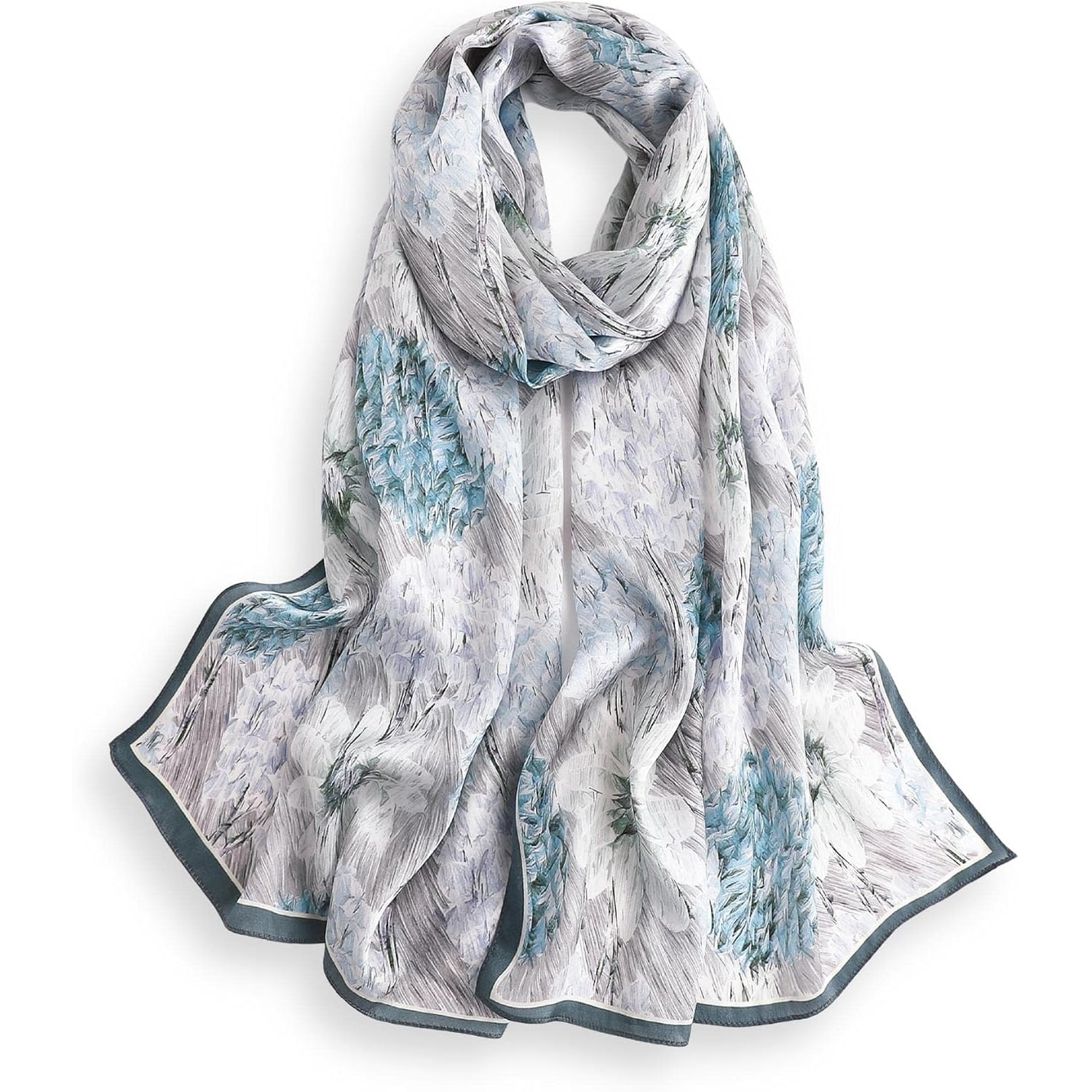
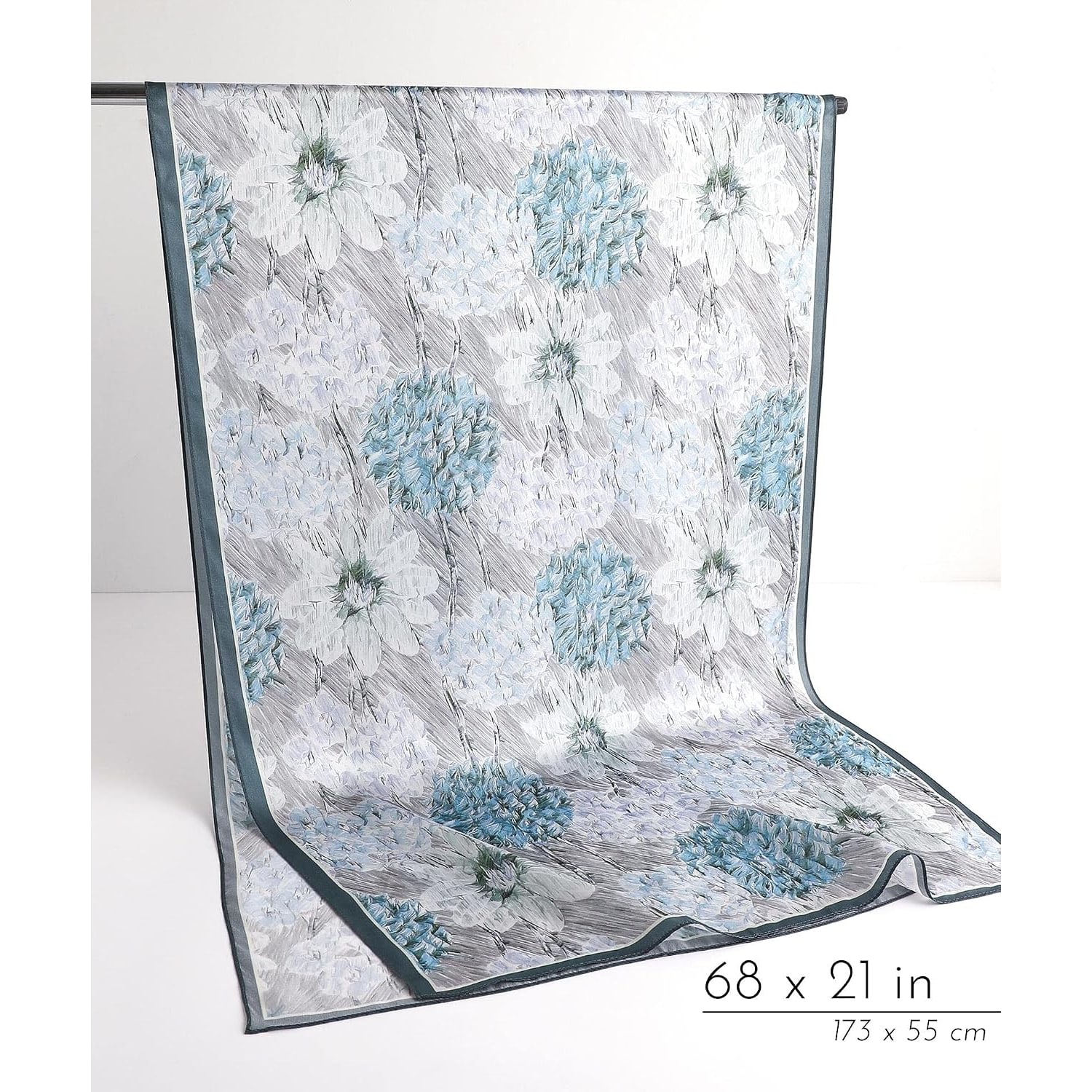
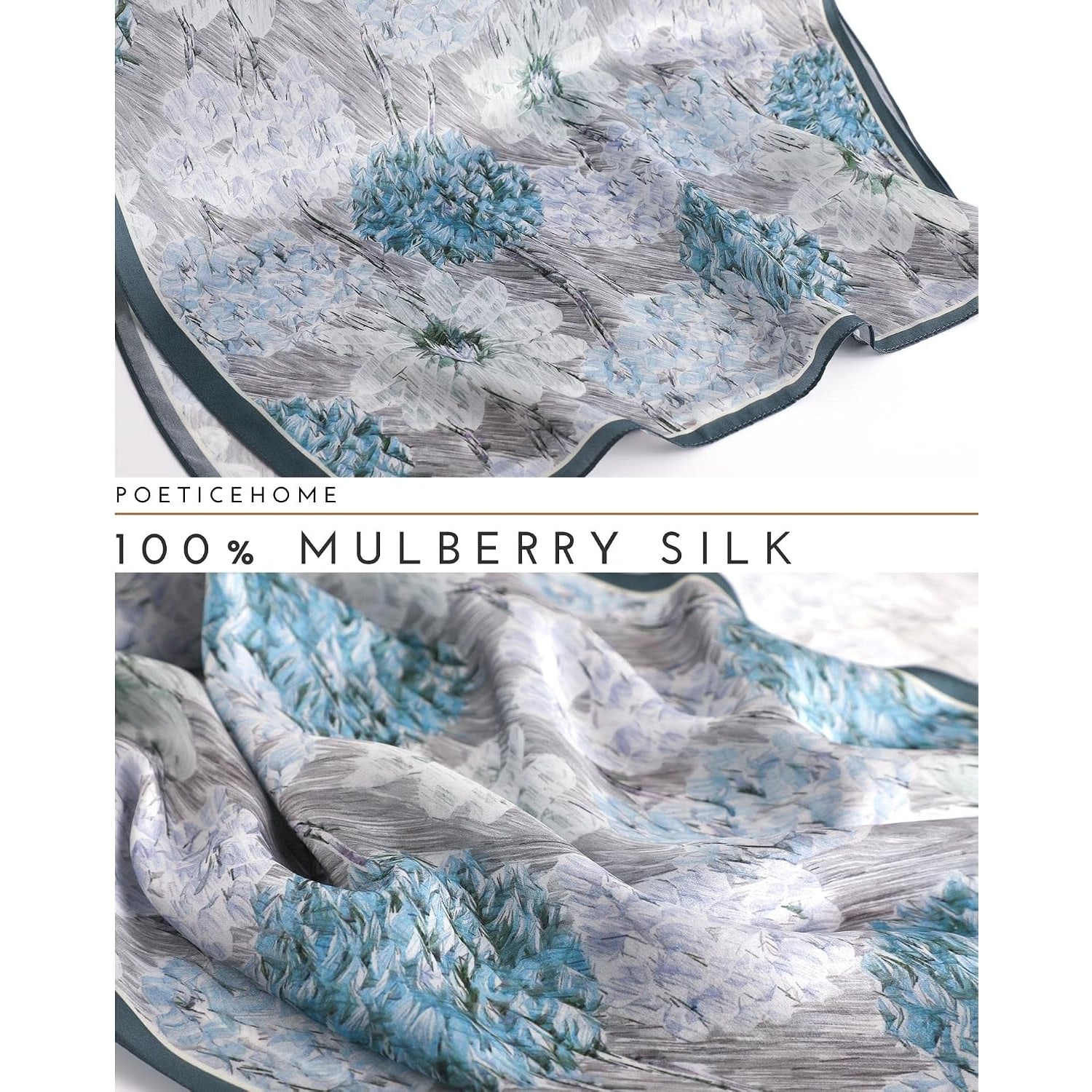
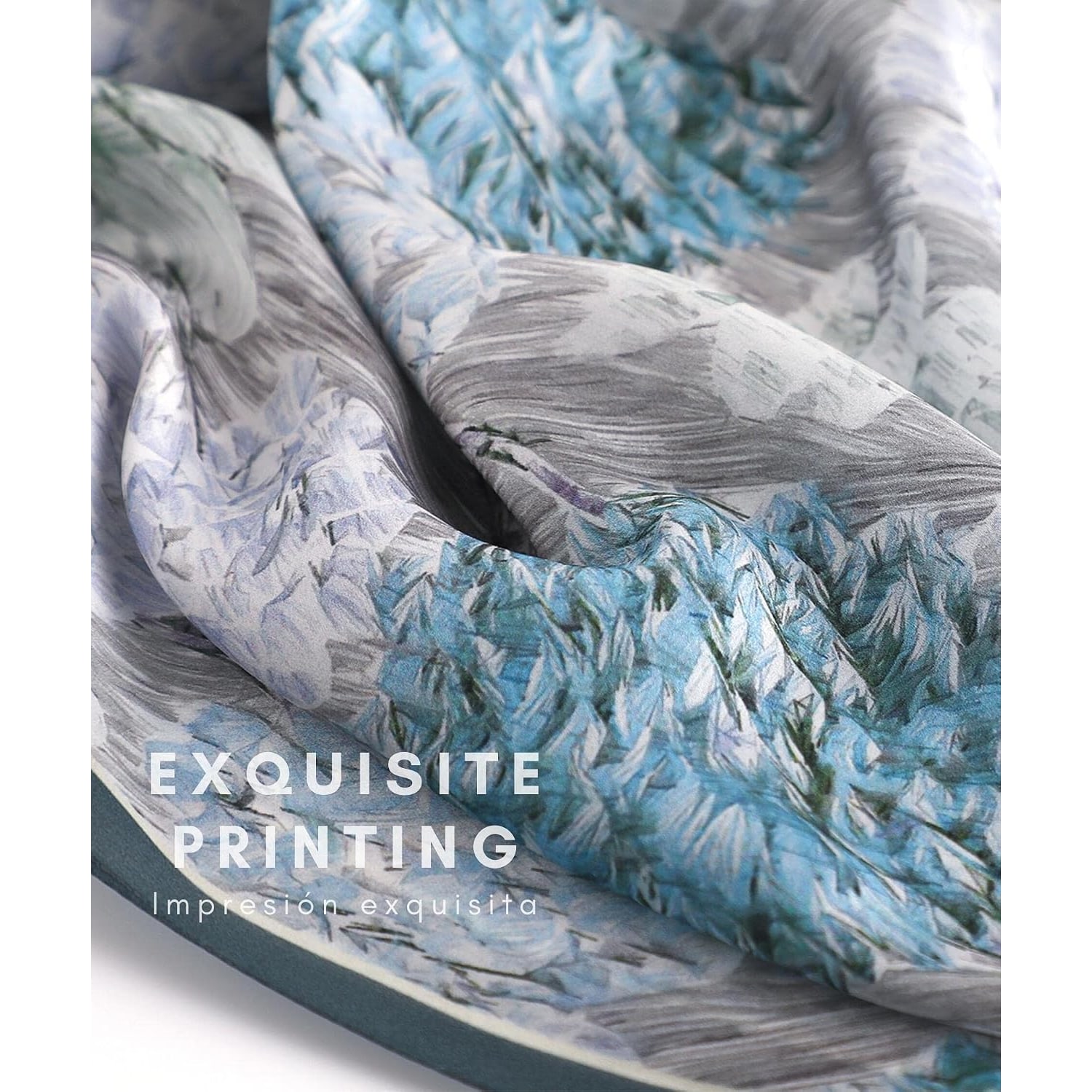
This one is 173 x 53 cm of 100% mulberry silk, printed with hydrangea blossoms in soft grey and blue. That is a lot of length in a very light fabric, and the combination is what makes it useful.
Why length changes everything
A 90 cm square scarf has one good move. You fold it into a triangle, you tie it at the throat, and that is largely that. It looks neat, but it is a single look.
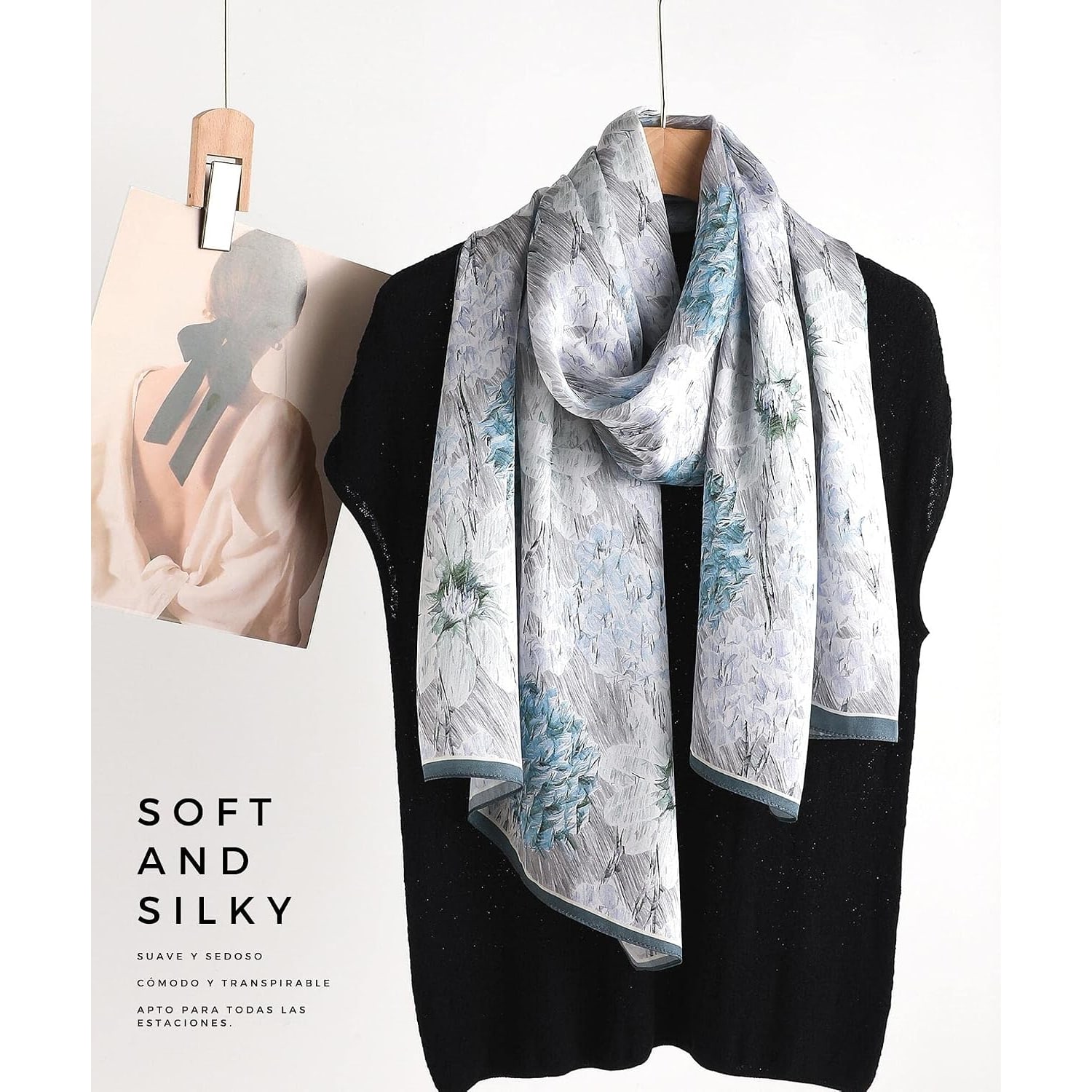
At 173 cm you get options. Wrap it twice around the neck and the ends still hang long enough to show the print. Loop it once and the scarf falls down the front of a coat in two straight panels. Leave it completely open and it reads as a light stole across the shoulders. Fold it lengthways into a 10 cm band and it becomes a hair scarf or a belt.
The 53 cm width matters too. Narrower than that and the scarf can only be worn folded. Wider and it starts to behave like a shawl, which is harder to knot neatly. Around 50 cm is the sweet spot where a scarf can go both ways, and this one sits just above it.
If you are weighing up the best long silk scarf for daily use, length in the 160 to 180 cm range is where most people land.
What mulberry silk actually does
Silk has a reputation for being fussy. In wear, it is the opposite. It is light, it does not itch, it warms up fast against the skin, and it packs down to almost nothing.
Mulberry silk specifically comes from silkworms raised on mulberry leaves, which produces a long and even fibre. That evenness is why the finished fabric feels smooth rather than slubby, and why a printed design sits cleanly on the surface instead of looking blurred. If you have only worn printed polyester before, the first difference you notice is the weight. Silk is lighter, and it moves with you rather than holding a stiff shape.
The second difference is the way it sits against the skin. Silk is smooth, so it slides over a collar, over hair, and over itself. That is what makes a silk neck scarf comfortable to wear all day, and it is also why a knot in silk needs to be snug rather than loose.
The trade-off is that silk needs hand washing. That is not a hardship, but it is a decision to make before you buy. If you want something you can throw in a machine every week, this is not that scarf.
Reading the colours
Hydrangea blossom in soft grey and blue is a quiet print. From across a room it reads as a soft, cool-toned blur. Up close you see the flower heads.
That matters because of how a scarf actually gets used. A loud print has to be the focus of an outfit, which means it only works on days when the rest of what you are wearing stays plain. A soft grey and blue print can go over navy, over denim, over black, over cream, over a charcoal coat. It does not compete.
Cool tones also tend to suit a wide range of complexions, and the grey keeps the blue from reading as too sweet. If you are shopping for the best floral silk scarf to wear often rather than occasionally, a muted palette gets more wear than a bright one.
Who this suits
Someone who commutes and wants a layer that lives in a bag. Someone who travels and needs an accessory that takes up no room in a case. Someone who wears a lot of plain, dark clothing and wants one piece that adds colour without changing the whole outfit.
It also works well as a first silk scarf. The shape is forgiving, the print is easy to wear, and the length means you are not fighting with it to get a knot to sit right.
It suits men just as well as women. A long rectangle tucked inside a coat collar is a standard look and has been for a very long time.
It is a less obvious choice if you want serious warmth. Silk takes the chill off, but in a cold winter you will want wool or cashmere over the top. Think of this as a three-season piece with a role in winter as an under-layer.
How to choose between shapes
A quick way to decide. If you mostly want to tie something small and tidy at the throat, a square works. If you want to drape, loop, wrap and occasionally cover your head, buy the long rectangle.
If you want the scarf to double as a hair accessory, length helps again. You can fold a 173 cm scarf into a narrow band with enough left to tie a decent bow, which is harder with a shorter piece. The same is true if you ever want to tie it through a bag handle.
Width is worth a thought. Around 50 to 55 cm lets you both fold narrow and open out. Much wider and you lose the narrow fold.
Looking after it
Hand wash only, in cool water, with a detergent made for delicates. A basin and five minutes is all it takes. Do not scrub, do not wring, and do not leave it soaking.
To dry, lay the scarf on a clean towel, roll the towel gently to press out the water, then unroll and dry the scarf flat or over a hanger. Keep it out of direct sun and off radiators. Heat and strong light are what dull a printed silk over time.
If you need to press it, use the lowest silk setting on your iron, work on the reverse side, and do it while the silk is still slightly damp. That takes the creases out quickly without stressing the fibre.
Two small habits extend the life of any silk scarf. Put perfume and hairspray on before you put the scarf on, not after. And store it loosely folded or rolled in a drawer rather than hanging it on a hook, which can mark the weave over months.
Getting more wear out of it
Try a few things that are easy to overlook. Thread it through your belt loops as a soft belt on a pair of trousers. Tie it around the handle of a plain tote to add colour to a bag you already own. Wear it flat under a blazer collar and let just the printed edges show.
On a plane, a long silk wrap works as a light cover across the shoulders or folded into a neck roll. On a bright day it gives your shoulders some cover without the heat of a cotton layer. These are the small uses that turn a scarf from an occasional item into something you reach for without thinking.
The short version
You are getting 173 x 53 cm of 100% mulberry silk with a hydrangea print in soft grey and blue. The length gives you several ways to wear it, the silk keeps it light and comfortable, and the muted palette means it works with clothes you already own.
Hand wash it in cool water, dry it out of the sun, and press it cool on the reverse. Do that and it will still look right in five years.
If you want one accessory that covers the office, travel and evenings, a long silk rectangle in a quiet print is about as close to a safe bet as accessories get.