
The complete guide
Buying Guide
The two things that ruin a sleep mask
Almost nobody gives up on sleep masks because the idea is wrong. They give up because of one of two failures.
The first is light leaking in at the nose. You put the mask on, it feels fine, and then you notice two small wedges of grey light sitting right at the edge of your vision. That happens because most masks are cut with a straight bottom edge, and a straight edge cannot follow the slope of a human nose. The mask bridges the gap instead of closing it.
The second is the strap. A narrow band of elastic carries all the tension in one thin line. At eleven at night it feels like nothing. At four in the morning it feels like a headband you forgot to take off. People wake up, push the mask onto their forehead, and it ends up on the floor.
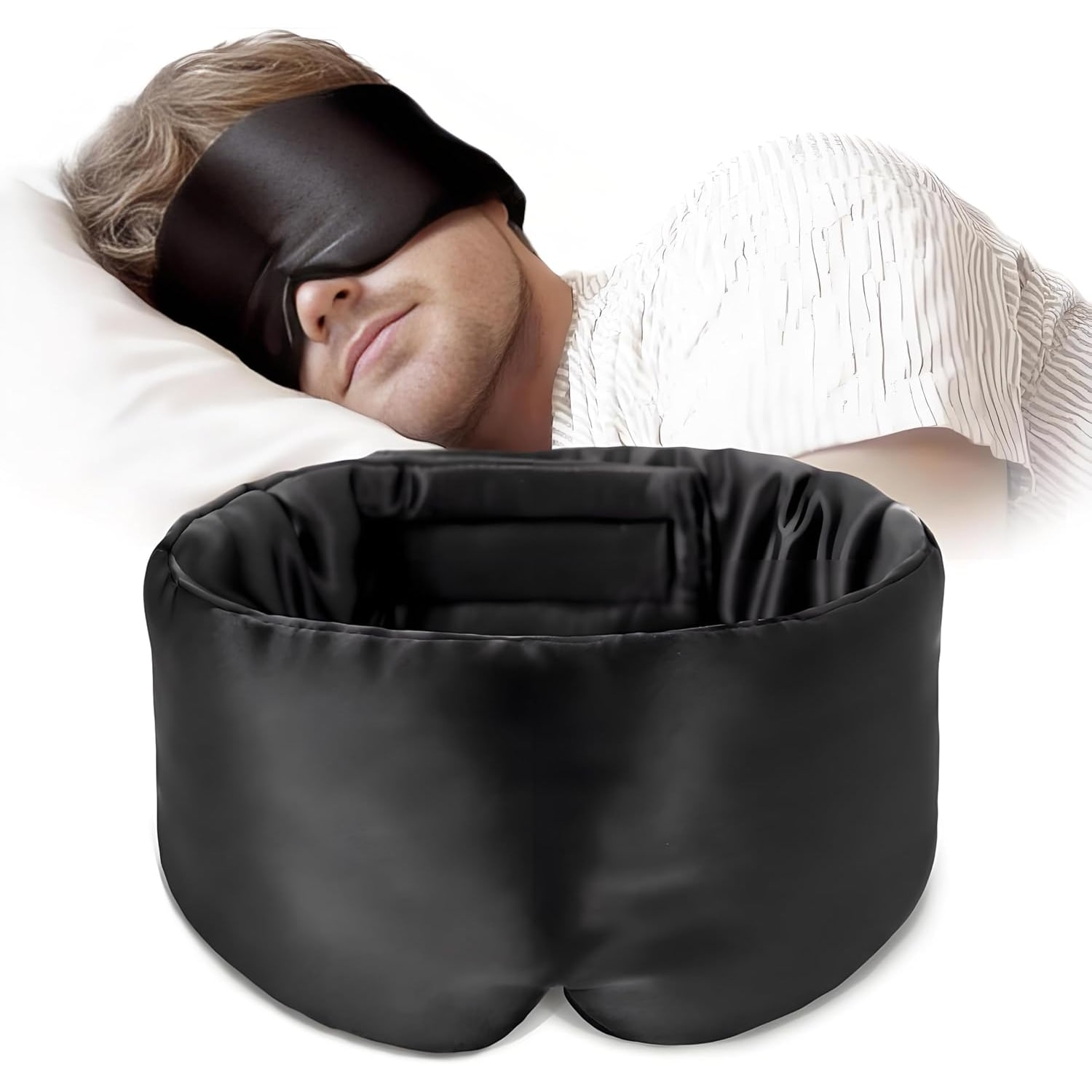
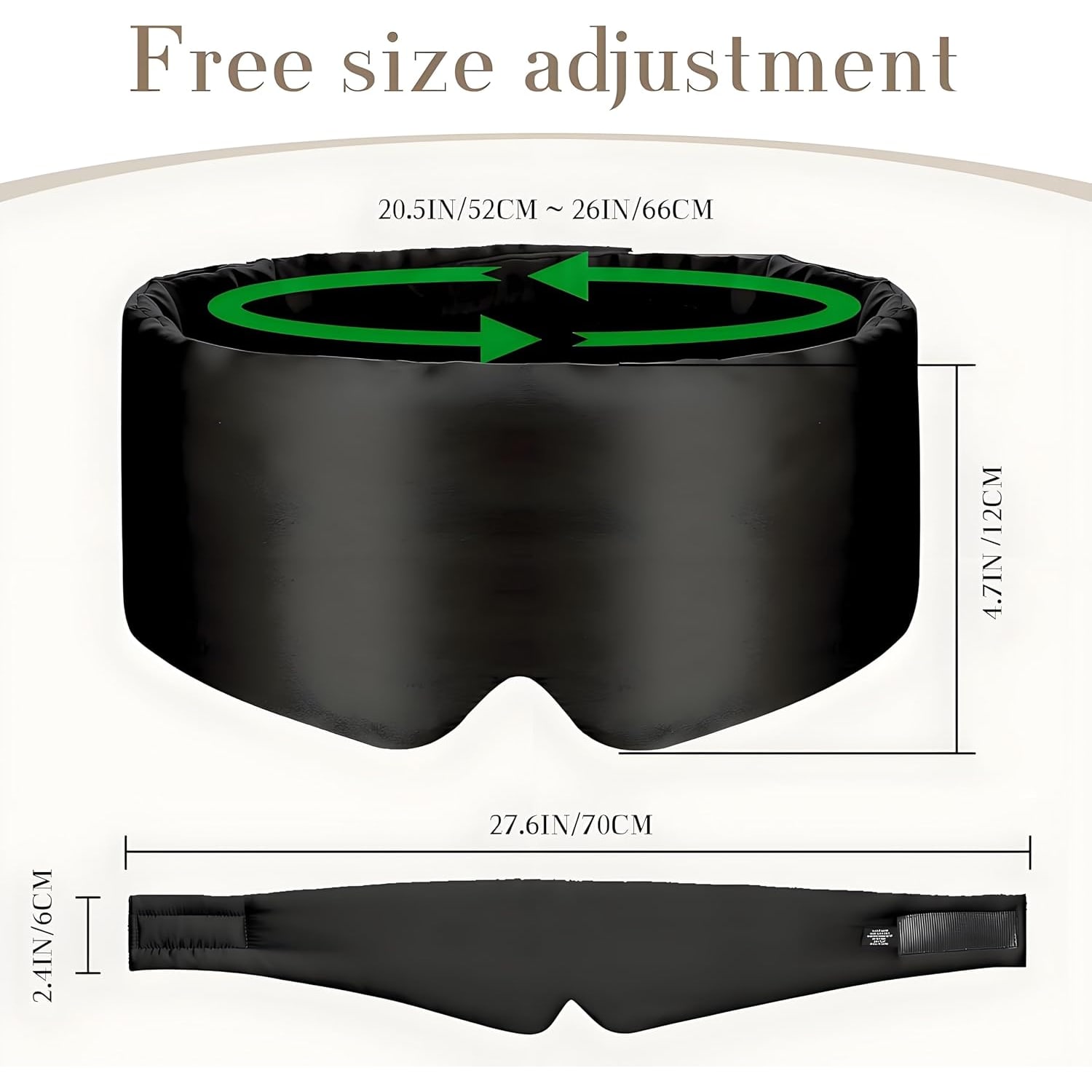
This black 19 momme large silk sleep mask is shaped around both problems. The nose section is contoured rather than cut flat, and the strap is deliberately wide with a hook and loop closure. Those are not glamorous features. They are the ones that decide whether you still have the mask on at sunrise.
What momme means and why 19 is the number to look for
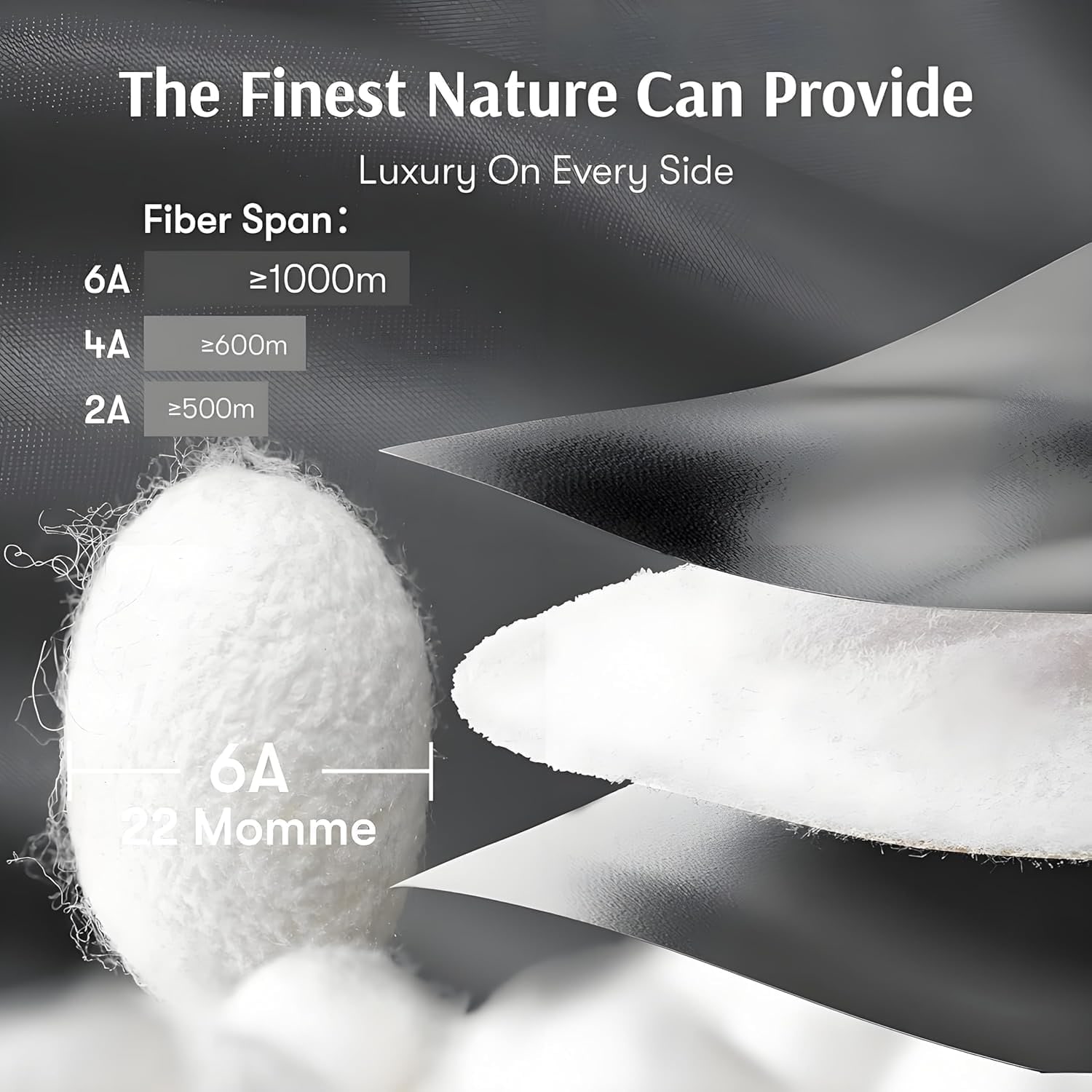
Silk is sold by momme, written as mm in some listings, which is a weight measure rather than a thickness measure. It tells you how dense the weave is. Lower momme silk is thinner and lighter. Higher momme silk is denser and heavier.
For masks and pillowcases, the useful range sits roughly between 16 and 25. Below that the fabric starts to feel insubstantial and a little see-through. Above it, you are paying more for weight you cannot really feel through a mask that barely touches your face.
Nineteen momme lands nicely in the middle. It has enough body that the mask holds its shape when you pick it up, and enough drape that it follows the contour of your face instead of standing away from it. If you have handled a cheap satin mask before, the difference in hand is immediate.
The grade 6A marking refers to the raw silk filament, not the finished mask. It describes long, even filaments, which is what produces a smooth and consistent surface. Think of it as a measure of the thread before anything was woven.
Why silk rather than cotton or satin
Polyester satin is the most common imitation. It looks shiny in a photograph and costs very little to make, which is why it floods the market. It is not silk. It is a synthetic woven to mimic the surface of silk.
The practical difference shows up in friction and in heat. Mulberry silk is a natural protein fibre with a smooth surface, so skin and hair slide across it with less drag than cotton. For anyone who turns over several times a night, that is the difference between a mask that moves with you and one that pulls at the side of your face.
Cotton is comfortable but it is grippier and it holds moisture differently. Silk tends to feel cooler against the face, which matters when the mask covers a decent area of skin for seven or eight hours.
If you are weighing up the best mulberry silk eye mask against a budget satin one, the honest comparison is fibre content and momme weight. Everything else is secondary.
The flat cut over the eyes
There are broadly two shapes on the market. Contoured or moulded masks have domed cups that arch over the eyes, usually built on a foam or moulded insert. Flat masks lay a single panel of fabric across the eye area.
This one is flat cut. The silk rests over closed eyes without pressing on the lids, so you can blink underneath it. That sounds minor until you have worn something that pushes down on your lashes all night.
Moulded masks have their fans, and they do create a tunnel of darkness that some people love. The trade-off is bulk. They do not fold down small, they can feel warm, and if you sleep on your side the dome gets squashed into your eye socket anyway. A flat silk panel packs into a pocket and stays comfortable in any position.
Getting the strap right
This is where most people go wrong on the first night.
The instinct is to tighten the strap until the mask feels secure. Do not do that. A hook and loop silk sleep mask with a wide strap only needs enough tension to hold position. If you can slide a finger comfortably between the strap and your head, you are about right.
Too tight, and the mask presses the shaped nose section into your face and you wake up with a mark. Too loose, and it rides up when you roll over. Spend the first two or three nights adjusting it rather than deciding after one attempt.
Lift long hair clear before fastening. Hook and loop will grab hair if you close it carelessly, and a tangle at two in the morning is nobody's idea of restful. Close the strap first, then let your hair down over it.
Who this suits
Side sleepers do well with it, because the flat cut and the wide strap both lie closer to the pillow than a domed mask with a thin band.
People with a streetlight, an alarm clock display, or a partner who reads late will notice the nose shaping most. That is the specific gap it was designed to close.
Shift workers and daytime sleepers are the hardest case, because daylight is far brighter than anything you face at night. A mask helps a great deal, but combine it with a blind or curtain if you can. A good silk night mask for shift workers works best as part of a setup rather than on its own.
Travellers get the packing advantage. Silk weighs almost nothing and folds to the size of a wallet.
Keeping it in good condition
Hand wash in cold water with a gentle detergent made for delicates. That is the stated care and it is worth following.
Close the hook and loop strap before the mask goes anywhere near water. Open hooks drag across silk and pull threads, and that is by far the most common way these masks get damaged.
Do not wring it. Lay it in a towel, roll the towel, and press. Then dry it flat, out of direct sun and away from radiators. Heat dulls silk over time.
Wash it every week or two if you wear it nightly, and sooner if you use creams or oils before bed. Little and often is much kinder to the fibre than leaving marks to set and then scrubbing at them later.
Skip the tumble dryer entirely. There is no version of that story that ends well.
The short version
Look for real mulberry silk, not satin. Look for a momme weight around 19, which is where the fabric feels dense without feeling heavy. Look for a shaped nose section, because that is where light actually gets in. And look for a wide strap, because a thin one will wake you up before the sun does.
This mask has all four. The rest is just getting the tension right and washing it properly.