
The complete guide
How to Choose and Wear a 66cm Square Silk Scarf
The problem with most scarves
Most people own a scarf that never gets worn. It is either too big, so it swallows the neck and sits like a bundle under a coat, or too small, so it only does one knot and looks fussy. Or it is a fabric that fights back: a cotton square that will not lie flat, a polyester one that squeaks against a collar and holds static.
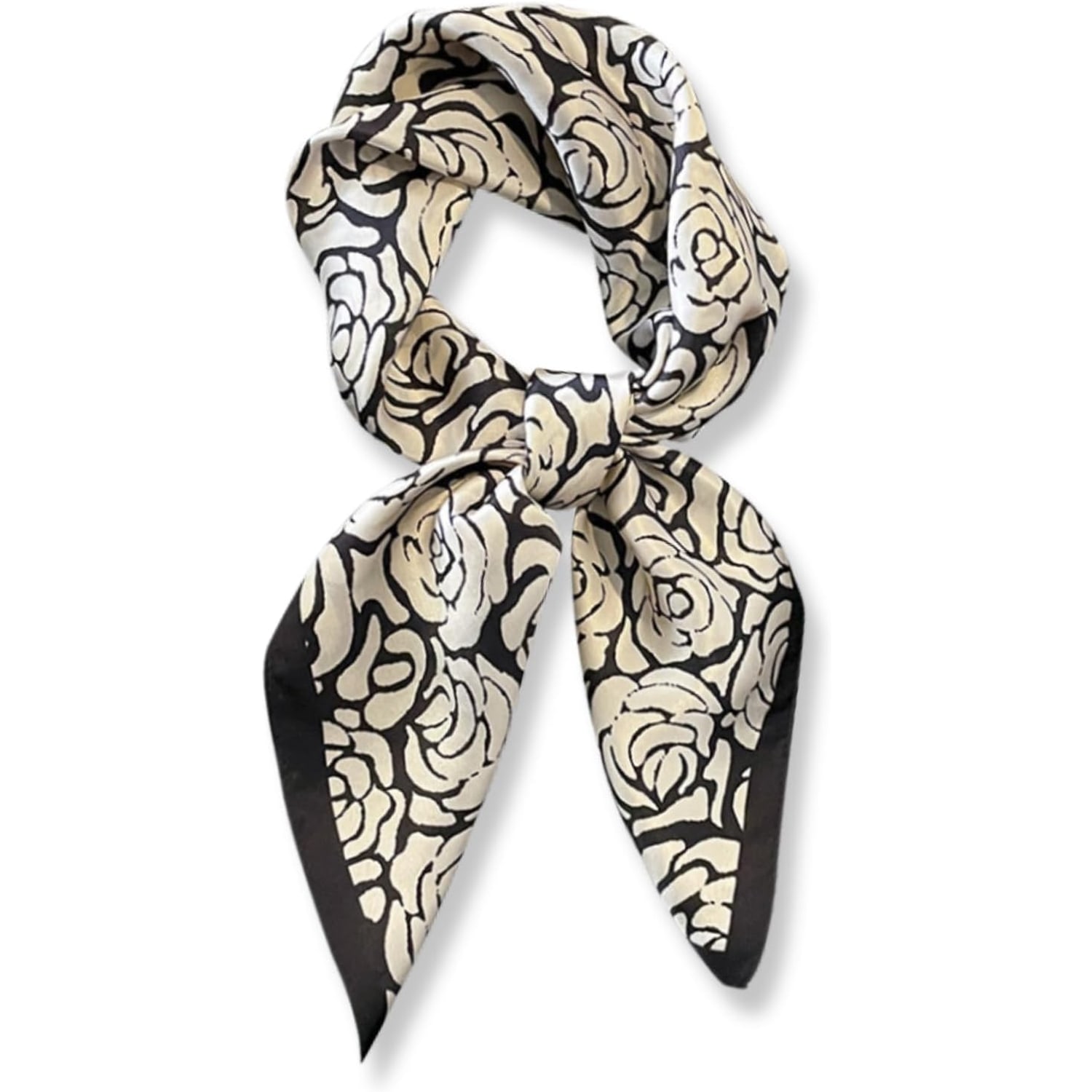
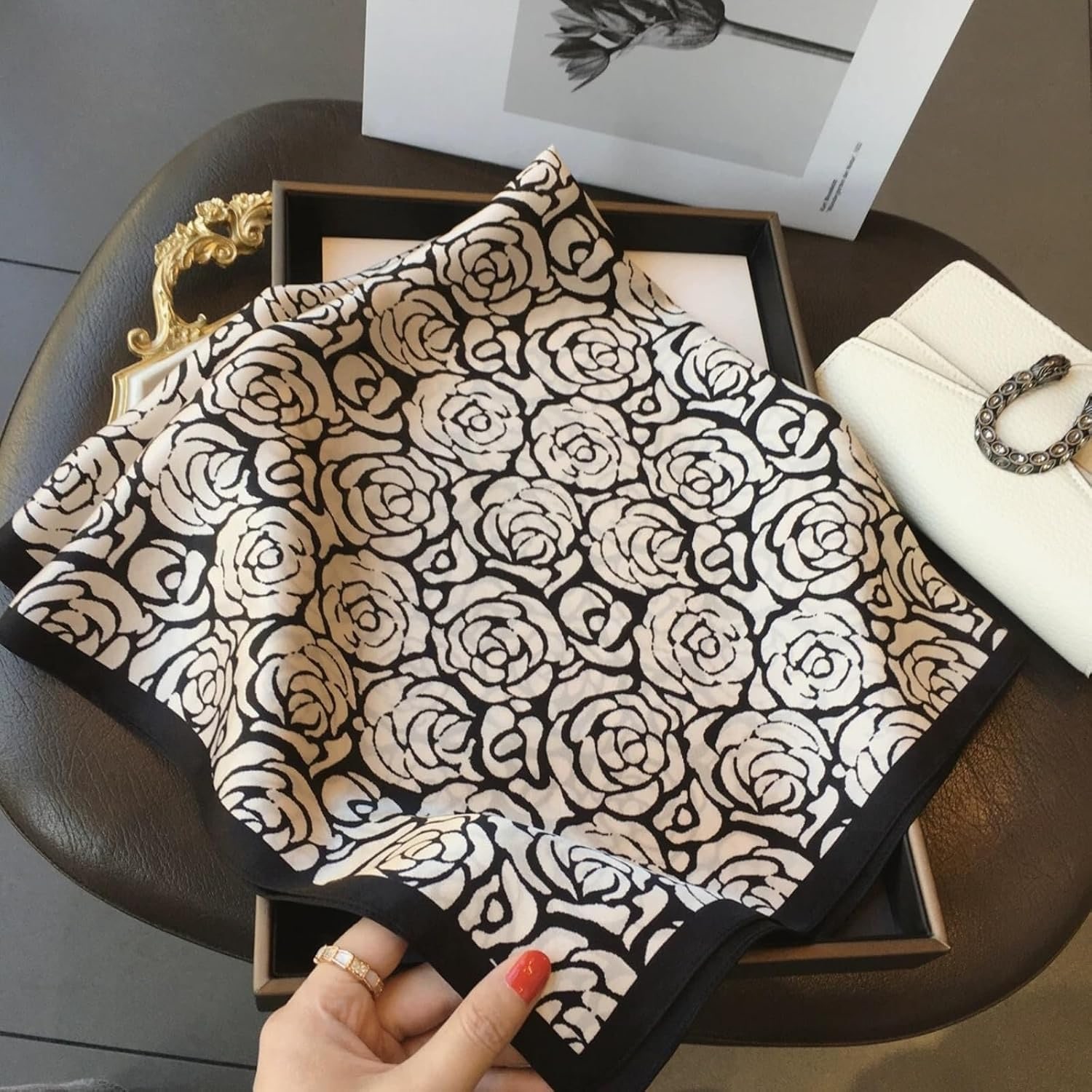
A 66 cm square of silk solves a lot of that at once. It is the middle size, the one that does the most jobs, and silk is the fibre that behaves best when you ask it to fold, knot and sit against skin. This particular scarf is 100% mulberry silk, printed with cream roses on a black ground, and it is about as versatile as a single accessory gets.
Why 66 x 66 cm is the useful size
Square silk scarves come in roughly three families. Small squares, around 50 to 55 cm, are neck only. They tie into a tight little knot and look sharp with a shirt, but they will not cover your head and they disappear under a heavy collar. Big squares, 90 cm and up, are shoulder pieces. They drape beautifully, but knotted at the throat they create real bulk, and in a handbag they take up actual room.
The 66 cm square sits in between, which is why it keeps turning up as the recommended first buy. Folded on the bias it makes a band long enough to wrap the neck once and tie with ends that tuck away. Opened flat it covers the crown of the head with enough left over to tie under the chin or at the nape. Folded corner to corner it is a proper triangle bandana. Rolled narrow it threads through belt loops or wraps a bag handle twice.
In practice that means one scarf and four or five looks, which is the difference between an accessory you wear and one you keep meaning to wear.
What mulberry silk actually does
Mulberry silk is made by silkworms fed exclusively on mulberry leaves, which produces a long, even filament. Long filaments weave into a smooth, continuous surface with very few loose fibre ends. That is the reason silk feels the way it does: cool when you first touch it, slippery under the fingers, and quiet against a collar.
It also matters for how the scarf hangs. Silk drapes. It does not hold a shape the way starched cotton does, so a knot settles into itself rather than standing proud, and folds fall soft around the neck instead of standing away from it. If you have ever tied a cotton bandana and watched it sit stiff off the throat, you will notice the difference immediately.
The smoothness has a practical side too. Hair and skin slide across woven silk with less friction than across a cotton weave. That is a property of the fabric, not a treatment, and it is the main reason silk hair scarves are popular with people who wear their hair up or wrap it overnight.
One honest note. The maker states the fibre and the size but does not state the momme weight, the weave or the hem finish. Momme is the number used to describe how heavy a silk is, and a heavier momme feels more substantial and drapes with more weight. If that figure is important to your decision, ask us before you order rather than assume.
Reading the print
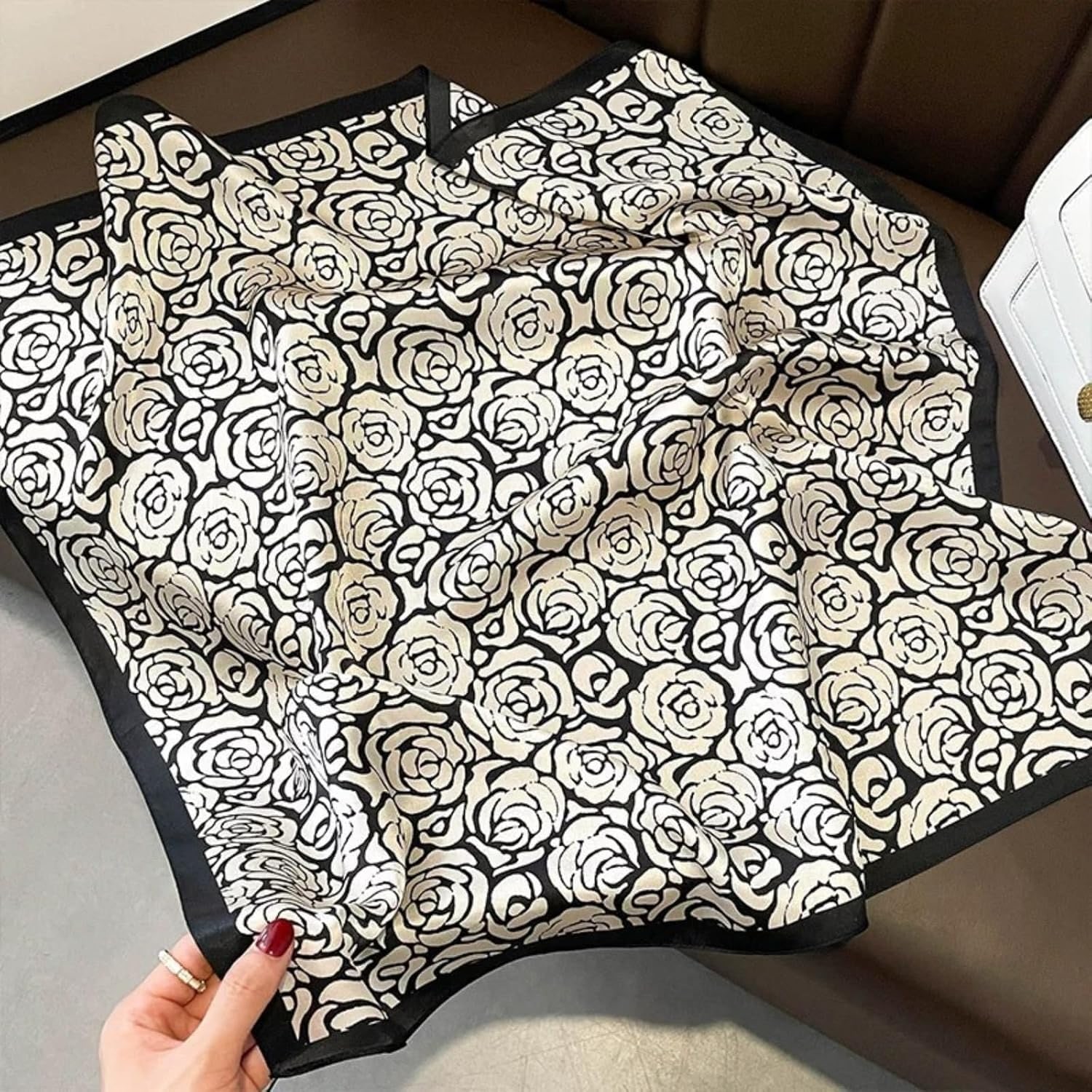
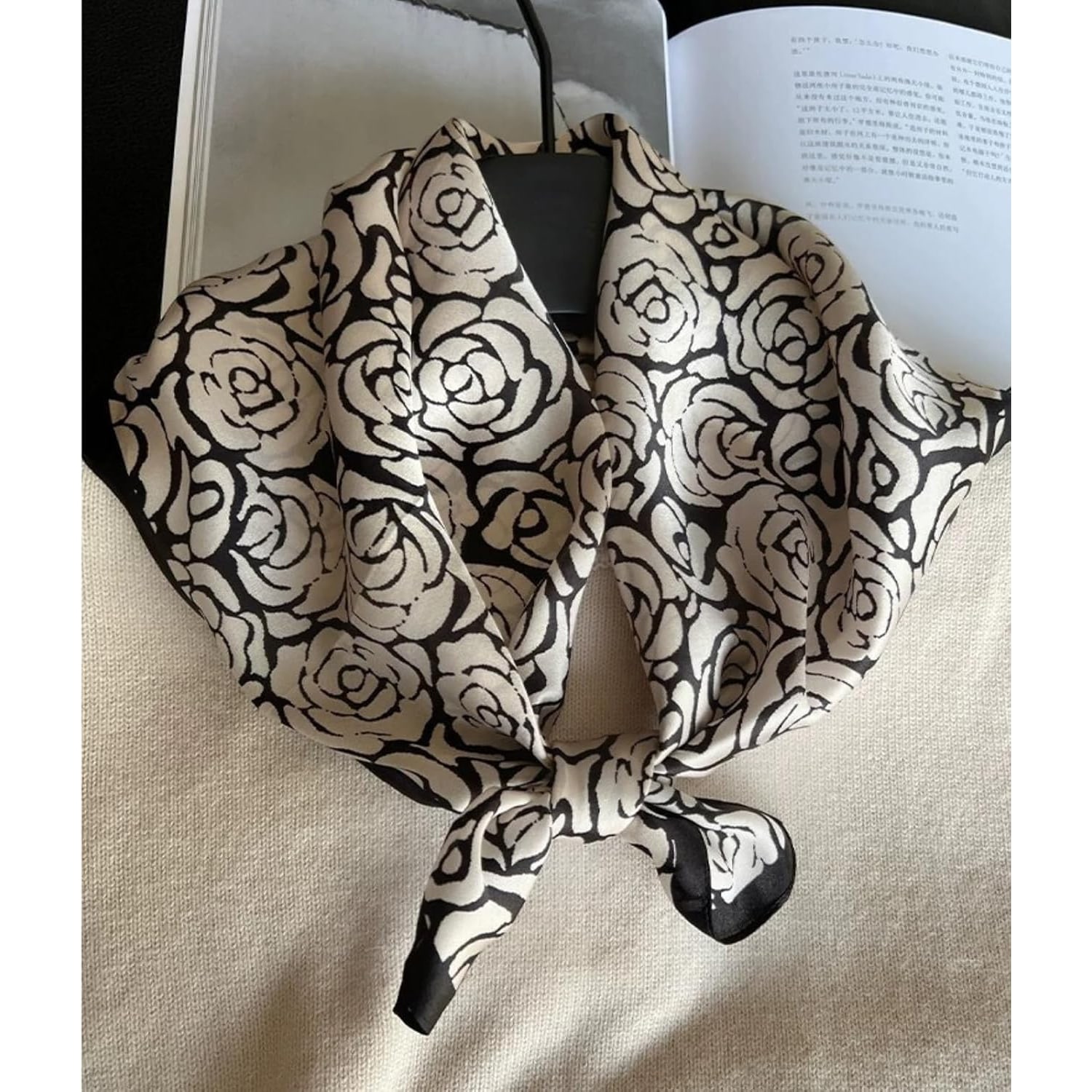
Cream roses on black is a clever combination for everyday wear. Step back a few metres and the scarf reads as a dark neutral with some lightness in it. Come closer and the flowers appear, with soft petal edges and lighter leaf shapes breaking up the ground.
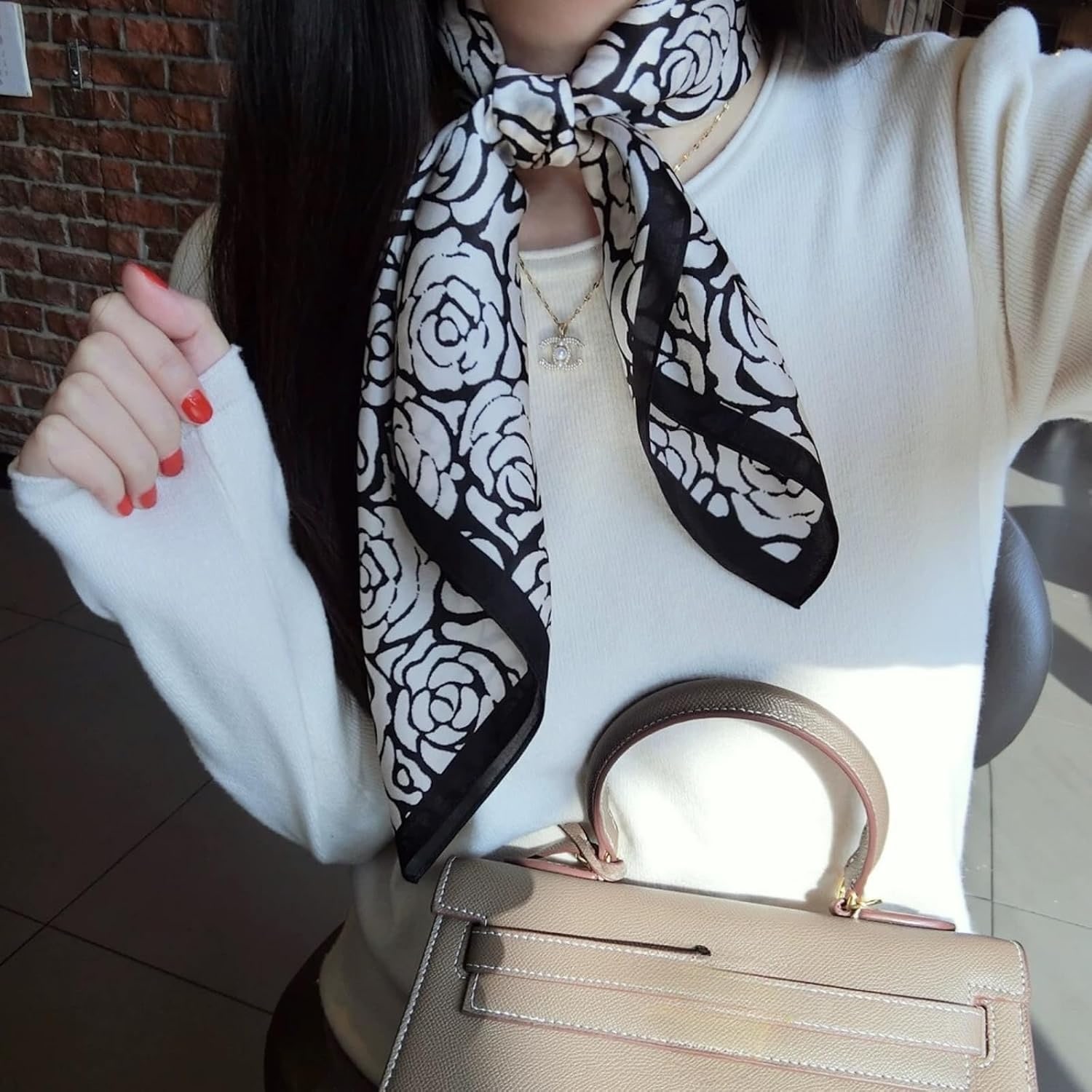
That double reading is what makes it easy to wear. A bold, high-contrast print dominates an outfit and tells you what to wear it with. This one does not. It goes with navy, grey, denim, camel, white and of course black, and it adds interest to a plain jumper without turning into the whole look.
It is also forgiving about how you fold it. With many prints, folding chops the design and you lose the point. With a scattered floral, whatever ends up showing still looks like the scarf.
Who it suits
If you want one accessory that works on a weekday and a night out, this is the category to be in. It suits people who wear a lot of plain, dark clothing and want one piece of pattern. It suits anyone who travels, because it weighs almost nothing and folds flat into the front slot of a bag. It suits people who put their hair up and want something to tie around it in the afternoon.
It is less suited to anyone looking for warmth. A silk square cuts a draught at the open neck of a coat and takes the sting out of strong air conditioning, but it is not a winter scarf and it will not replace wool in January.
It also makes a reliable gift, mostly because there is no size to guess. A scarf fits everyone. The black and cream pairing lands in the safe zone for people whose wardrobes you do not know in detail.
Three ways to tie it
The neck band. Fold the square corner to corner, then keep folding the long edge over on itself until you have a band four or five centimetres wide. Wrap it once around the neck and tie a simple knot slightly off centre. Tuck the ends inside the band. This is the one that sits flat under a collar.
The head scarf. Open it flat, fold once into a triangle, and lay the long edge across the forehead or just behind the hairline. Bring the two side points behind the head, cross them, and tie at the nape over the third point. Tucking the loose point under the knot stops it flapping.
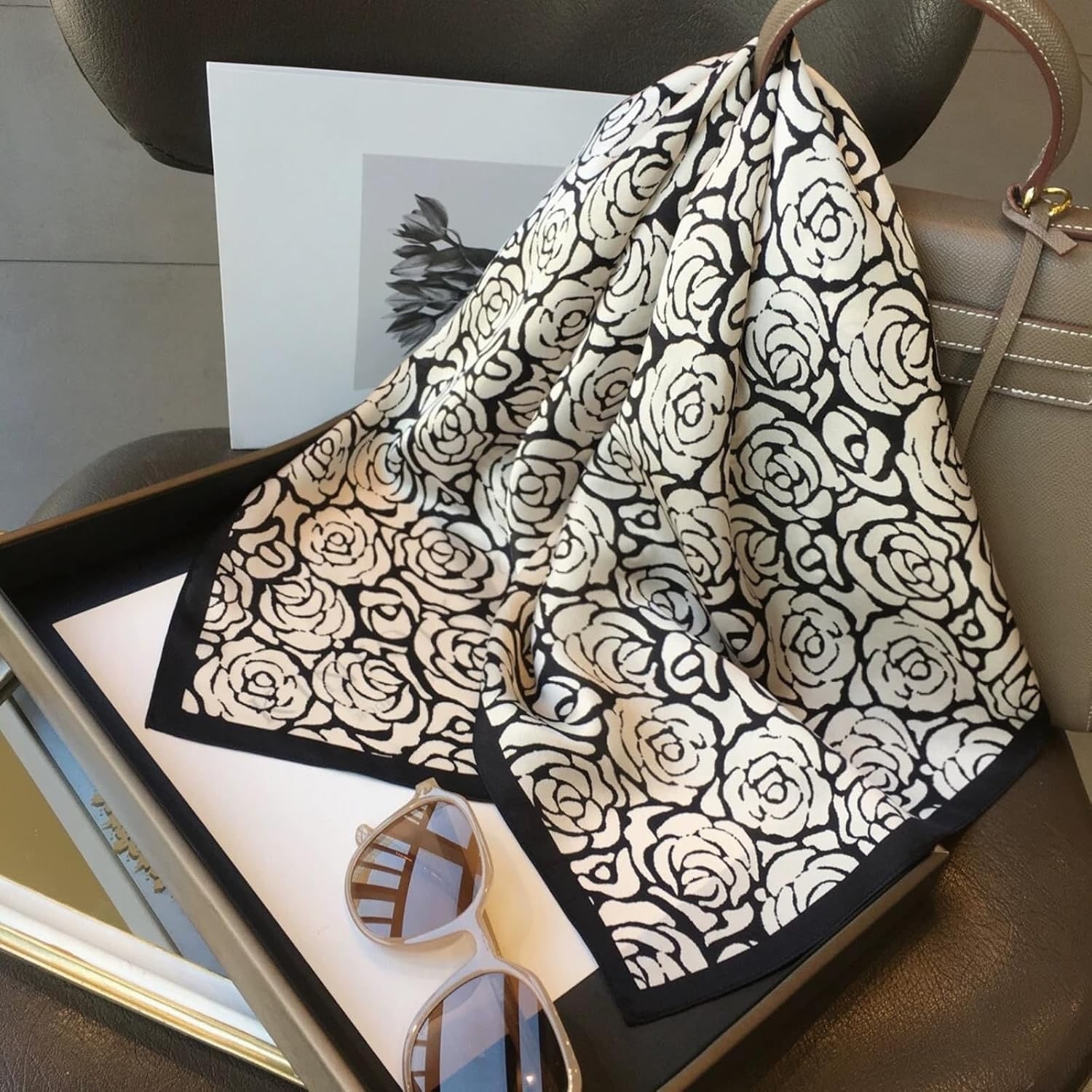
The bag tie. Roll the scarf into a narrow rope, loop it twice around the base of a handle, and tie a simple bow. Let the ends hang about ten centimetres. This one takes thirty seconds and changes the character of a plain bag.
Looking after it
The care instruction is hand wash only, and it is worth following. Fill a basin with cool water, add a small amount of detergent made for silk or wool, and move the scarf gently through the water for a minute or two. Do not rub it against itself and do not wring it out. Rinse in clean cool water, lay it on a towel, roll the towel up and press to take out the water, then dry it flat and away from direct sun or a radiator.
Press it on a low setting, on the reverse side, ideally while it is still a little damp. If your iron runs hot, put a thin cotton cloth between the iron and the silk. Let perfume and hairspray dry fully before the scarf touches your neck, as alcohol-based sprays can mark printed silk over time.
Store it folded loosely in a drawer or a soft pouch. Avoid hanging it from one corner on a hook for weeks at a time, because the weight slowly pulls the weave out of true.
The short version
A 66 x 66 cm square in 100% mulberry silk, printed with cream roses on a black ground. It ties at the neck, covers the hair, threads through belt loops and wraps a bag handle, and it folds down to nothing when you are done. Hand wash it, dry it flat, press it cool. The momme weight and weave are not stated, so ask if that matters to you. If it arrives and it is not right, you have 14 days to send it back under the EU right of withdrawal.