
The complete guide
How to Choose and Wear a Square Silk Scarf
The problem a small square solves
Most wardrobes have a gap that is hard to name. You have the coat, the shirt, the jeans, the boots, and the whole thing still looks like it got dressed in the dark. Nothing is wrong. Nothing is interesting either.
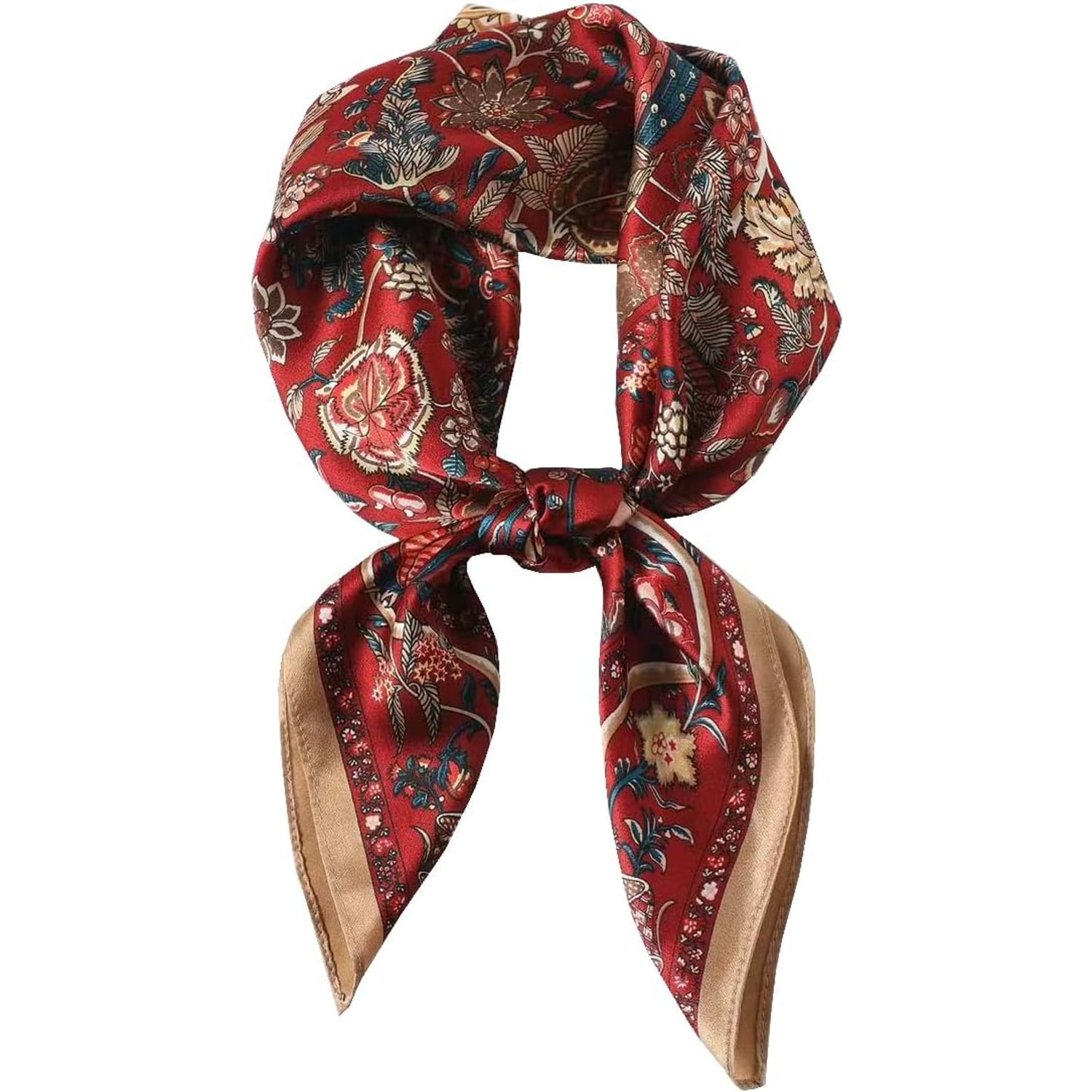
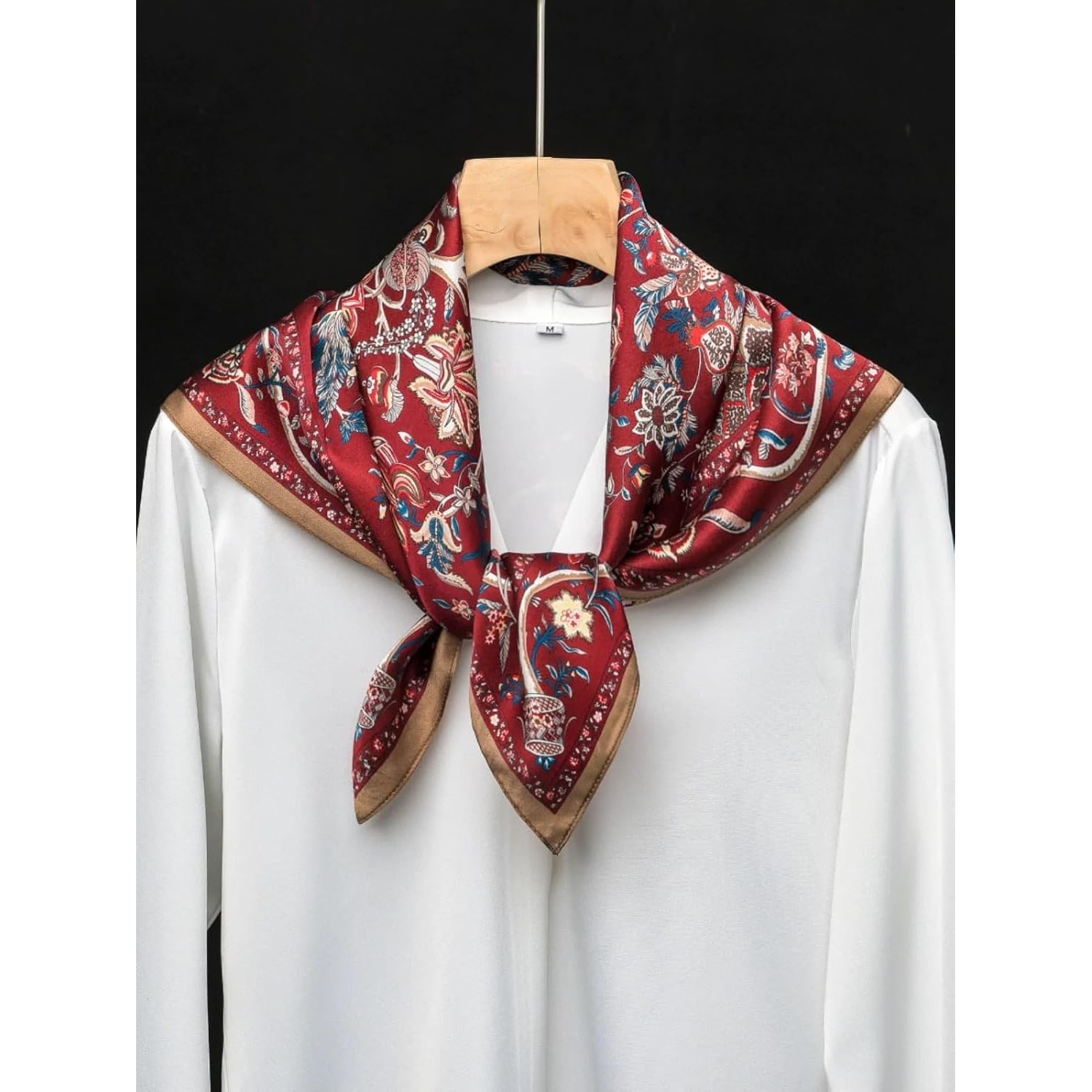
A square silk scarf fills that gap faster than almost anything else, and it does it without changing the clothes you already own. Tie a garnet red paisley at the throat and a plain navy jumper suddenly looks considered. Fold the same scarf into a band, push your hair back with it, and a rushed morning reads as deliberate.
That is the practical case for a scarf like this one. It is small, it is light, and it does a disproportionate amount of work.
What you are actually buying
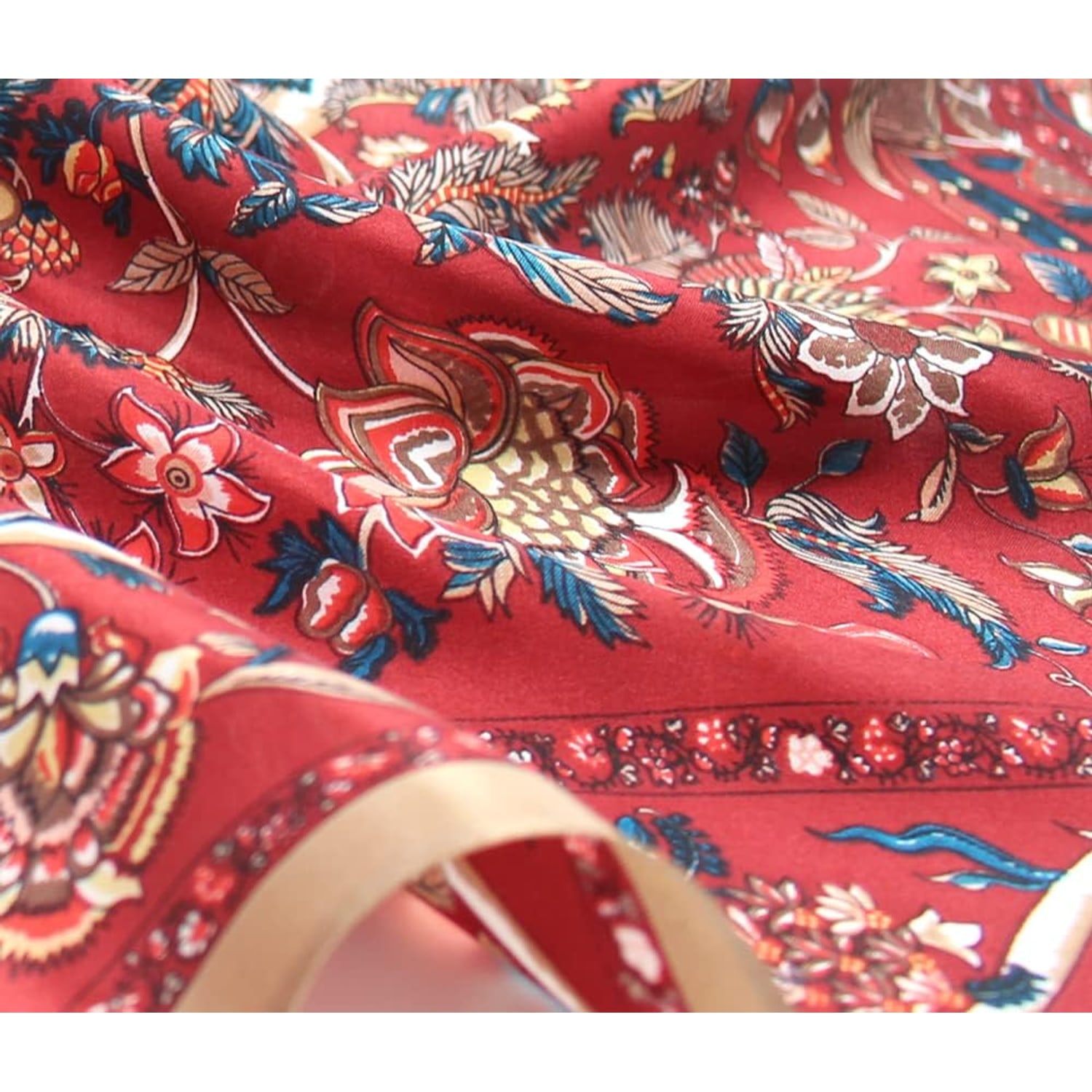
The facts are short. This is a square scarf, listed at 65 x 65 to 68 x 68 cm, which is roughly 27 inches each way. The maker lists it as 100% silk. The paisley print is applied to one side, so the face shows the pattern at full strength and the reverse shows a gentler version of it. The listed weight is about 25 g.
That weight figure is worth pausing on, because it tells you what kind of silk this is. Twenty-five grams across a 68 cm square is a fine, light fabric. It will drape close to the body, take a knot easily, and pack down to nothing. It will not sit stiffly in sculpted folds the way a heavy twill does, and it will not add warmth.
Momme weight, weave and hem finish are not stated, so we will not guess at them. What we can say is that the combination of size, weight and one-sided print describes a classic everyday printed silk square rather than a heavyweight statement piece.
Why square, and why this size
Scarves come in squares, rectangles and long thin bands, and each shape does something different. A long rectangle is for wrapping and hanging. A square is for folding and knotting.
Fold a square corner to corner and you get a triangle, which is the base for almost every neck style. Keep rolling that triangle from the long edge and you get a band, which is what you use for hair, for a tight neckerchief, or for tying round a bag handle. Leave it open and you have a head covering.
Size changes what is possible. A 50 cm square is small, good for a bag or a tight neck knot but awkward over hair. A 90 cm square is generous, good for shoulders and loose head wraps, but it can look like a lot of fabric at the neck. The 65 to 68 cm range sits in the middle and is the most useful single size to own. It is the reason this is the size most people reach for when buying a 100% silk square scarf for general wear.
Who it suits
If you wear a lot of plain, solid-colour clothing, a printed square is the easiest way to break it up. If you wear a lot of pattern already, a scarf like this is harder to place, though a deep red paisley will still work against solid navy or black.
It suits people who want to look put together with minimal effort. It suits people who travel light, because it weighs almost nothing and takes no space. It suits anyone who likes the idea of accessories but does not want to think about sizing.
It does not suit someone looking for warmth. If you want something to wrap against a cold wind, buy wool or cashmere and keep the silk for the shoulder seasons and indoors.
How to wear it four ways
At the neck. Fold corner to corner, then roll from the long edge until you have a band about three to five centimetres wide. Wrap it round your neck and tie a square knot slightly off centre. Tuck the ends into a collar or leave them out. This is the version most people wear most often.
In the hair. Roll the same band, but narrower. Tie it around your head with the knot either on top, at the side, or underneath at the nape. Silk is smoother than cotton, so expect it to slide a little until you find a knot that grips. Rolling tighter helps.
As a head scarf. Leave the triangle unrolled, place the long edge across your forehead, and tie the two ends under your chin or behind your neck. At 68 cm this covers the head comfortably but will not reach your shoulders.
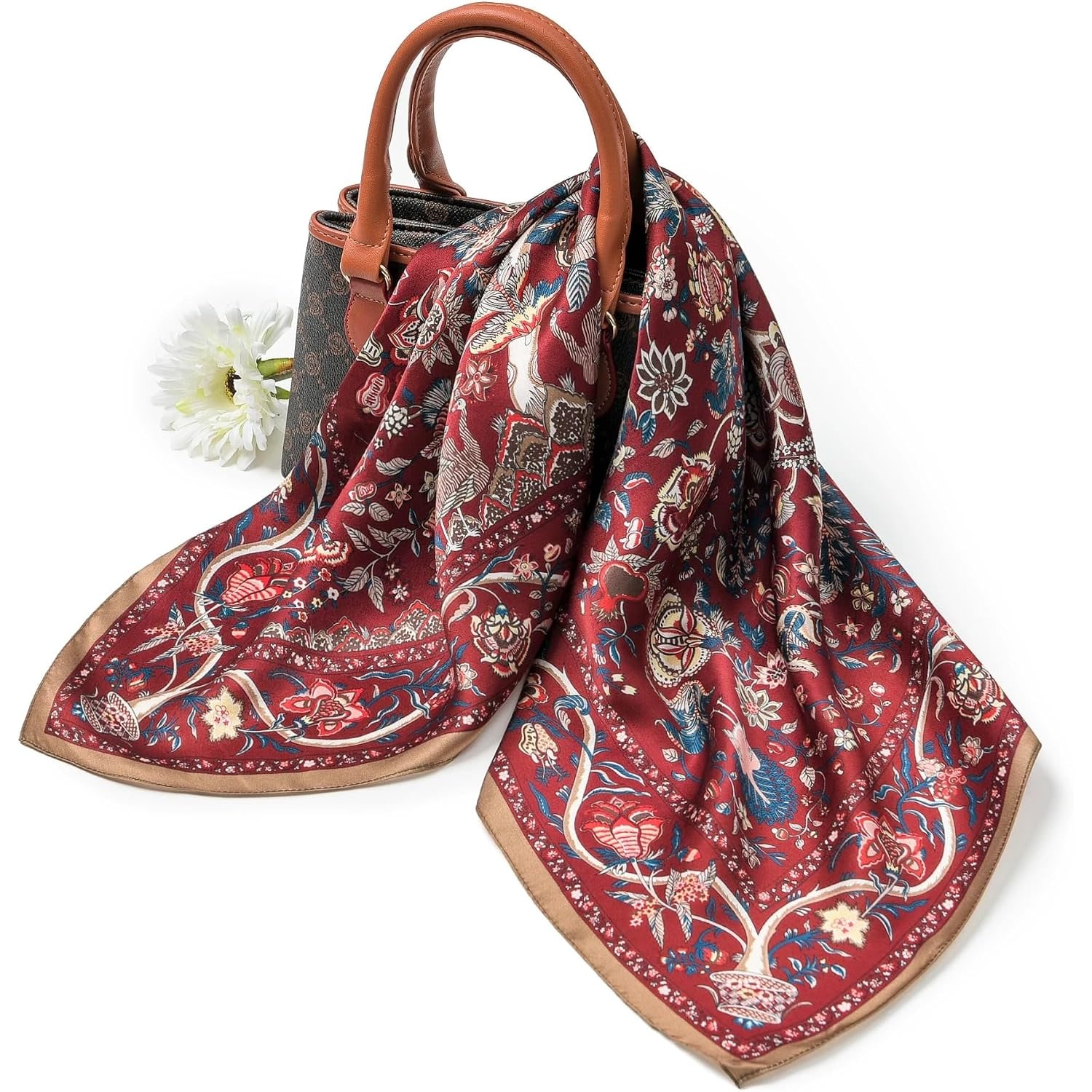
On a bag. Roll it loosely and tie it round the base of a handle with a simple knot and two trailing ends, or make a small bow. This is the lowest effort option and often the one that gets the most comments.
Styling garnet red paisley
Paisley is an old pattern with a lot of mileage left in it. It reads as classic rather than of-the-moment, which means a scarf like this does not date in the way a seasonal print does.
Garnet red is a warm, deep red. It is a flattering shade against most skin tones because it is not harsh. Put it with navy and it looks traditional. Put it with camel or tan and it looks warm. Put it with grey and it does the heaviest lifting, since grey needs something to stop it going flat. Against black it gives a single point of colour without competing.
The one pairing worth thinking twice about is another red in a different tone. Two reds that are nearly the same but not quite tend to look accidental.
Looking after it
Silk has a reputation for being difficult. It is not difficult, it is just specific.
Hand wash only, in cool water, with a detergent made for delicates. Swish it, do not scrub it. Rinse until the water runs clear. Never wring or twist, because that is what puts permanent creases into fine silk. Instead lay the scarf flat on a towel, roll the towel up, press, and unroll. Then dry flat or hang in the shade.
Iron on the lowest silk setting, on the reverse, while the scarf is still slightly damp. Damp silk presses beautifully. Dry silk needs more heat, and heat is what damages it.
Two more habits help. Put perfume and hairspray on before the scarf goes on, not after. And store it folded loosely or rolled in a drawer rather than hanging from a hook, which can stretch a corner over months.
Deep dyes sometimes release a little colour on the first wash. Wash it alone the first time, keep the water cool, and do not leave it soaking.
Getting a gift right
Scarves make good gifts for one boring, excellent reason. There is no size to get wrong. You do not need to know anyone's measurements, and nobody has to try it on in front of you.
A 68 cm silk square in a classic print suits a wide range of ages and wardrobes. It works for someone who already owns scarves and for someone who owns none. If you are buying for a first-time wearer, a square this size is more forgiving than a very large one, which can feel like too much fabric to manage.
The short version
This is a 100% silk square, roughly 68 cm each way, printed on one side with paisley in garnet red, weighing about 25 g. It is light, it folds small, and it knots four different ways. Hand wash only, cool water, dry flat, low iron on the reverse.
Buy it if you want one accessory that makes plain clothes look intentional. Skip it if you want warmth. Brand, origin, momme weight and hem finish are not specified, so if any of those matter to you, ask before you order and we will tell you what we know.