
The complete guide
How to Choose and Wear a Plain Silk Square Scarf
The outfit that is nearly right
There is a familiar moment in front of a mirror. The shirt is fine, the trousers are fine, the shoes are fine, and the whole thing still looks like nothing in particular. The problem is usually not the clothes. It is that nothing in the outfit has any colour or any texture doing a job.
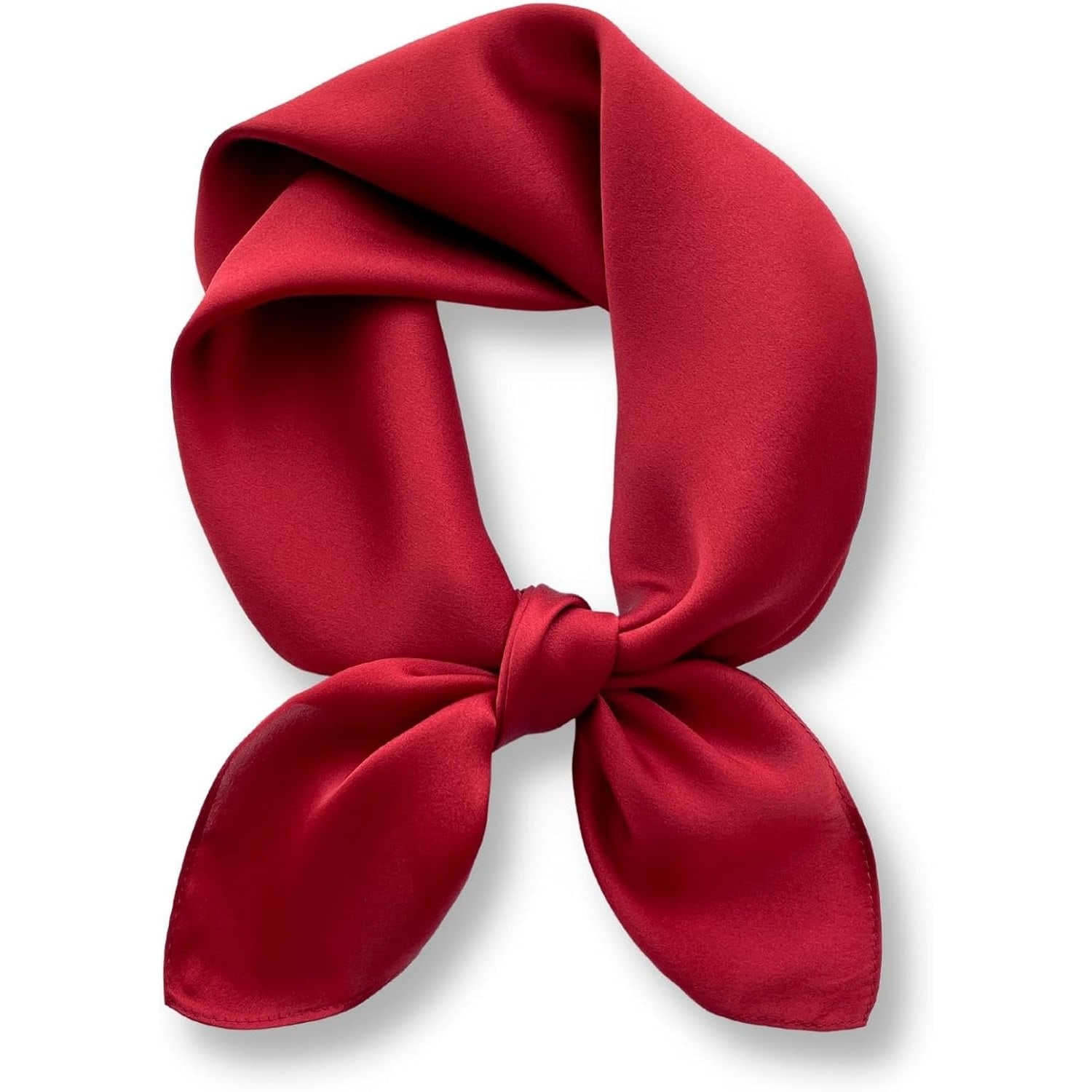
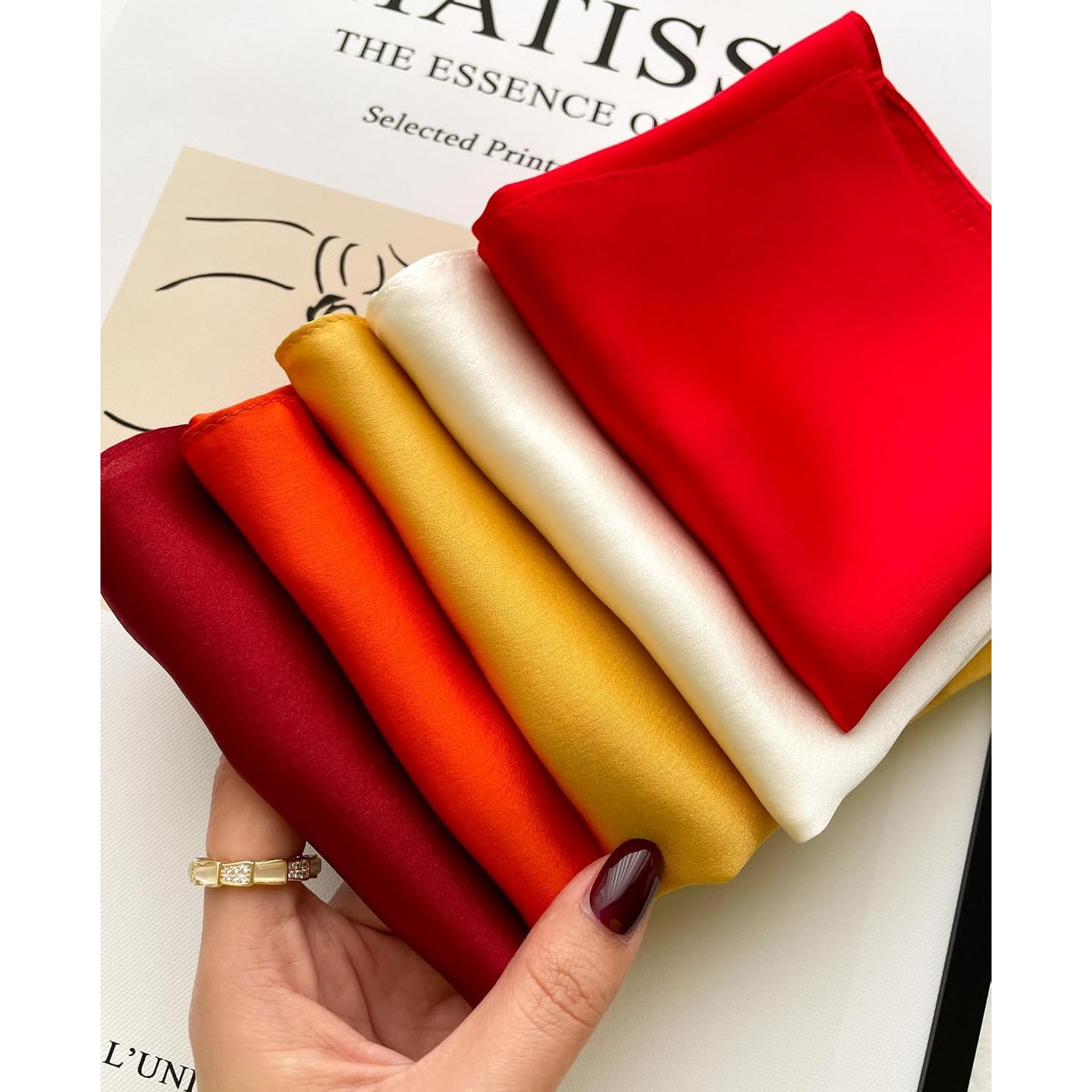
A plain silk square solves that faster than almost anything else you own. It adds one deliberate colour at the neck or in the hair, it catches light differently from cotton and wool, and it takes about four seconds to put on. Burgundy is a particularly useful colour for this, because it is strong enough to register but dark enough to stay quiet.
This guide covers how a square silk scarf actually works, what the 68 cm size does well, who it suits, and how to keep it looking good for years.
What mulberry silk brings to a scarf
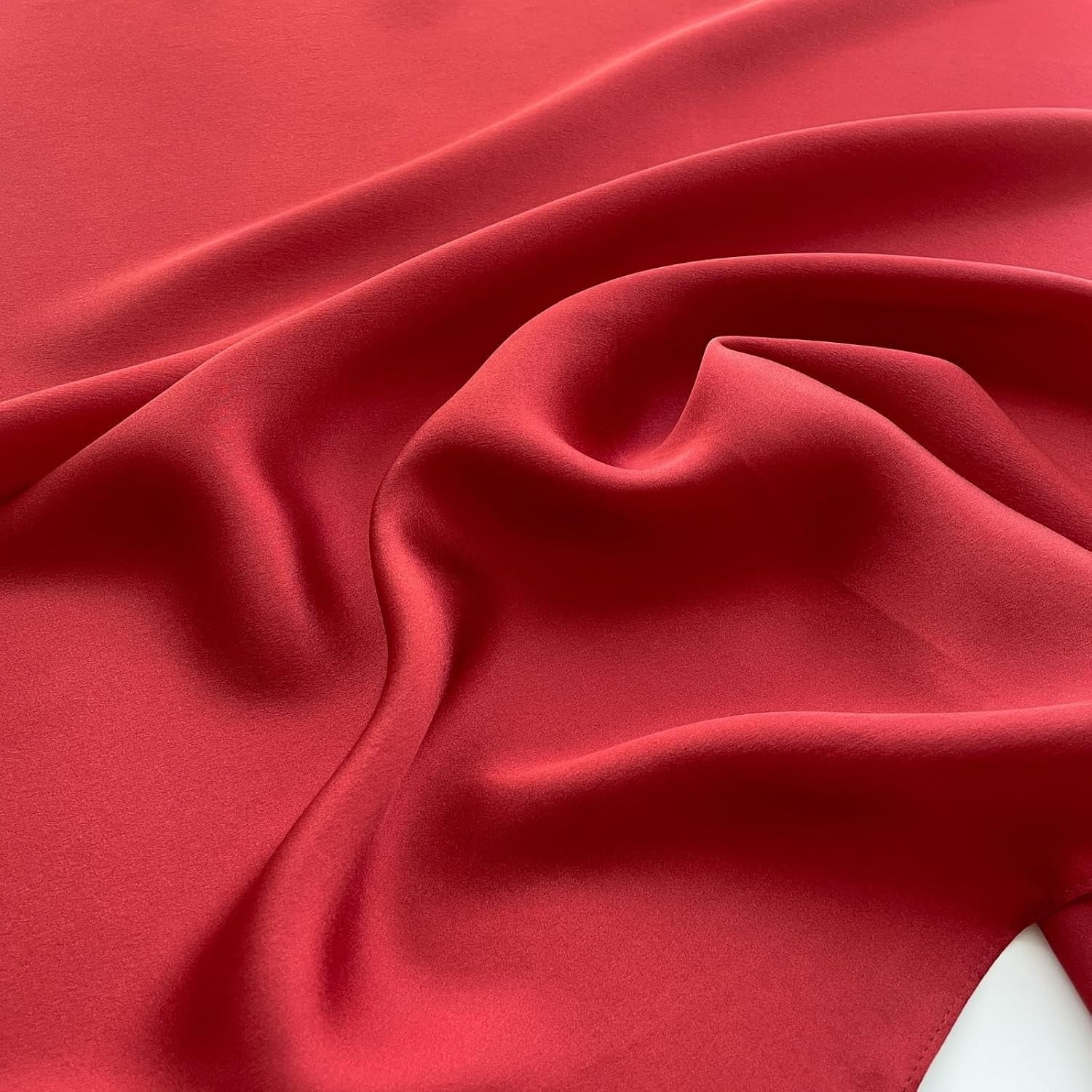
Silk comes from the cocoon of the silkworm. Mulberry silk specifically comes from worms raised on mulberry leaves, which gives a long, uniform fibre. That length is the whole story. Long fibres make smooth yarn, smooth yarn makes fabric with very little surface fuzz, and fabric with no fuzz slides instead of grips.
You feel that in three ways. The scarf drapes downward in soft folds rather than standing away from the body. Knots pull tight and sit flat instead of forming a lump. And hair moves across the surface with less drag than it does across cotton, which is why a silk head scarf tends to leave hair looking smoother when you take it off.
The maker lists this scarf as 100% mulberry silk. Momme weight, which is the standard measure of how heavy silk fabric is, is not stated, and nor is the weave. Those details affect how opaque and how fluid a scarf feels, so if you need a specific weight for a particular purpose, that information is not available here.
Why 68 cm is a useful square
Silk squares tend to come in three broad sizes. Small squares around 50 to 55 cm are really for the hair, a wrist or a bag. Large squares around 90 cm are for the shoulders, the head with full coverage, or dramatic neck wraps. The middle size, around 65 to 70 cm, is the one that does the most jobs.
At 68 x 68 cm (27 x 27 inches) you have enough fabric to fold diagonally, roll down into a band and tie twice at the neck with tails that hang a sensible length. You can open it out and cover your head. You can fold it into a narrow strip for a ponytail wrap or a bag handle. What you cannot really do is wear it across the shoulders, which needs a 90 cm square or a rectangle.
For most people building a small collection, a mid-size square is the one that leaves the drawer most often. If you only ever buy one, this is the size to start with.
Who it suits
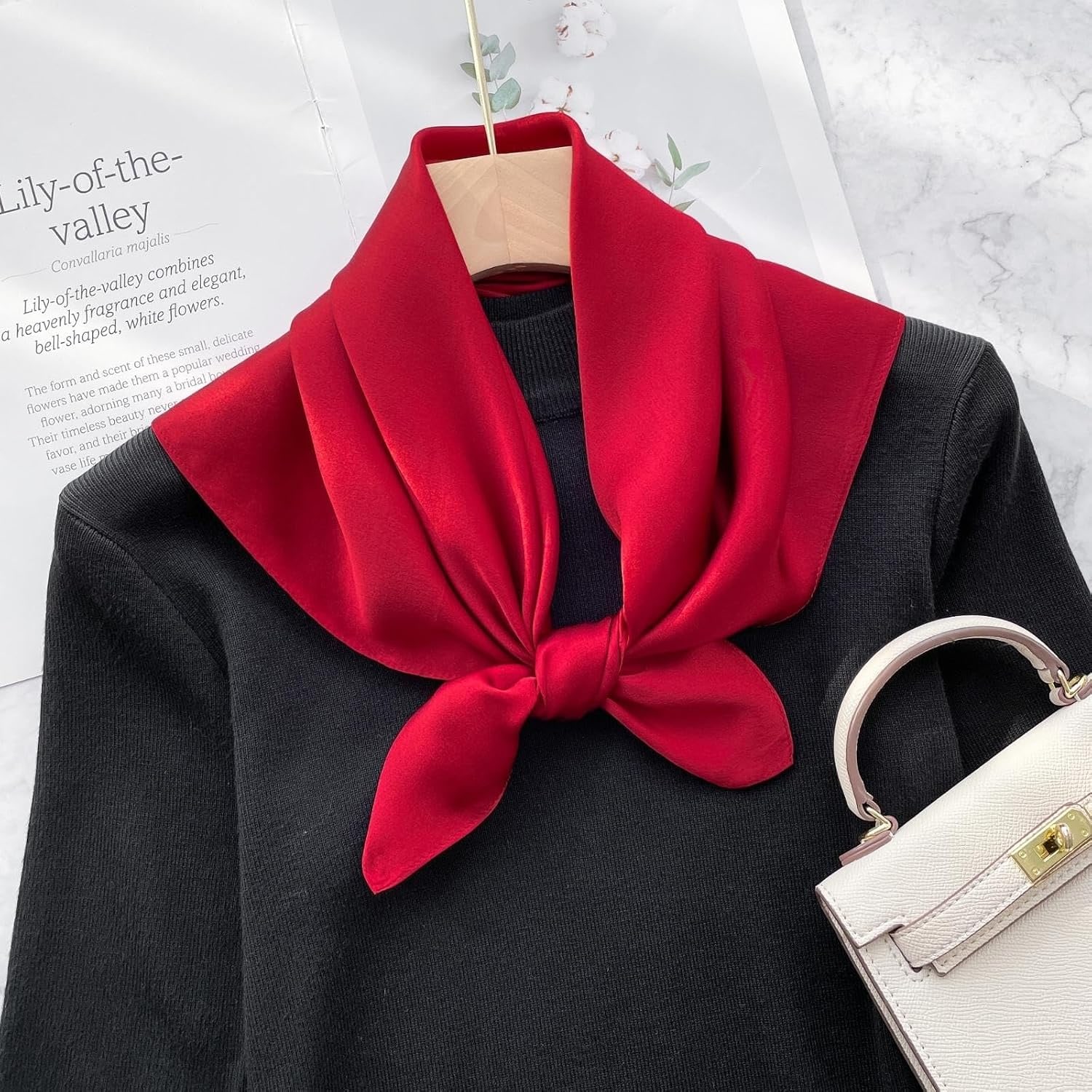
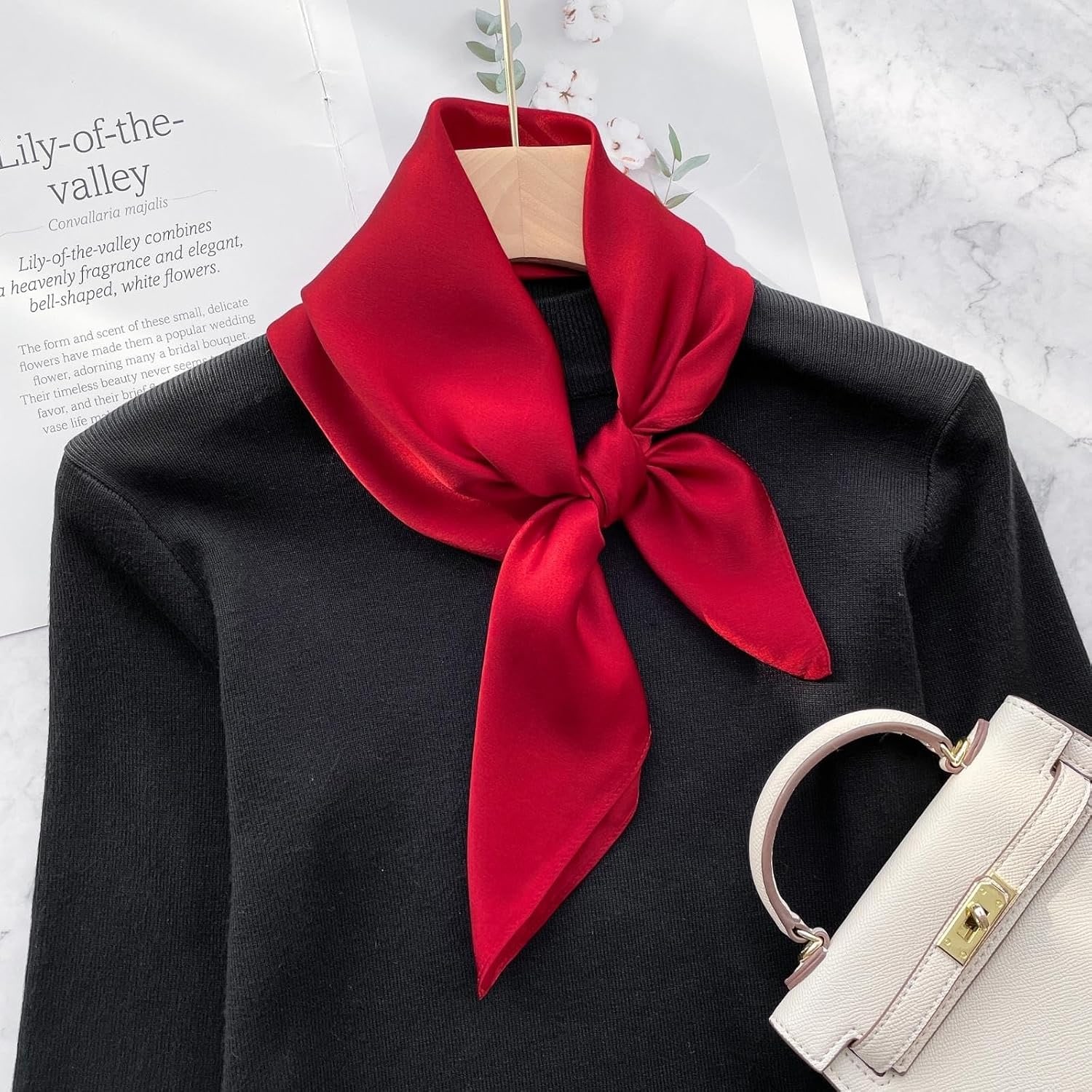
Anyone who wears a lot of plain, dark clothing gets the most obvious benefit, because a burgundy square is the single element that stops an all-navy or all-black outfit reading flat. It also works for people who already wear pattern, since a solid colour does not compete with stripes or checks the way a printed scarf does.
It suits people who want something low maintenance in the way they dress. There is nothing to coordinate and nothing seasonal about it, so the same scarf works in March and October.
It suits travellers. A silk square weighs almost nothing, folds into a pocket, covers the head in sun or wind, and smartens up a plain t-shirt on a day when you have been in transit for ten hours.
It is a reasonable choice for men too. Tucked inside an open collar, a plain burgundy neckerchief is understated and reads as deliberate rather than costume.
How to choose between a plain scarf and a printed one
Printed silk scarves are beautiful and they are also harder to wear. A print has its own colour palette, its own scale and often its own mood, and you have to build an outfit around it. That is fun when you have the time and frustrating when you do not.
A plain scarf has the opposite problem, which is barely a problem at all. The only decision is whether the colour works with what you are wearing, and a deep red works with most things. The texture and the shine do the decorative work instead of a pattern.
If you are buying your first silk square, plain is the sensible call. Add prints later once you know how you actually wear it.
Four ways to tie it
The simplest is the neck band. Fold the square corner to corner into a triangle, then roll the long folded edge towards the point until you have a band about five centimetres wide. Wrap it round the neck and tie a single or double knot at the front, side or back.
The second is the loose drape. Fold diagonally, put the triangle point on your chest and cross the ends behind your neck, bringing them back to the front. Tuck the ends inside a collar or jumper.
The third is the head scarf. Open it fully, place the folded edge along the hairline, and tie under the chin or at the nape. A knot at the nape with the tails tucked in gives a cleaner look under a coat.
The fourth is the bag tie. Fold into a narrow strip, wrap once or twice round the handle base and finish with a small bow. Keep the knot away from any hard metal fitting, since repeated rubbing against a buckle is the fastest way to wear silk thin.
Looking after it
Silk is tougher than its reputation, but it has clear preferences. Wash it by hand in cool water with a detergent made for delicates. Swirl rather than rub, rinse in cool water, then press it between a folded towel to take out the bulk of the moisture. Never wring or twist, because that stretches the weave.
Dry it flat or over a line out of direct sunlight. Sun and radiator heat are what fade deep dyes, and burgundy is a deep dye. If it needs pressing, use the lowest silk setting on the reverse side while the fabric is still slightly damp, and skip the steam burst.
Two habits make a bigger difference than the washing. First, put perfume and hairspray on before the scarf and let them dry. Alcohol can mark silk. Second, store it loosely folded or rolled in a drawer or pouch, not in a plastic bag, and not on a hook that creases one spot for months.
Strong dyes sometimes release a little colour on the first wash. Wash it on its own the first time and do not leave it sitting in water.
The short version
A 68 x 68 cm square of mulberry silk in solid burgundy is a small, useful thing. It is big enough to tie properly at the neck and to cover the head, small enough to carry everywhere, and plain enough to go with almost anything you already own.
The silk content is what makes the knots sit flat and the fabric hang well. The size is what makes it the scarf you actually use rather than the one that stays in the drawer. And the plain colour is what stops it feeling dated in two years.
Hand wash it in cool water, keep it out of the sun, and put your perfume on first. That is the whole maintenance routine.