
The complete guide
How to Choose a Mulberry Silk Sleep Mask That Actually Stays Put
The problem with most sleep masks
Almost everyone who buys a sleep mask buys a second one. The first is usually cheap, made from a polyester shell with a thin foam pad, and it fails in one of three predictable ways. The elastic gives up and the mask slides off at three in the morning. The fabric grips your skin so you wake with a crease across one cheek. Or the stitching along the nose sits proud and lets a thin line of light through exactly where you do not want it.
None of those are complicated problems. They are material and construction problems, and they are the reason a mulberry silk eye mask tends to be the thing people settle on once they have tried a few.
Silk helps on two fronts. It is smooth, so it slides over skin rather than dragging on it, which is the difference between waking up with a mask on your face and waking up with the mask pushed up on your forehead. And it is light. A silk mask with cotton padding weighs almost nothing. That matters more than people expect, because weight is pressure, and pressure around the eyes is what makes a mask feel like a restriction rather than a comfort.
What this mask is made of
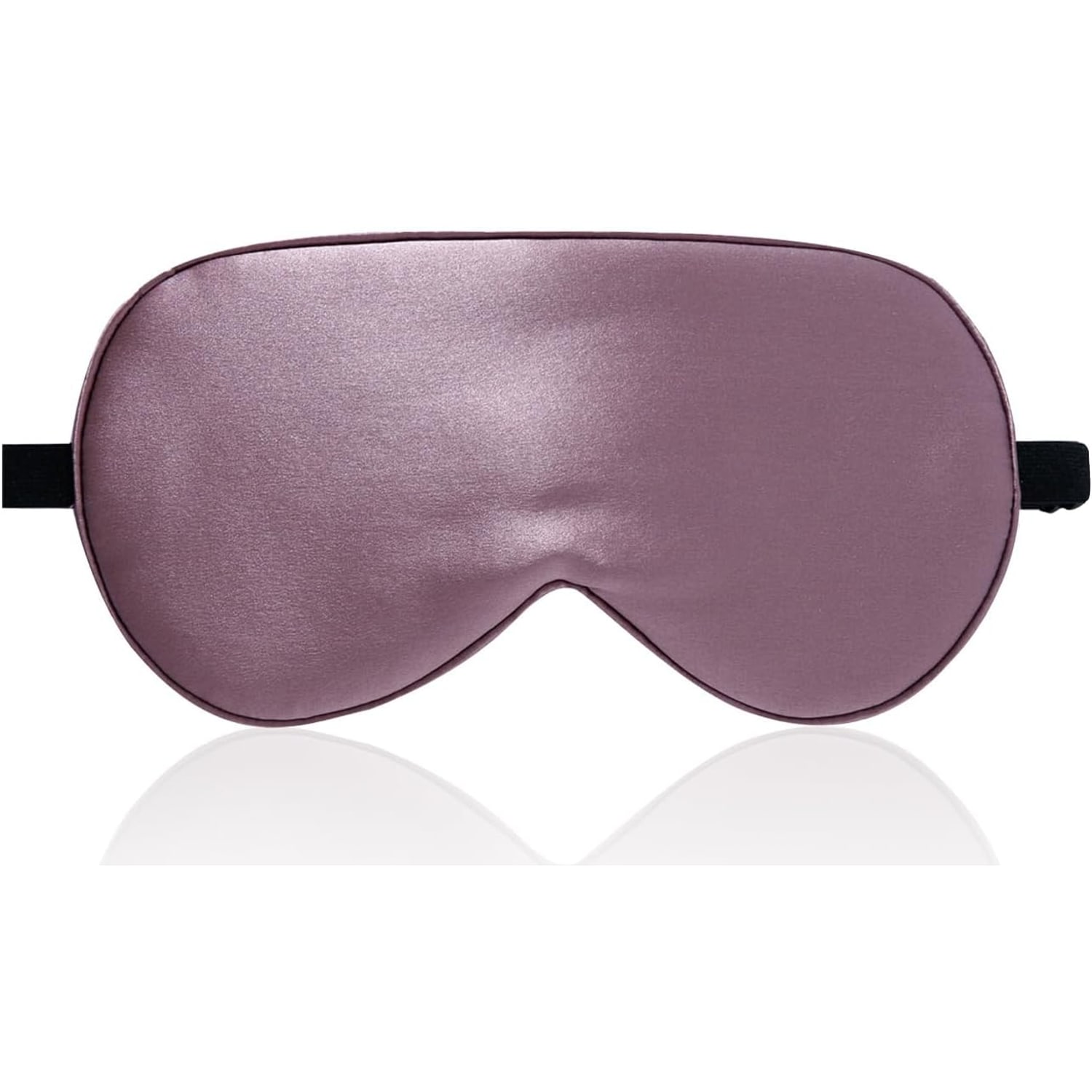
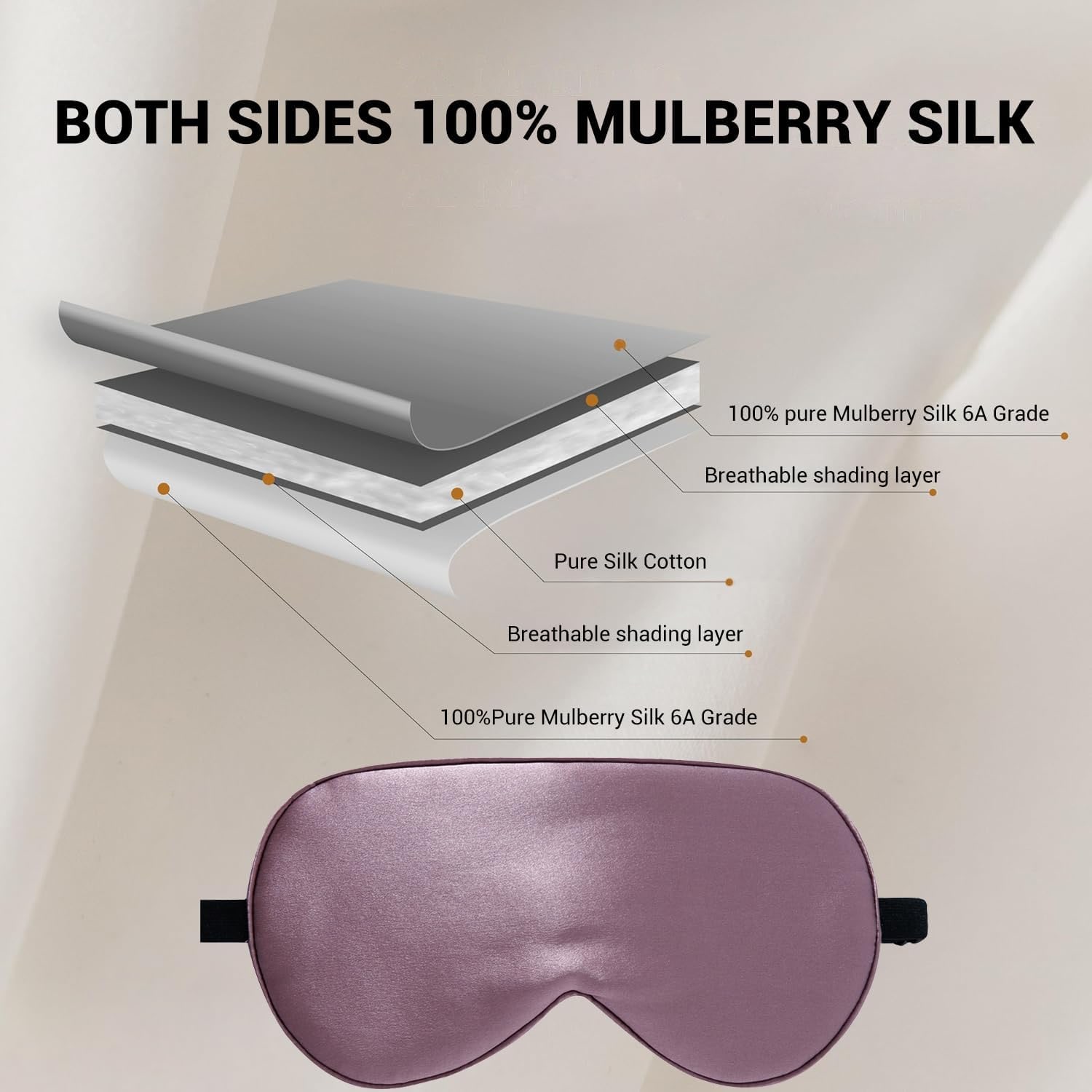
Both faces of this grey purple mulberry silk sleep mask are grade 6A mulberry silk. The back is black silk. Inside, between those two layers, is a cotton padding.
That construction is worth unpacking. A lot of masks described as silk are silk on the outside only, with a polyester or brushed lining on the side that touches your face. The side you see in photographs is the side that does not matter. Having mulberry silk on both faces means the surface against your eyelids is the smooth one, which is where the benefit actually lives.
The cotton padding is doing the structural work. Silk on its own would collapse flat against the contours of your face, which sounds good until you realise it means fabric pressing on lashes and light finding every small gap. The padding holds a gentle loft, so the mask bridges across the eye socket instead of sinking into it. Cotton is also breathable, so the mask does not build up heat the way a foam-filled version can over six or seven hours.
Why the buckle matters more than you think
The single most common complaint about sleep masks is fit, and fit is a strap problem.
Elastic is cheap and quick. It feels right in the shop and it feels right for the first fortnight. Then it starts to relax. By month three the mask that used to sit snug is loose enough to shift when you roll over, and by month six it is a headband. You cannot fix stretched elastic.
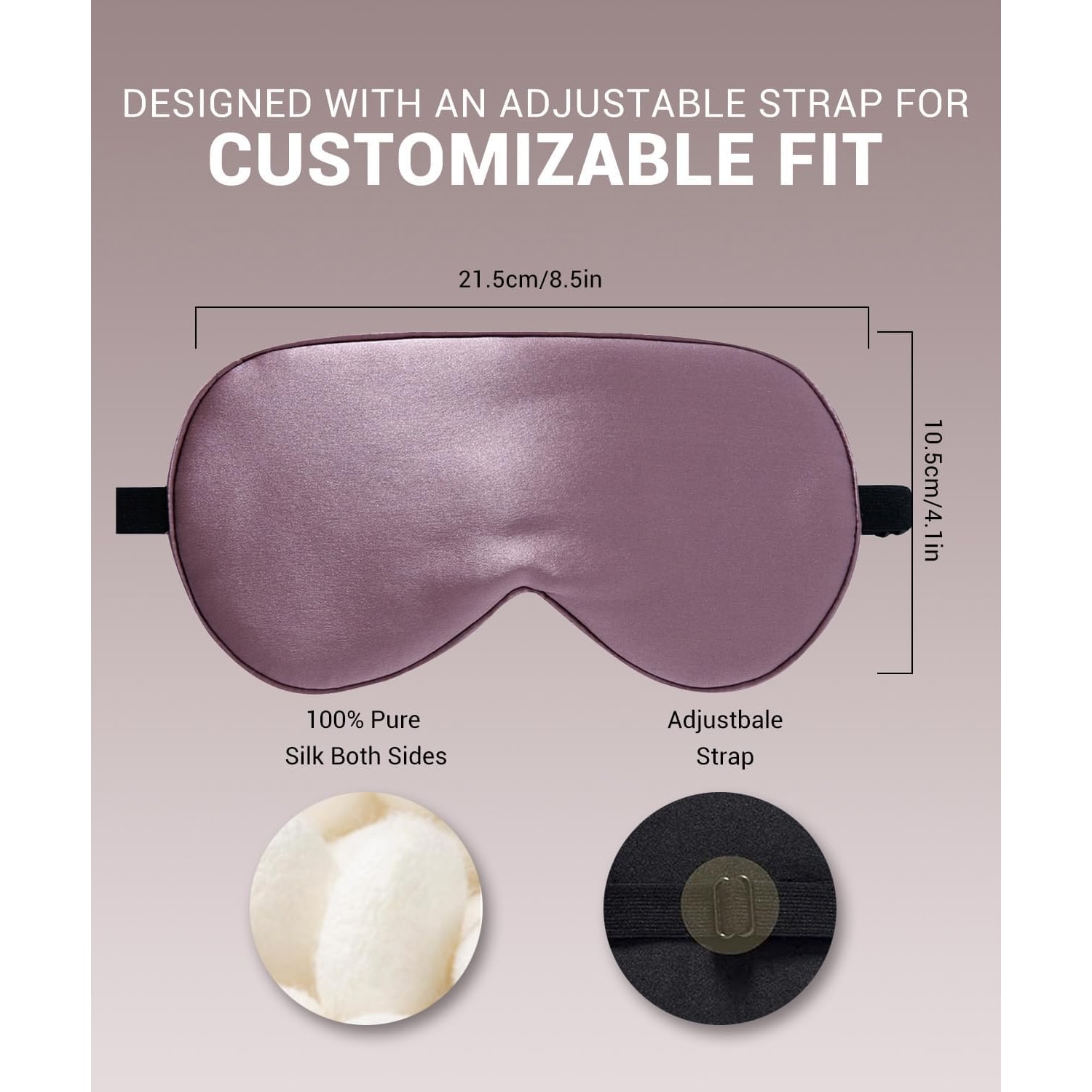
A buckle solves this by removing the stretch from the equation. You set the strap length once, to the point where the mask holds against your face without squeezing your temples, and it stays there. When you lend it to someone, or travel and want it slightly looser under a hood, you adjust it in a couple of seconds and then adjust it back.
The only thing to learn with a buckle strap is placement. Slide the buckle slightly off-centre at the back of the head so it is not sitting between your skull and the pillow. People who sleep on their back notice this on the first night. People who sleep on their side almost never do.
Who it suits
This style of mask works for a broad range of sleepers, but a few groups get the most out of it.
Side sleepers do well because a slim padded mask moves with the pillow rather than catching on it. If you have tried a moulded cup mask and found it lifts off your face when you turn, a flat silk one is a different experience entirely.
Shift workers and anyone sleeping during daylight hours lean on masks heavily. If your schedule means a 10am bedtime, a good blackout eye mask paired with a decent curtain is the practical answer, and silk makes it something you will actually keep using rather than abandoning after a week.
Travellers are the other obvious group. A silk eye mask with adjustable strap packs down to nothing, weighs nothing, and survives being stuffed into a bag pocket. On a long flight, when the cabin lights come up for a meal service you did not want, it is the one thing that lets you stay asleep.
It also suits anyone who has given up on masks before because of comfort. If the reason you stopped was creasing, pulling or heat, the material change is usually what fixes it.
How to choose between masks
There are only a handful of things actually worth comparing.
Silk on both sides, or just the front. Check this first. It is the biggest quality difference and the easiest thing for a listing to be vague about. Both faces of this mask are mulberry silk.
Padding type. Cotton padding is soft and breathable. Foam is firmer and can feel warm. Contoured plastic shells block more light but take up far more space in a bag and are not for everyone.
Strap system. Buckle, slider or plain elastic. Buckle holds its setting longest. A plastic slider is a reasonable middle ground. Plain sewn elastic is the one to avoid if you want the mask to last.
Colour. Darker shades hide the small marks that any item worn against the face will eventually pick up. A grey purple front with a black back is a sensible combination for that reason.
Care requirements. Hand wash only is normal for silk. If you know you will not hand wash anything, buy cotton instead and be honest with yourself.
Looking after it
Silk rewards gentle handling and punishes shortcuts, so the routine is worth getting right once.
Hand wash only, in cool water, with a detergent made for delicates. Swirl the mask through the water rather than scrubbing it. Rinse in clean cool water until there is no soap left.
Never wring it. Twisting silk fibres while they are wet is the fastest way to leave permanent puckering. Instead, lay the mask flat on a dry towel, roll the towel loosely and press to draw the water out.
Reshape the mask while it is damp so the padding sits even, then dry it flat, away from radiators, direct sunlight and anything hot. It will usually be ready by the next evening.
Skip the tumble dryer, the bleach and the stain remover. If you need to press out a crease, use the lowest iron setting on the reverse with a cloth in between, and keep the iron well away from the buckle.
As a rhythm, washing every one to two weeks suits nightly use. If you apply creams or oils before bed, wash it more often, because residue is what dulls silk over time.
Small habits that help
Set the strap tension in the evening, not when you are already half asleep. You want firm contact with no pinching at the temples.
If you wear the mask every night, consider keeping a second one so there is always a clean, dry mask available on wash day.
Store it flat or loosely folded rather than crushed at the bottom of a drawer. The padding keeps its shape better that way.
And give it a fortnight. Most people who switch to silk notice the difference on the first night, but the fit takes a few nights to settle into a position that feels automatic.
The short version
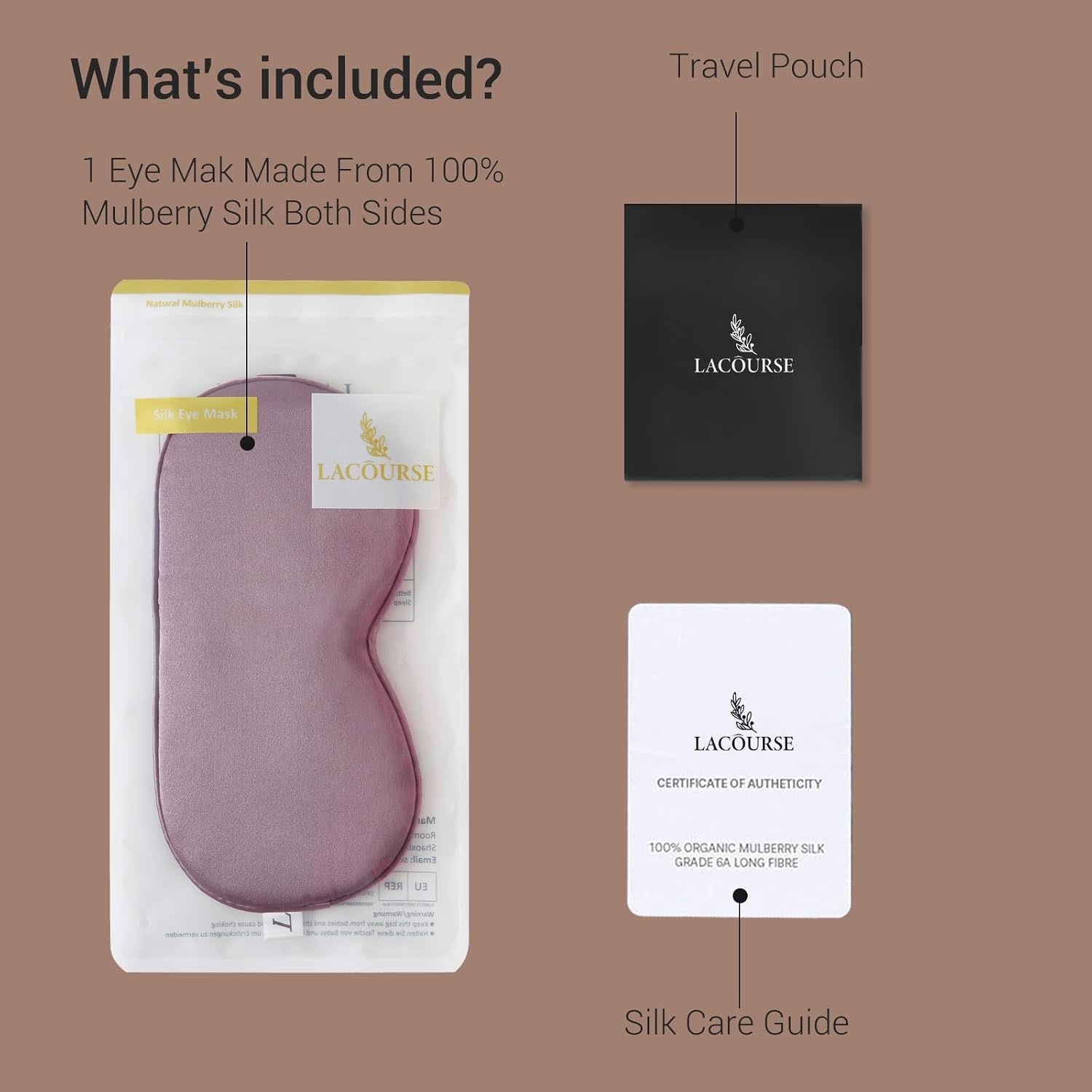
This is a grey purple mulberry silk sleep mask with grade 6A mulberry silk on both faces, a black silk reverse, cotton padding inside and an adjustable buckle strap. It is light, it packs flat, and the buckle means the fit you set is the fit you keep.
Hand wash it in cool water, dry it flat, and it will keep its feel for a long time. If you have bounced off sleep masks before because of heat, creasing or a strap that gave up, a silk mask with a proper buckle is the version worth trying next.