
The complete guide
How to Choose a Silk Sleep Mask That You Will Actually Keep Wearing
The problem with most sleep masks
Almost everyone who buys a sleep mask has the same story. It works for a few nights, then one morning you find it on the floor, or you wake at 3am and pull it off without really thinking. The mask was not uncomfortable exactly. It just was not comfortable enough to forget about.
There are usually three reasons for that. The fabric is scratchy or sweaty. The strap is too tight, too loose, or digs in at the back of the head. Or the mask is narrow, so light leaks in at the sides and you half-wake every time a car goes past the window.
A silk mask with a wider cut and an adjustable band is designed around those three failures. It will not fix a noisy neighbour or a glowing phone, but it removes the small irritations that make most people give up on masks altogether.
Why silk, specifically
Silk gets talked about a lot, so it is worth being plain about what it does and does not do.
What it does is slide. Mulberry silk has long, even filaments and the woven surface is very smooth, so when you turn your head the mask moves against your skin rather than gripping it. Cotton and polyester both drag more. That is why people who move around at night often get on better with silk.
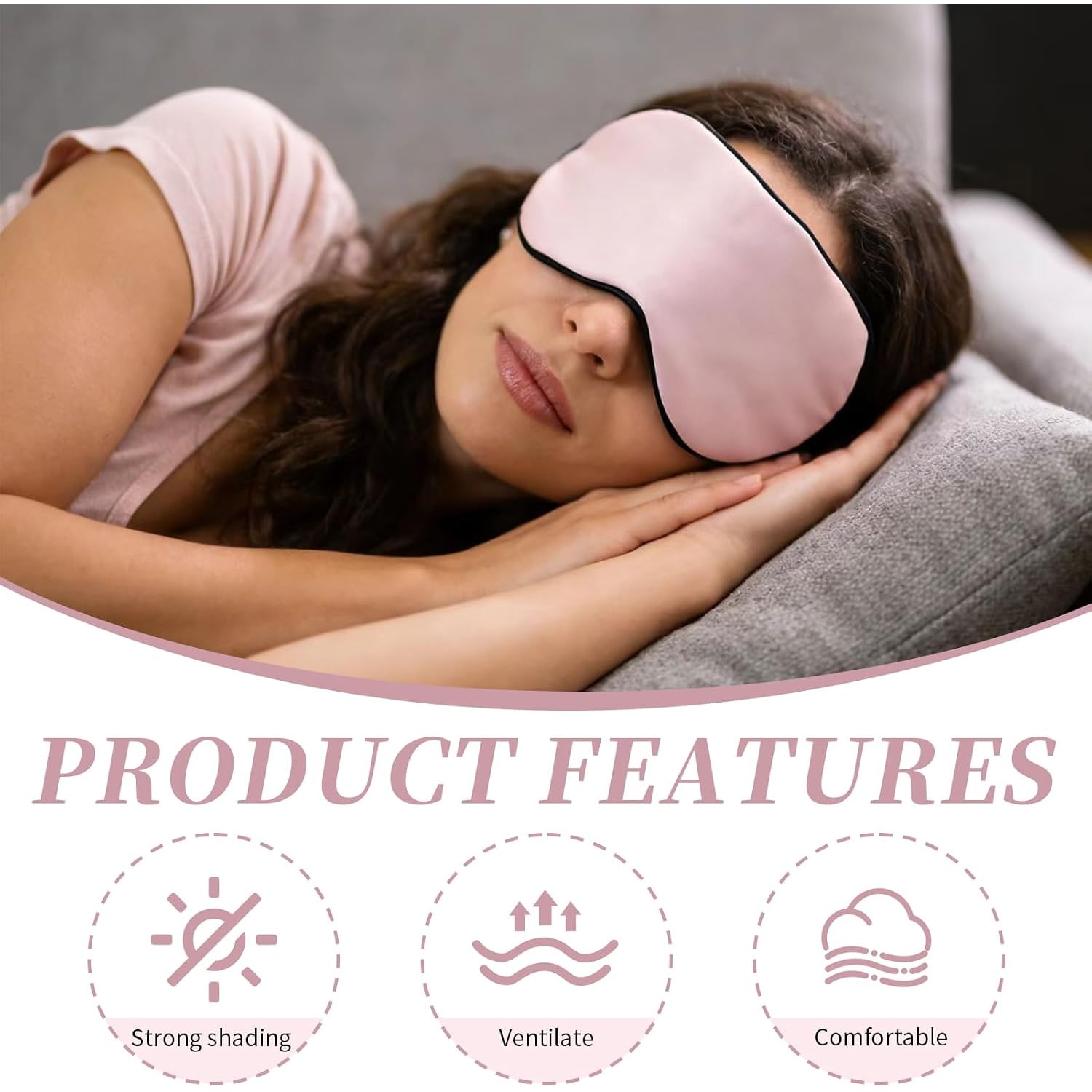
It also sits at a neutral temperature. Silk feels cool when you first put it on and then settles. It does not hold heat against your face the way a thick foam mask can, which matters if you run warm or sleep in a bedroom that does not cool down much overnight.
What it does not do is anything medical. A silk mask is a piece of smooth fabric that blocks light. That is the job. Anything beyond that is marketing.
Width matters more than people expect
If you only change one thing about the mask you are using, make it the width.
A narrow mask covers the eye sockets and not much else. Your face is not flat, so there are natural gaps beside the bridge of your nose and above your cheekbones. On a narrow mask those gaps are right at the edge of the fabric, which is the easiest route for light to find.
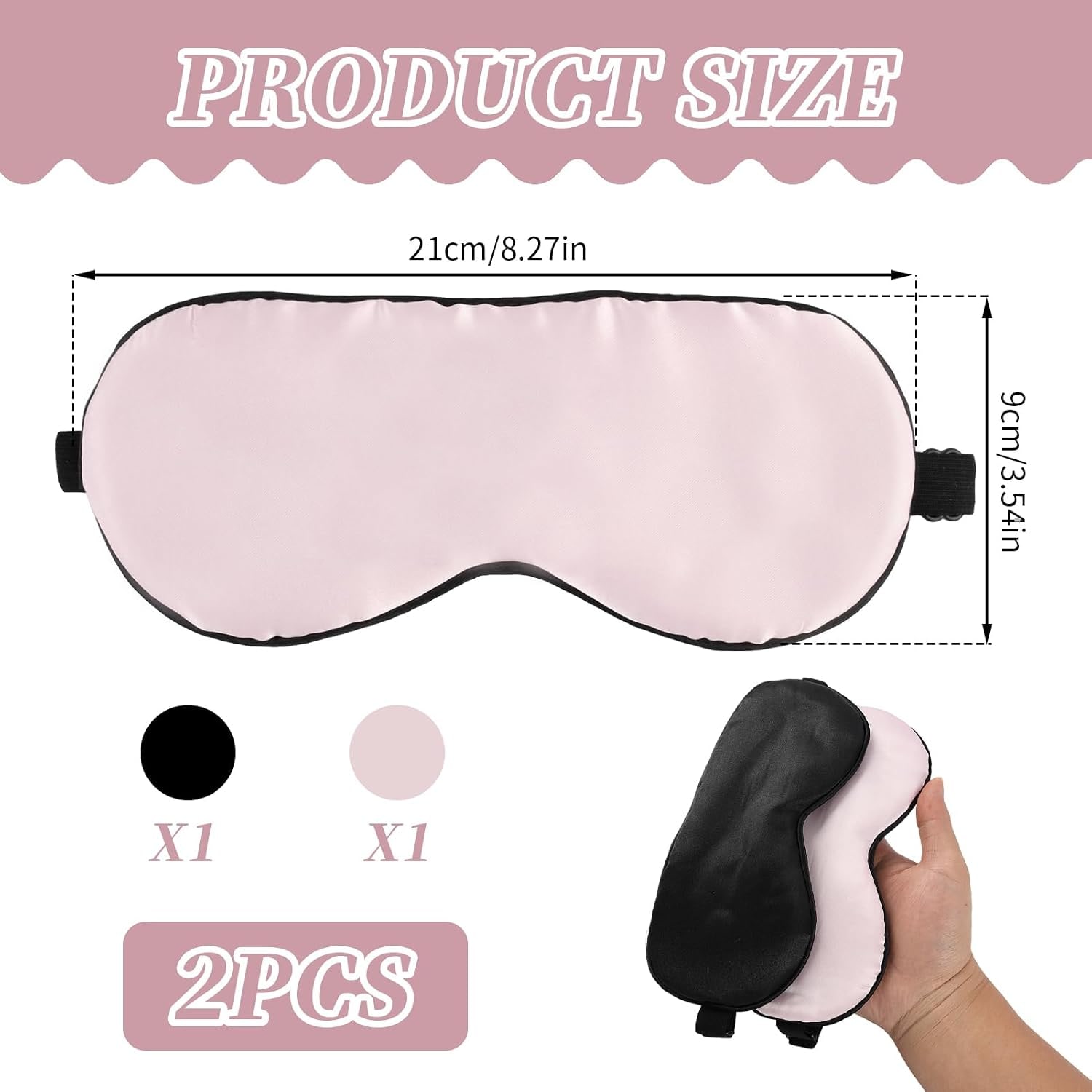
A wider panel pushes the edges of the mask out towards the temples and further down across the cheek. More fabric is in contact with your face, so the light has further to travel to get in. It also spreads the pressure of the band over a larger area, which is why wide masks tend to feel lighter even though they use more material.
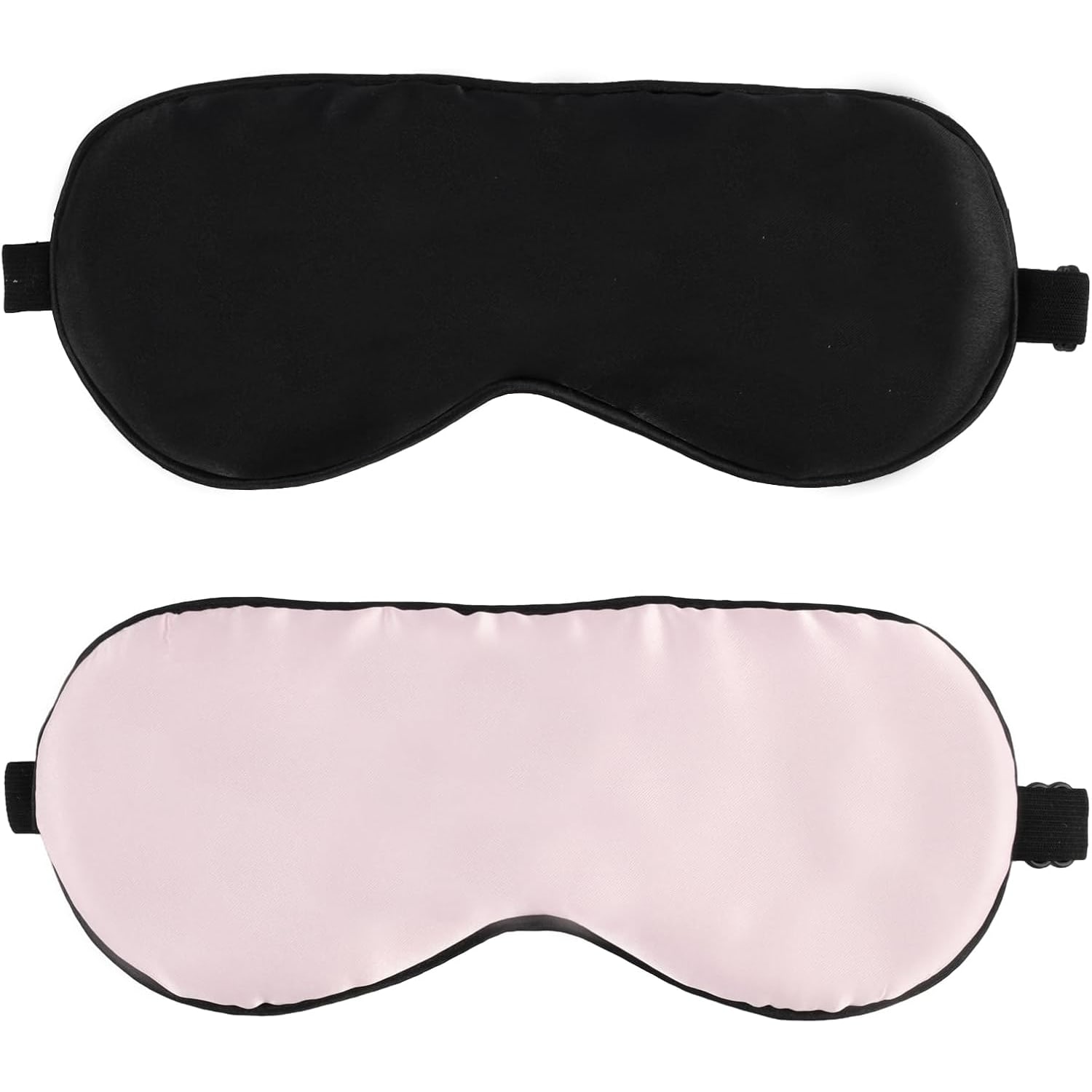
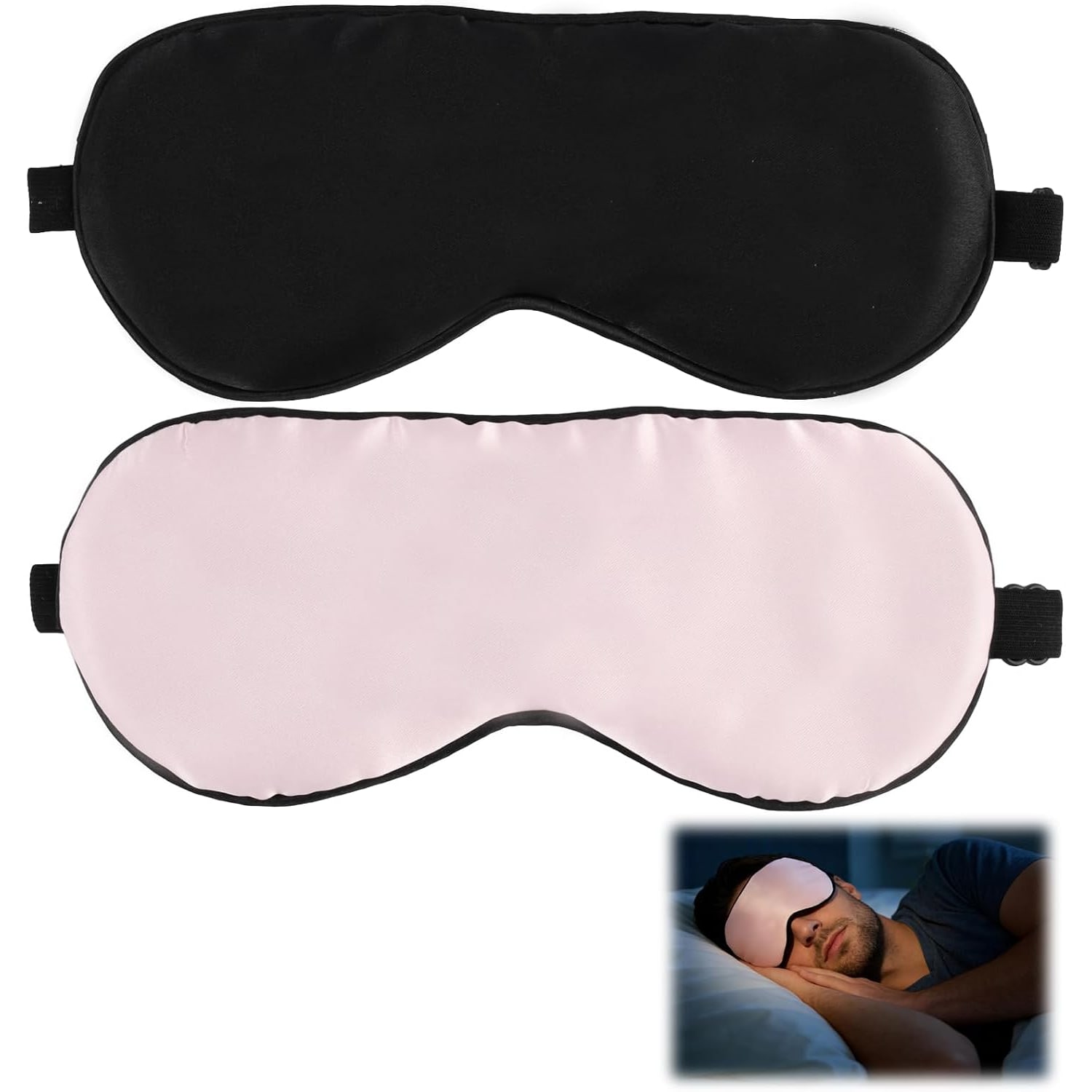
This set is cut wider than a basic mask for exactly that reason. If you have been using a thin strip of fabric and finding it patchy, the step up is noticeable.
The dark backing layer
Light-coloured silk can glow. Hold a pale fabric up to a lamp and you will see it immediately. That is fine during the day and a problem at night, especially on a plane with the overhead light on or in a hotel room with a bright strip under the door.
Both masks here have a black layer behind the silk. On the black mask that is less obvious. On the peach pink one it is what stops the lighter colour from working against you. You get the nicer colour on the outside and the same darkness on the inside, which is a sensible way to build a two-colour set.
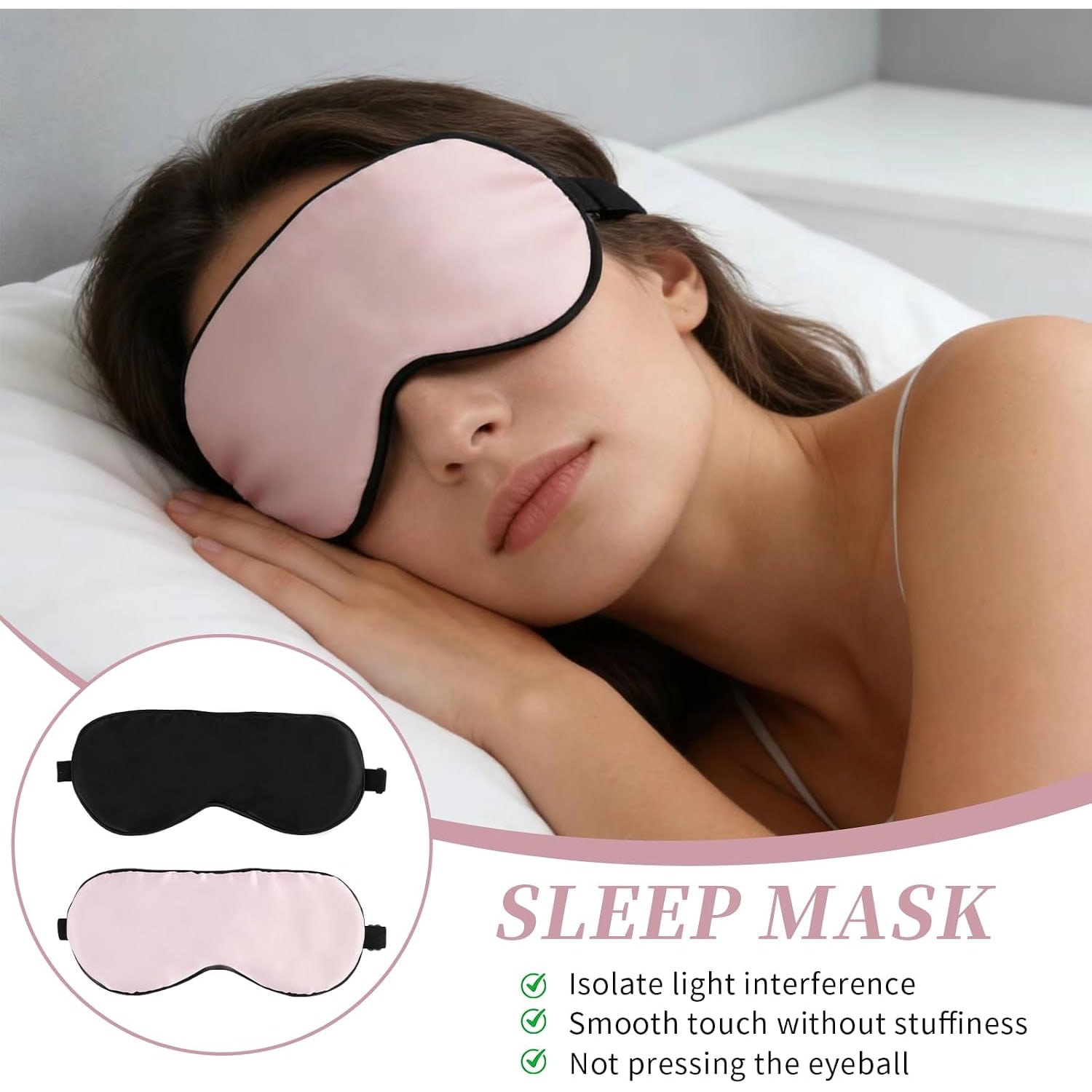
No mask blocks every photon. Faces are not symmetrical, noses get in the way, and some light will always creep up from below. Think of it as taking a bright room down to something close to night, not as a sealed blackout.
Getting the strap right
This is where most people go wrong, and it is a two-minute fix.
Put the mask on in a sitting position, then adjust the band until the mask feels secure if you nod and shake your head gently. That is the tension you want. If you can feel pressure on your eyelids, it is too tight. If the mask shifts when you lie down on your side, it is too loose.
Then leave it. One of the quiet advantages of an adjustable band is that you only set it once. A fixed-strap mask gives you whatever tension the factory chose, and that is either right for you or it is not.
A tight band is the usual cause of forehead marks in the morning. Loosen it one notch and the mark almost always disappears.
Who this set suits
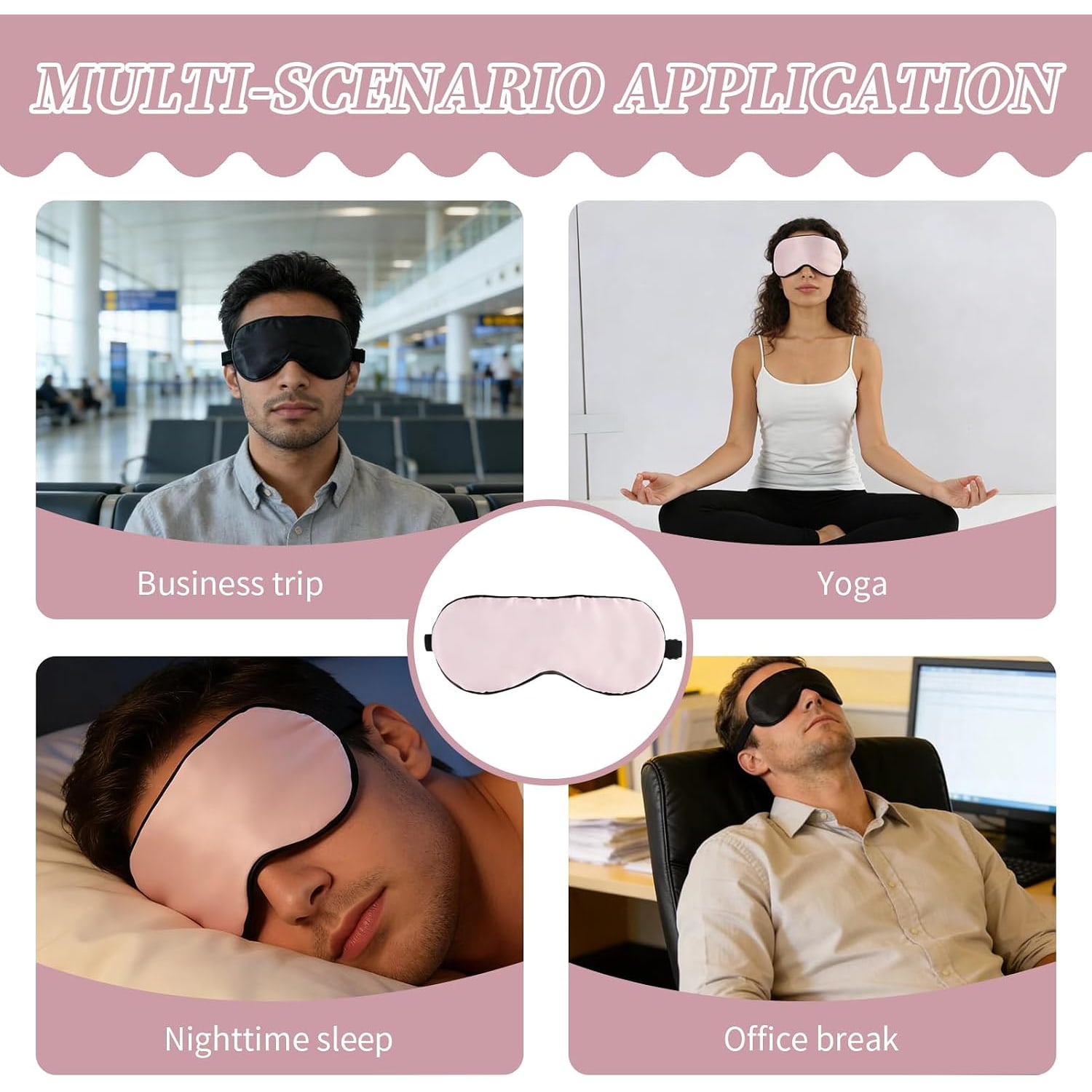
Side sleepers do well with silk, because the mask slips against the pillow rather than bunching up or being pushed out of position.
Travellers get real use out of a two-pack. One mask stays in the carry-on permanently, so you never arrive at the airport having left it at home. Silk also packs flat and weighs almost nothing.
People who sleep during the day, whether that is shift work, a new baby in the house or just a long-haul recovery nap, need more light blocking than the average sleeper. A wide mask with a dark backing is the right tool.
And if you simply find polyester masks sweaty and foam ones bulky, silk is the obvious alternative to try.
Caring for silk without fuss
Silk sounds delicate and it is, but the routine is short.
Hand wash in cool water with a mild detergent meant for delicates. Swish it, do not scrub, and do not leave it soaking. Rinse, then press the water out between the folds of a towel rather than wringing it, which stresses the fibres and the stitching.
Lay the mask flat to dry, away from radiators and direct sunlight. Heat is the enemy of both silk and elastic, so skip the tumble dryer entirely. If you want to press it, use the lowest iron setting on the reverse of the silk and keep well away from the band.
Wash the black mask on its own for the first couple of washes. Dark dyes sometimes release a little colour early on, and cool water keeps that to a minimum.
Having two masks makes all of this easier. One is in the wash, one is on the bedside table, and you never have a night without one.
Buying a pair rather than one
Two masks in a box often looks like a padding exercise. In this case it is genuinely practical.
Sleep masks get washed, lost, left in hotels and borrowed by partners. A spare removes most of those problems. Two different colours also means you can tell them apart, which sounds trivial until you have two identical black masks and no idea which one you washed.
Plenty of people buy a set like this and hand the second mask to someone else. That works too, and it is one of the few accessories that almost anyone can use.
The short version
If you want a mask you will still be wearing in six months, look for three things. Smooth fabric that does not drag on your skin, enough width to cover past the corners of your eyes, and a strap you can adjust yourself.
This set covers all three. Two masks in 100% mulberry silk, a wider cut than a basic eye mask, a black backing layer that cuts the light coming through, and an adjustable elastic band. Hand wash them, dry them flat, keep one in your bag and one by the bed.