
The complete guide
How To Choose A Silk Sleep Mask That You Will Actually Wear
The problem with the room you sleep in
Very few bedrooms are properly dark. There is a streetlamp outside, a charging light on a laptop, a gap where the curtain does not meet the wall, or the simple fact that the sun comes up at five in June. If you work nights, the problem is bigger again, because you are trying to sleep in full daylight with the rest of the world awake outside.
Light at the eyes is a strong signal to the body. You can be exhausted and still find yourself half-awake because your eyelids are picking up a glow they are not meant to see at that hour. Blackout blinds help, but they are expensive, they do not travel, and they are no use at all in a hotel with a gap in the curtains.
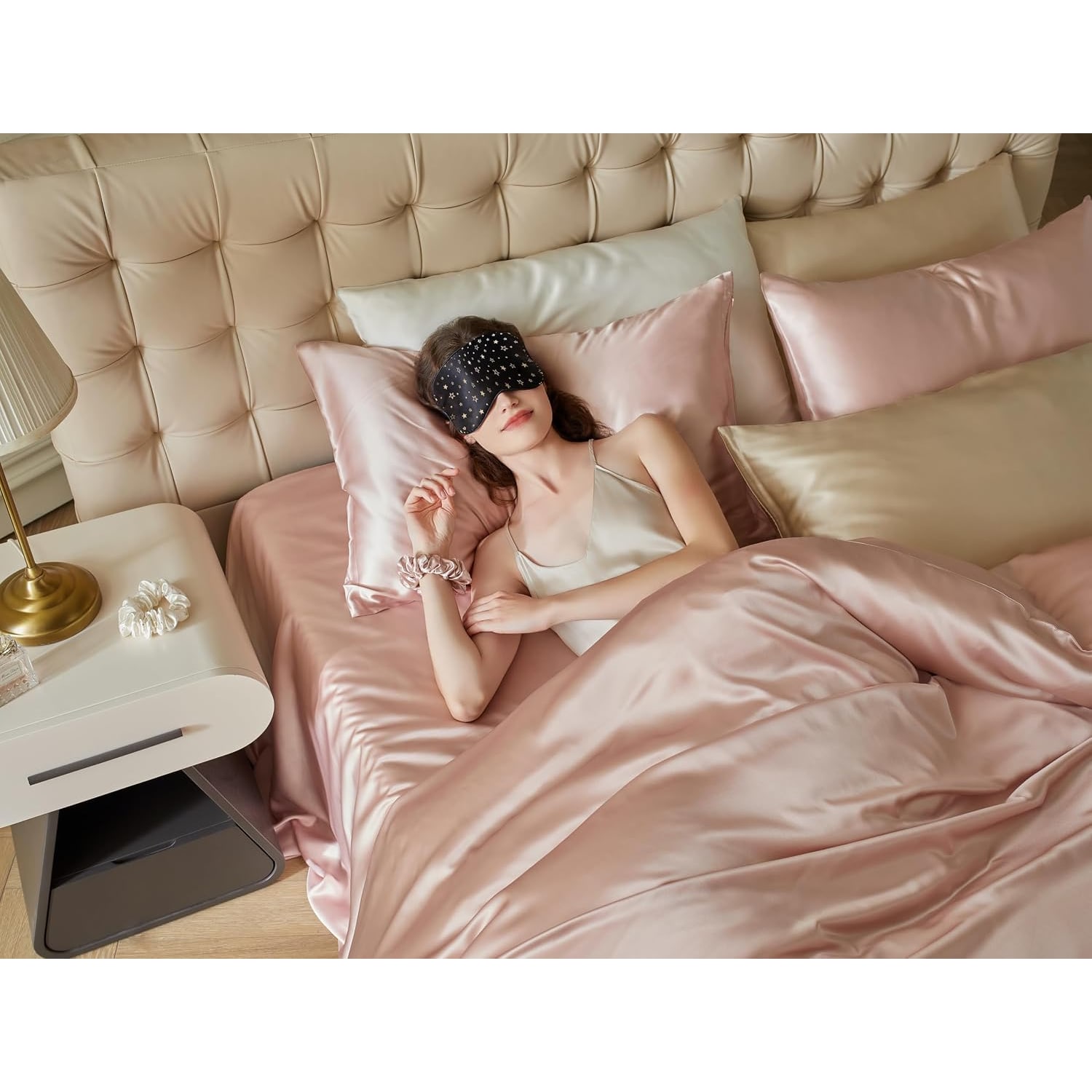
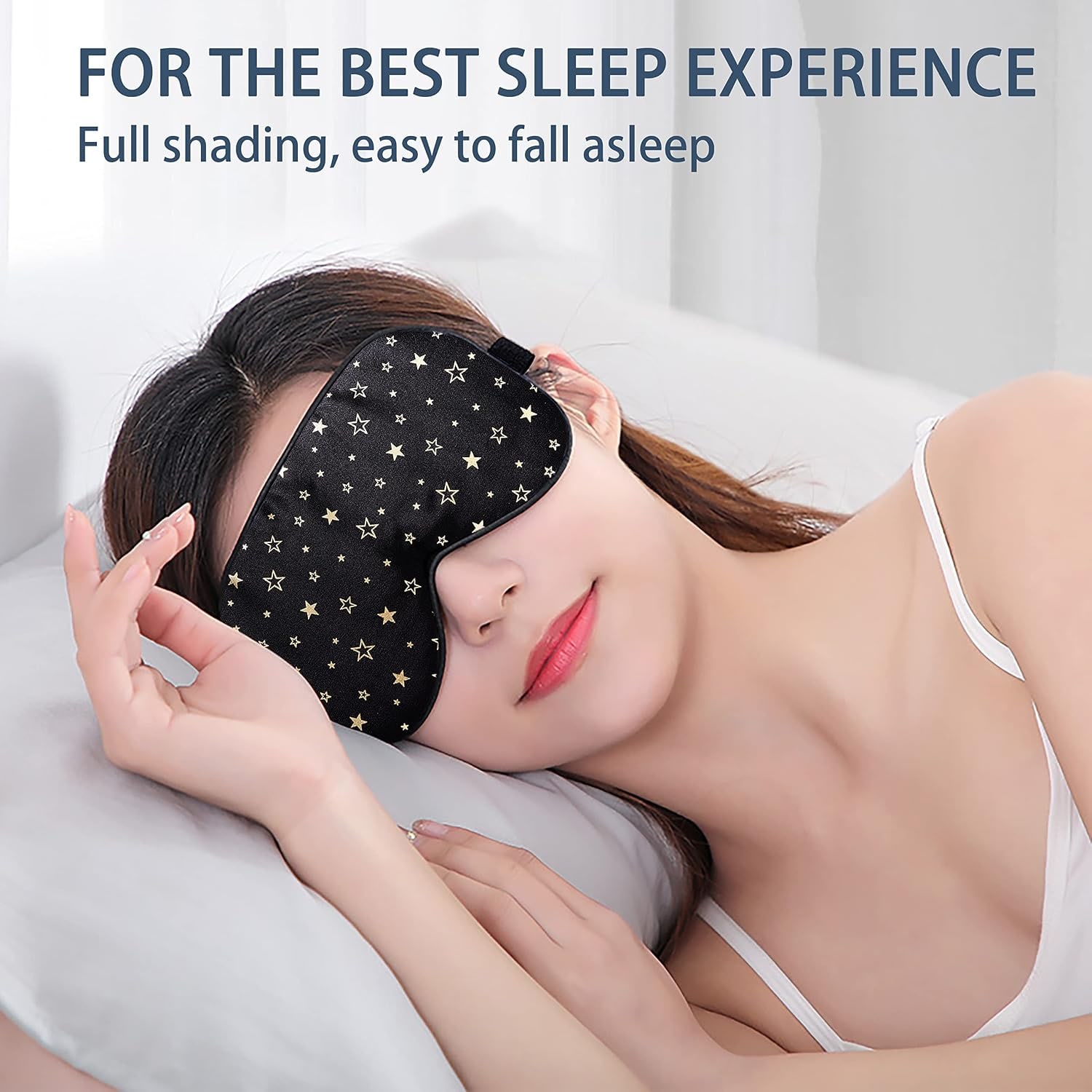
A sleep mask solves the problem at the smallest point in the chain, which is the eyes themselves. It costs very little, it weighs almost nothing, and it works in any room you happen to be in.
Why silk, and why mulberry silk in particular
The material matters more than people expect. A mask sits against the thinnest skin on your body, for seven or eight hours, every night. A rough or stiff fabric announces itself every time you move.
Mulberry silk comes from silkworms fed on mulberry leaves, which produce long, even fibres. Woven up, that gives a fabric with a smooth surface. Your skin slides over it with less friction than it does over a cotton weave, which is why silk pillowcases have become popular for the same reason. For a mask, the practical upshot is that the fabric moves with you when you turn over rather than tugging.
Silk is also a fine fibre, so a mask made from it is light. That sounds like a small thing until you compare it to a padded synthetic mask that presses on your face for hours and leaves marks in the morning.
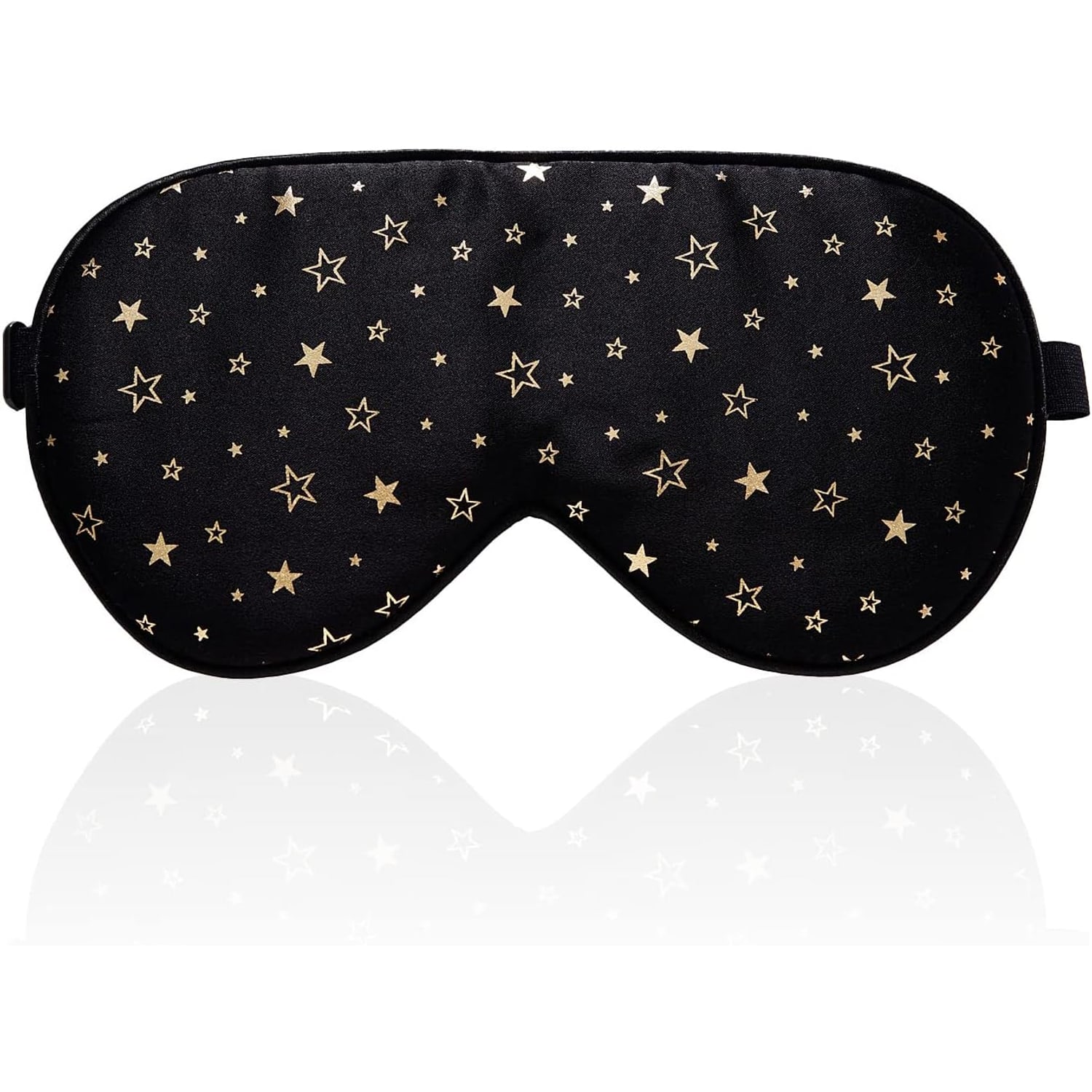
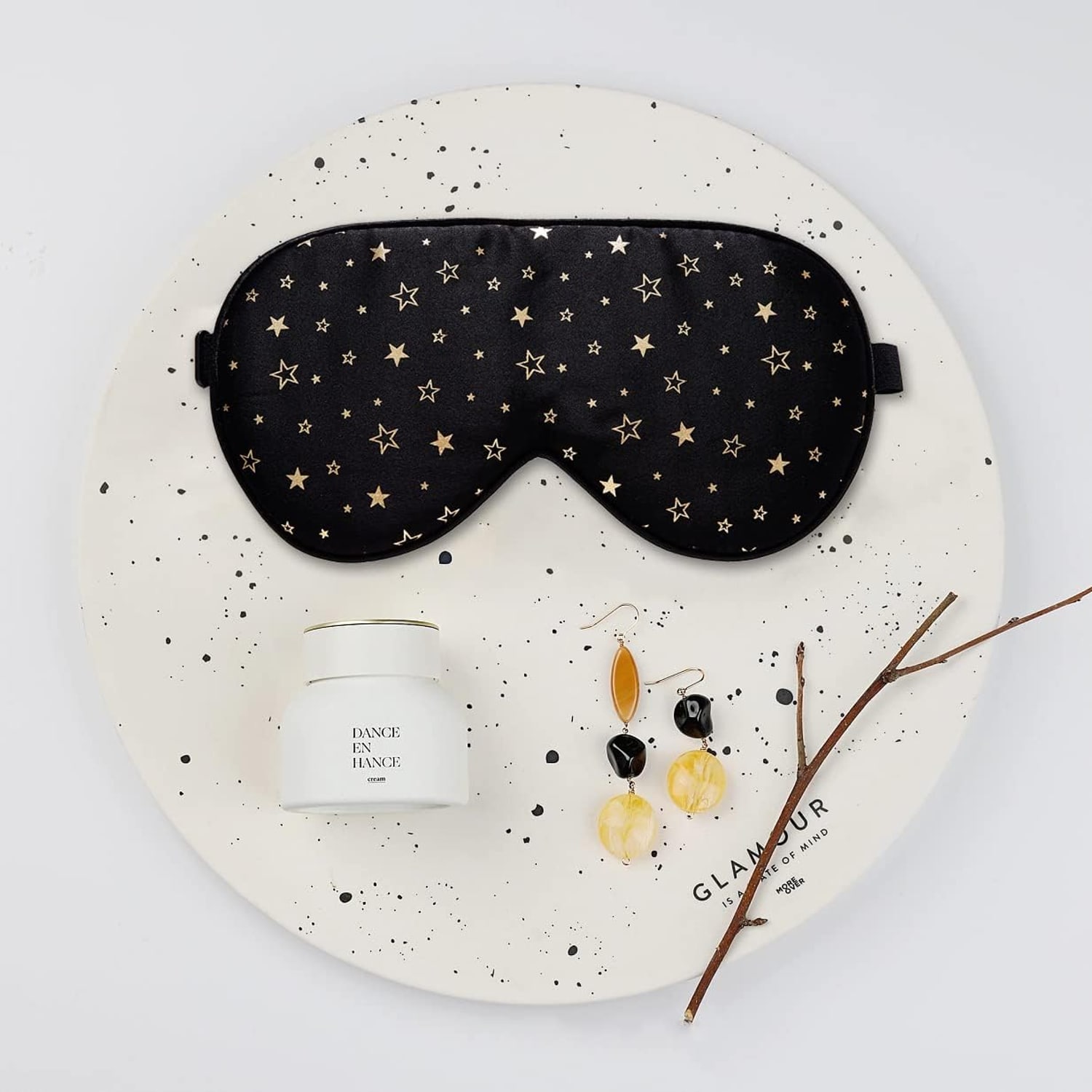
This mask is made from 100% mulberry silk and printed with small gold stars on a black ground. The momme weight, the exact size and the country of origin are not stated by the maker, so if those details are critical to you it is worth knowing they are not published.
The strap is half the product
Here is the part shoppers skip. Most masks fail on the strap, not the fabric.
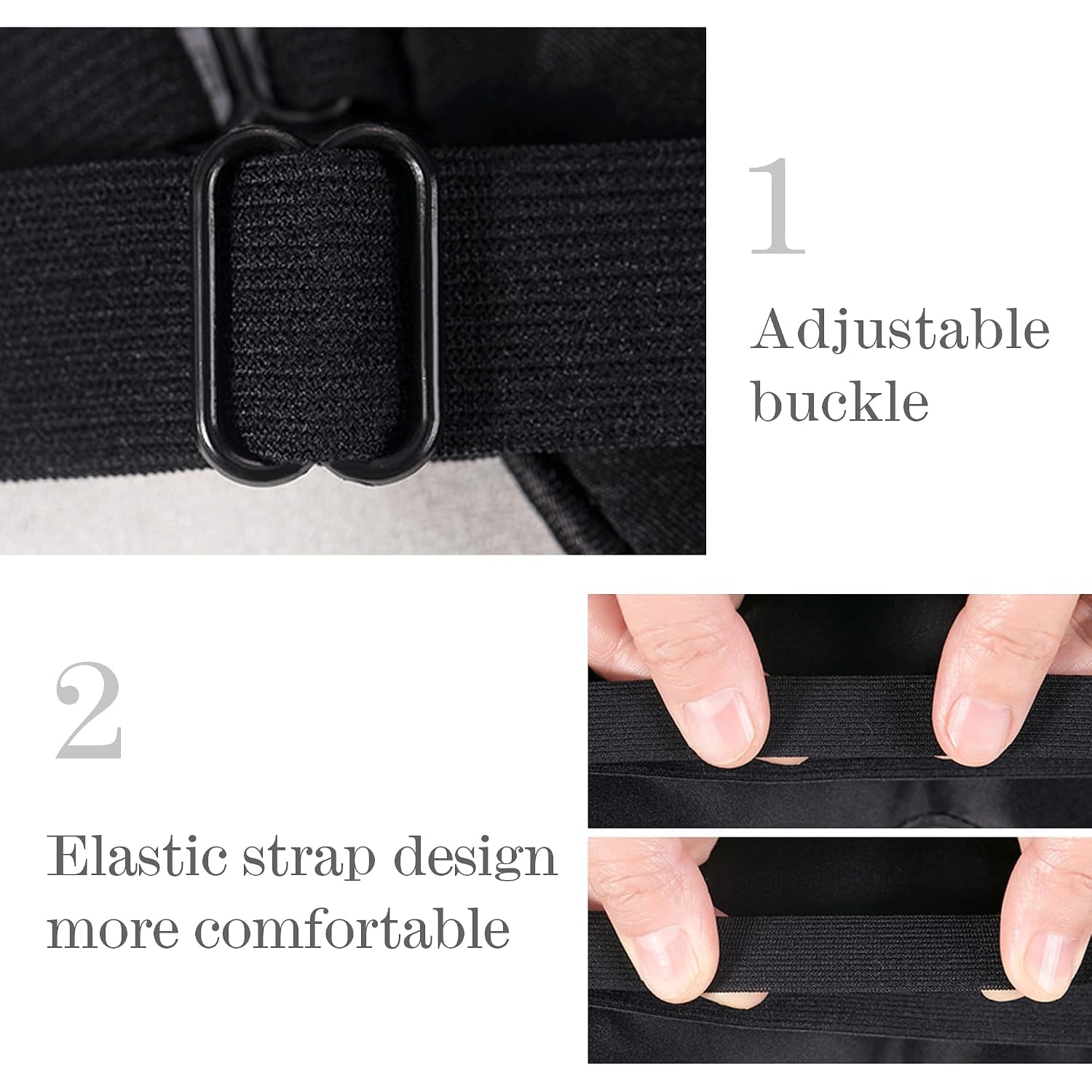
A sewn-in elastic band has exactly one tension. If it is too tight, you get a headache and a crease across the back of your head. If it is too loose, the mask slides off at three in the morning and you wake up with it around your neck. You cannot fix either problem.
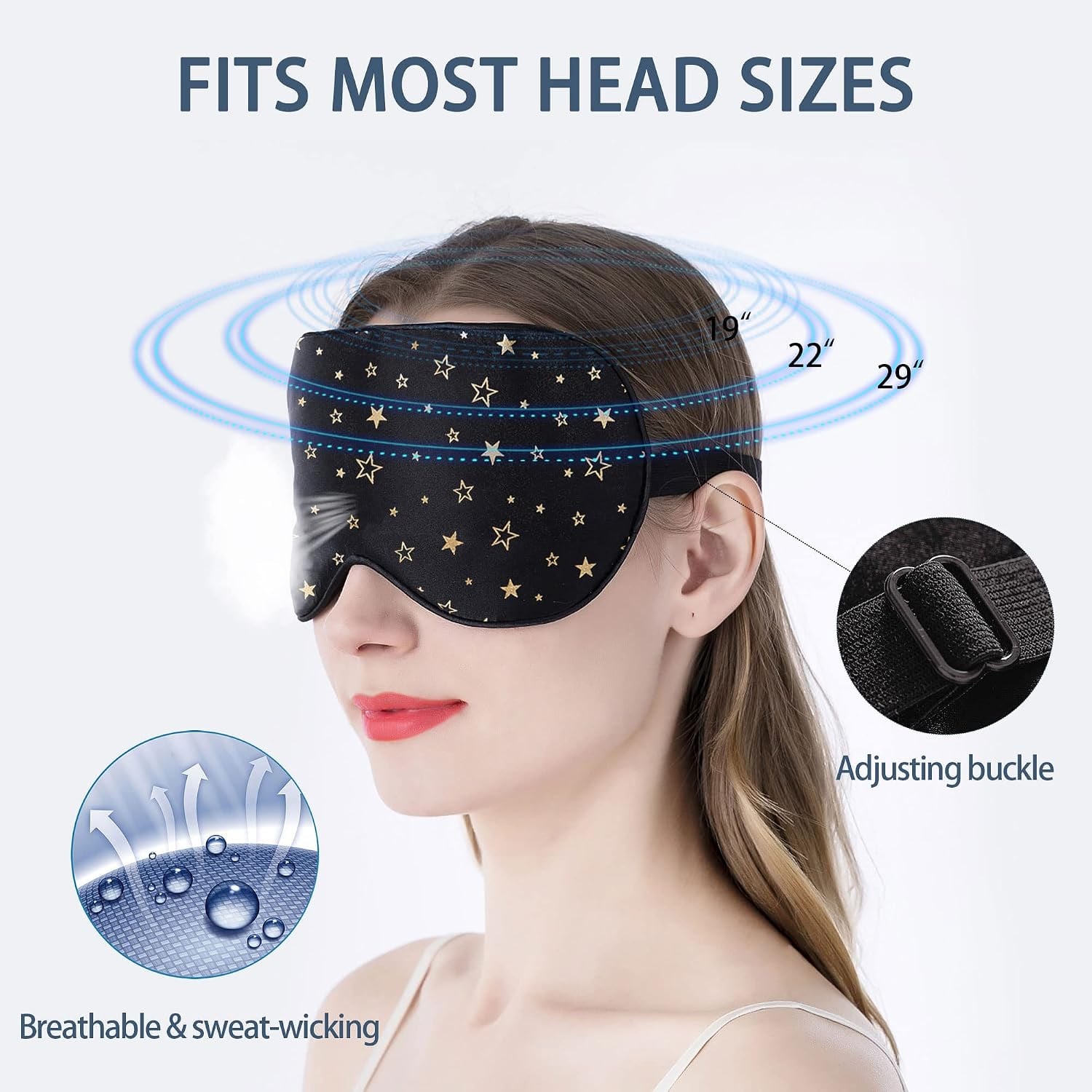
An adjustable hook and loop strap lets you set the tension yourself. That means you can wear it looser when you are lying flat on your back, firmer on a plane when you are upright and moving, and loosen it again if you have your hair up in a bun. It also means one mask suits more than one person in a household, which is handy.
A small piece of advice about hook and loop: close the strap before washing, and pick stray hairs and fluff off the hook side occasionally. Left alone, hook fastenings collect lint and lose grip. Kept clean, they last for years.
Flat masks versus contoured masks
There are two broad shapes on the market. Flat masks, like this one, are a simple panel of fabric that rests against the lids. Contoured masks have moulded cups that arch over the eyes so nothing touches the lashes.
Flat silk masks are lighter, pack smaller, and sit far better for side sleepers because there is no rigid shape to dig into the pillow. They also feel less like equipment and more like a piece of cloth, which some people prefer.
Contoured masks win if you wear lash extensions, if you find any pressure on the eyes uncomfortable, or if you want to open your eyes under the mask. They are bulkier and they do not fold flat for packing.
Neither is better across the board. It depends on how you sleep and what bothers you. If you are the sort of person who turns over six times a night with one ear in the pillow, a flat, light mask is usually the easier companion.
Who tends to get the most out of one
Travellers are the obvious group. On a long flight the cabin lights come up at odd hours and the window shade two rows along is always the one that stays open. A mask that folds into a pocket is worth more than one that needs its own case.
Shift workers are the second group, and arguably the ones who need it most. Sleeping at ten in the morning with sun on the curtains is hard work. A mask will not darken the room, but it handles the part that reaches your eyes.
Then there is everyone else, which is to say light sleepers in ordinary bedrooms. People who share a room with someone who reads late. People in flats with a security light outside. People who just find that darkness helps them switch off. None of that is unusual, and none of it needs a special reason.
Getting the fit right the first week
Give yourself a few nights. The first time you wear a mask it feels like an object on your face, and by night four most people stop noticing it at all.
Start looser than you think you need. The instinct is to clamp it on so no light gets in, but a tight mask creates its own discomfort and you will take it off at two in the morning. Set it so it stays put when you turn your head and no tighter. A thin line of light near the nose is normal and rarely enough to keep anyone awake.
If your hair is long, gather it to one side before you fasten the strap. If you use night cream, give it a few minutes to settle before the mask goes on, or you will be washing the mask more often than you would like.
Caring for silk without fuss
Silk has a reputation for being difficult and it does not deserve it. The rules are short.
Hand wash in cool water with a small amount of detergent made for delicates. Swirl it rather than scrubbing. Rinse until the water runs clear. Press the water out between a folded towel instead of wringing, then lay the mask flat to dry away from radiators and bright sun. Close the hook and loop strap first so the hooks do not snag the silk.
What ruins silk is heat, bleach and friction. A hot machine cycle delivers all three at once, which is why the care instruction here is hand wash only. Two minutes at the basin once a week is the whole job.
If the mask needs smoothing, a cool iron with a cloth over the silk will do it. Keep the iron away from the strap entirely.
The short version
If your room is not fully dark, or you sleep when the sun is up, a mask is the cheapest fix available. Choose silk because it is smooth and light against the thin skin around the eyes. Choose an adjustable strap because fixed elastic gives you no way out if the tension is wrong.
This one is 100% mulberry silk with a hook and loop strap and a small gold star print on black. It is light, it folds flat for a bag, and it washes by hand in cool water. Dimensions, momme weight and origin are not stated, so if those specifics matter to your decision, factor that in.
Set it loose, give it a week, and see whether you sleep through to the alarm.